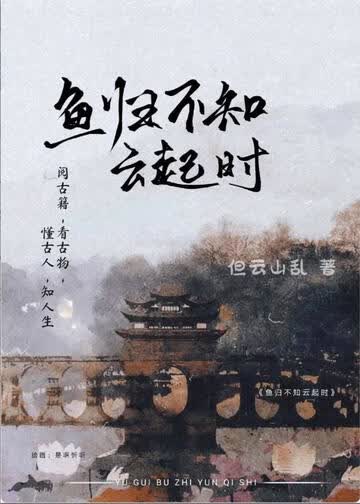
When the fish returns unaware of the rising clouds, it is just like the world occasionally sees cultural relics displayed silently, but it is difficult to know how many "clouds" are hidden behind them to protect the past.
When Yi An was sailing south with cultural relics, she often encountered storms on the river. The porcelain bottles in the cabin were afraid of being bumped, and the silk paintings were afraid of tides. She always wrapped the box cage tightly with cotton wool. At night, listening to the waves of the river crashing on the boat, she would touch the corners of the box when she opened her eyes to see if it was secure. At that time, the fish on the river followed the tide and returned to their nests every day. They swung their tails and skimmed the bottom of the boat. They only knew the direction of the water flow. How could they know that the manuscript of "Inscriptions on Gold and Stone" in the cabin was being protected by someone with their lives, avoiding the iron hooves of the Jin soldiers and the beacon fire of troubled times.
Just like the bronze tripod in the museum today, the patterns on the tripod's body hide the sun and moon of the Shang and Zhou dynasties. But when visitors look up at it, they may not think: it was buried in the ruins after the war a hundred years ago. These protective details happen quietly like "clouds rising" and disappear when the fish returns, but they allow the cultural relics to transcend time and meet us today.
Intention: Fish have their own way back, and the "return" of cultural relics is paved with the protection of generations. When the fish swim freely among the clouds and water, the protected cultural relics are also passing on the spark of civilization in a silent manner - this is the deep meaning hidden in "When the fish returns and does not know the clouds rise": the safe survival of all cultural relics in the world is the result of countless people silently supporting them at the "clouds rising".