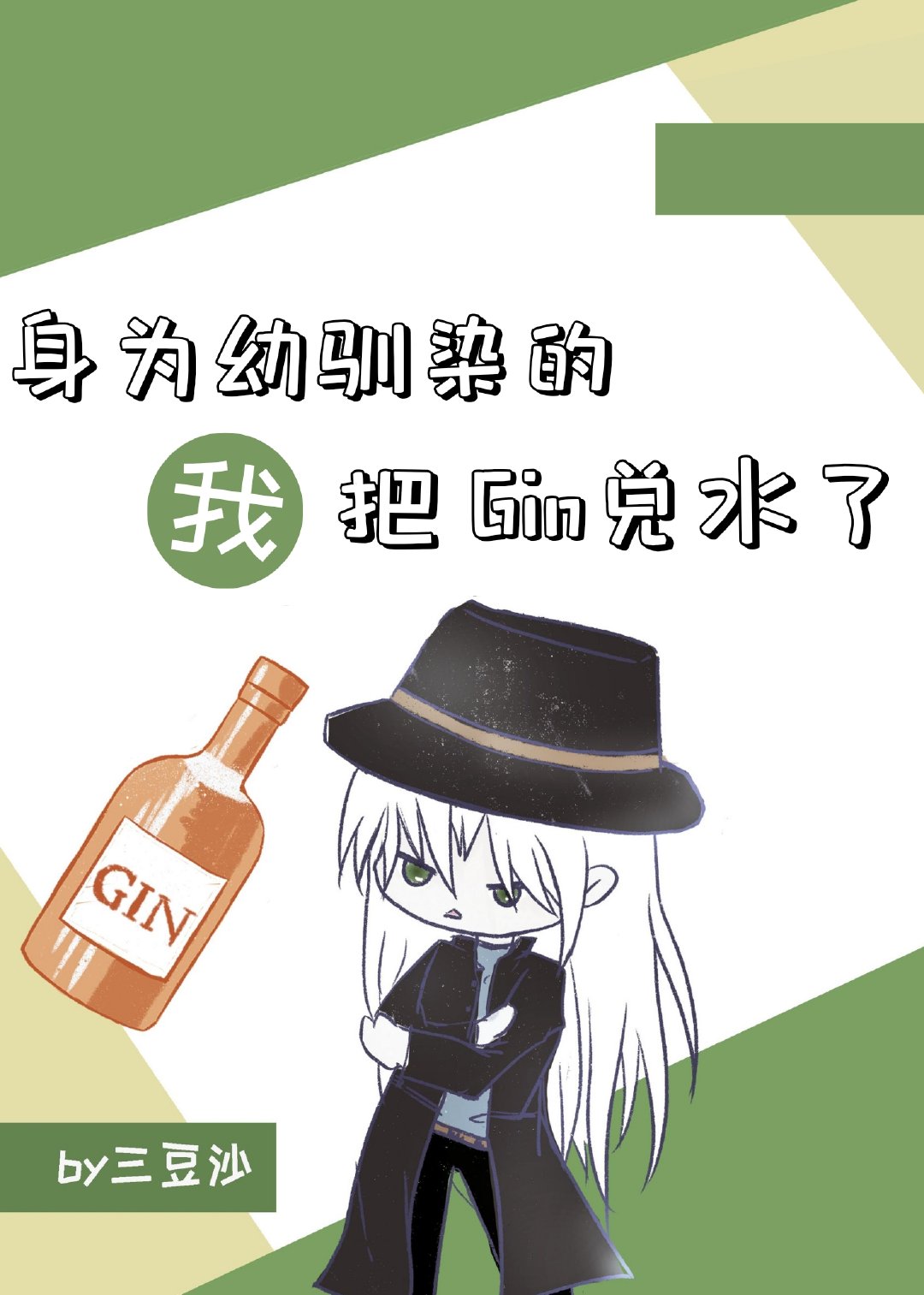
As a Young Tame Dye, I Mixed Gin with Water
身为幼驯染的我把Gin兑水了
- Status
- Completed
- Length
- 336k Words
- Genre
- Romance
- Era
- Modern Era
- Updated
- 1y ago
- Source
- JJWXC
Stats
Tags
Synopsis
Reader comments
In booklists 17



Gin
There are both long and short stories, mainly romance, plus a few Danmei. On November 30, 2024, a few more names were added. Ko Otome Xiangzhong's gin wine line is very good.



Ke Tong Completes the Sweet Article
It shouldn't be cruel. I read some of the articles earlier and can't remember them clearly.


Ming Ke Fan
Romance, there are endings and serializations.


Conan Fanfic Cp Gin
Conan spin-off, bg bl gin text


Complete Book List
.



Ke Tong
"Detective Conan" fan


Recommended Conan Articles
This is a recommendation for Conan fanfics I have read


Finished Reading
Looks good all the time
Anime-Derived Fan Fiction
Fumino, Curse, Conan, etc.



Fan Derivatives
There are bl and bg fanfics for comprehensive comics such as Naruto Mingko's Hui Fumino, etc.



Four Stars
Full booking

Self-Existence Manga Fanfic 1
As the title says, save some derivative or comprehensive comics that I have read, mainly Ming Ke, Dao Ran, Demon Slayer, Genshin Impact, etc. Wen Yeju replays other books, bg or no cp

Conan Fanfic
Same people

Full Booking
Book all
Full Booking
Book all
The Two-Dimensional Derivation of the Main Name Ke
Mainly derived from Mingke
Anime Fanfic
Ming Ke, Wenye, and Curse are the same as humanities
More by this author
 [Inarizaki] Twins Love Diary
 Mrs. Shinobu Wants to Live a Peaceful Married Life
 The World's First Postman
 I Am the Air in a Thriller Game
 A Wealthy Female Supporting Actress Has Her Sights Set on a Top-Notch Assistant
 I Kidnapped the Inarizaki North Team
When will it be updated? Not enough to watch at all. I was so touched that he even sent me a red envelope.
I made a good comment yesterday, and as expected, it will be the finale today. . .
[Orange candy] I got it [Orange candy] I got it [Orange candy] I got it [Orange candy] I got it [kiss]
Hey hey hey, so sweet?????????
It's too short. I want it to be longer.
The author's wife must keep updating. I like it so much. I'm super super looking forward to it.
Ah ah ah ah, the heroine is so handsome
Great, great, Modo Modo
Okay, come on, take your time [Hold your thighs]
This work titled "The End of the Dreamland" is indeed very special in the current online literature market. It does not cater to the market or please readers, but builds its own aesthetic system and emotional logic in an almost stubborn manner. The author's ambition is obvious - what she wants is not a "good-looking story", but a "real dream". And dreams never exist to please anyone. The vast majority of online articles nowadays take "fast" as the first priority - to quickly establish characters, quickly advance the plot, and quickly create conflicts. But "The End of the Dream Land" has chosen the opposite path: it is slow, it is heavy, and it is willing to stay for three lines for a mirage and consume a section for a ray of blue light. The author is clearly a devout believer in atmosphere. In her writing, the plot is deliberately downplayed, the characters are deliberately suppressed, and only the environment is allowed to spread freely and expand as much as possible. From the disintegration of Zhu Yuheng's body in the opening chapter - "Dozens of eyeballs dripping with dirty blood, gurgling bubbles like bubble water emerged from her neck" - to Zhu Heng staring at the window day after day after waking up, to the infinite extension and fragmented decoration of the circular corridor, the author has always used the environment to speak and the atmosphere to narrate. This kind of writing is extremely risky: it challenges the patience of readers and the rules of the market. But it is this kind of "desperate" investment that gives the work a rare quality - it is not "written" but "leached". Readers are not "reading" a story, but "immersed" in a world. This sense of immersion is achieved precisely because the author understands the power of "blank space". She doesn't explain too much or rush to explain, but lets the environment itself become the main body of the narrative, letting the mirage, blue light, blood tide, and abyss tell the unspeakable things by themselves. In terms of character creation, "Dreamland Ends" also shows an anti-market attitude. Today's online writing prefers "character first" - each character must have a distinct label, unique lines, and memorable personality traits. However, the characters in this work present a peculiar sense of "thousands of people are alike". Zhu Heng, Song Yuechan, Wang Youzhi, Yan Chichun... Although their bodies, shapes and words are not repeated, they have vaguely similar temperaments - silence, forbearance and restraint. They do not show their emotions easily and are not eager to confess their inner feelings. Even when faced with nightmares and death, they just "shed tears" but "stand side by side in the mirage, light and blood." This kind of "one thousand people are alike" is not the author's mistake, but a conscious pursuit. Together, these characters convey a certain kind of awe—the awe of dreams, the awe of memory, and the awe of death. They live cautiously in a mirage like gods with their heads raised, not daring to speak loudly or act wantonly. And this common awe made them become a whole, a "crowd". What's even more interesting is that this way of characterization actually brings the reader closer to the work. When each character's face is blurred, it is easier for readers to "walk into the crowd in the book" - because there is no clear "other" obstacle, readers can integrate into that world more naturally, become a member of the forbearing crowd, and feel the melancholy and pathos together. This is also the brilliance of the author: she does not want to create "unforgettable characters", but to create an "immersive atmosphere." The characters are just part of the atmosphere, participants in the dream, not the masters. From a structural point of view, the author is obviously trying to blur all coordinates that can anchor "reality". The time relationship between Zhu Yuheng's recollection at the beginning and Zhu Heng's awakening is blurry; Zhu Heng's state of "remembering everything but pretending not to know" is blurry; the boundaries between mirage and reality, nightmare and waking memory and forgetfulness are also blurry. This ambiguity is not confusion, but a conscious "dream logic." Dreams are never linear, never clear, never can be rationally framed. Dreams have their own language, their own rhythm, their own cause and effect. And "Dream Land Ends in Ruins" tells the story of dreams in the way of dreams. Of particular note is the recurring theme of "memory." Zhu Heng remembers everything, but chooses to remain silent; Yu Heng is forgotten, but is always missed; the new tenants have to "remember where they were before going to bed" - memory here becomes a resource, a burden, and a redemption. And when memories begin to blur, when characters begin to forget, and when nightmares begin to devour the past, the world called "Phantom" becomes increasingly shaky but extremely real. Because the essence of dreams is not the transformation and reorganization of memory? Taken together, I think what the author ultimately wants to write is a long, sad, bluesy dream. "Blue" is the main color of the whole article - matte blue, dark blue, dark blue, sky blue, sky blue, twilight blue, fluorescent blue... Each kind of blue tells different emotions and together weaves an emotional web. In this web, what the author wants to capture are those eternal propositions about love and sacrifice, about forgetfulness and memory, about death and rebirth. Judging from the completed chapters, Zhu Yuheng's sacrifice and Zhu Heng's return form an emotional loop. "Even if I forget countless times - I will still fall in love with you at first sight when I meet you again" - this sentence is like the soul of the entire work, which tells an emotional connection that transcends death and forgetfulness. And Liu Haiping's "eternal" pursuit, Xiaoxue's nightmare, Yan Chichun's fall, the vague foreshadowing of Zihan and the bamboo forest... All of these imply that what the author wants to tell is by no means a simple story about the afterlife, but a fable about "how to remember the people we love." "Dream Land Ends in Ruins" is a work that does not cater to the market, but it is this "not catering" that gives it its unique temperament and value. It is not for everyone, but it must belong to those who are willing to slow down, sink, and walk into a dream. I hope the author will continue to weave this dream and let it bloom into blue flowers on top of the ruins.
Ashuo is so cute! It's great [Star Eyes], in this "new home", Hehe also feels human touch... It makes my heart warm when I see it, and I really want to eat chestnut cakes (but it seems to be spring now...) The three of us are so happy now...