[Following the article: "Coming here from the Republic of China", just click on the author's column~]
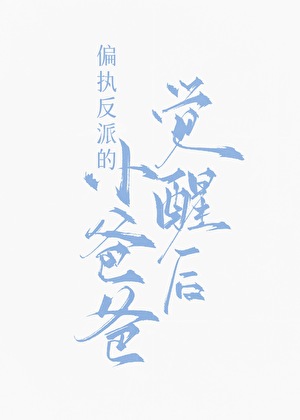
Shen Yuhan is the eldest brother of Zhongyong Hou Mansion, and has the reputation of "the best brother in the capital".
He was raised according to the highest standards of a matron since he was a child. He was the best example among the men in the capital. The men who wanted to marry him were lined up from the east city to the west city every day. Even the old emperor almost included him in the harem.
Qi was suffering from domestic and foreign troubles, and its national power was declining year by year. The old emperor sent Shen Yuhan to make peace with him by decree. Encountering bandits on the way to get married, Shen Yuhan accidentally fell off the carriage. When he opened his eyes again, he came to a strange world. In a few days, he seemed to be getting married, but after all, he could not escape the fate of getting married.
-
Shan Qihuan was born in the complicated and wealthy Shan family, with many brothers and sisters. He has outstanding abilities. He was the CEO of a listed company before he was thirty years old and was a leader among the younger generation of the Shan family.
Because of his father's absurd dream, their family must choose one person to marry a prodigal who is uneducated, smokes, drinks, and goes to bars. He gets jealous at banquets and gets pushed into the swimming pool. It is said that this man is the only grandson of his father's late friend.
After some calculations by a magic stick, Shan Qihuan was selected among many brothers.
Laugh.
After marriage, he will definitely ignore the prodigal son and make him quit before he gets into trouble.
-
On their wedding night, Shen Yuhan stood nervously in front of Shan Qihuan, preparing to unbutton his suit.
Shan Qihuan, who was very resistant to other people's closeness, wanted to wave away his hand, but when he gently held the other person's hand, the latter raised his head.
Shen Yuhan's face turned slightly red and she asked him softly: "Hubby, do you want to rest?" Is this what people here call their husband-in-law?
Looking at the beauty with clean eyes, Shan Qihuan took a breath: "Rest."
-
This article tells an inspirational story about a man from ancient times who traveled to modern times and worked hard to learn to be a modern person.
◆The background setting is that same-sex people can get married, sweet, everyday, and not able to have children.
◆Personal attacks are declined. If you don't like the subject matter, please proceed with caution.
◆If there are no accidents, the update time will be 12:00 noon every day, and the text will be revised during the rest of the time.
◆This article was added to V on March 5, 2021. Please support the genuine version. Thank you to every cutie who followed the article. Thank you~
-
-------Receipt document-------
"Come Here from the Republic of China"
Jiang Yicen was born into a feudal family at the end of the Qing Dynasty. He and his grandfather had read eight-part essays and four books and five classics. He had been engaged to a girl from another family since he was a child. But his fiancée, who had studied abroad and had advanced ideas, broke off the engagement with him. She tactfully said that he was too rigid, old-fashioned and boring, and she would not be happy being with him;
Later, he experienced war and spent all his wealth just to save people from fire and water;
Later, he joined the army and died in the war.
Originally, death was the end, but he never thought that this was a new life, but he returned to a feudal and enlightened family.
Feudal means that he was sent to marry by his family, while enlightened means that his marriage partner is a man.
-
Nan Shuyi is bohemian, loves freedom, and does things as he pleases. He makes headlines every day for various incidents. It is not an exaggeration to call him a playboy.
In order to make Nan Shuyi calm down, the Nan family forcibly gave him a marriage partner.
The day before the wedding, he disdainfully complained to his friends: "Hey, I will never sleep with a man in my life."
On the wedding day, his marriage partner sat in front of him like a young master of the Republic of China. The corners of his lips were slightly raised, and he smiled without showing his teeth, which was very decent.
He called Nan Shuyi softly: "Sir."
Nan Shuyi paused slightly, straightened his tie that was twisted due to impatience, and stood up straight.
Jiang Yicen thought, it was hard to live in an era without war, and he could live safely and soundly. No matter what, it would be okay to call his marriage partner "Sir".
He has really traveled a long, long time since the Republic of China came here.
Many years later, Jiang Yicen believed that what his ex-fiancée said was wrong and that his life was not too boring.
-
This is a story about a hero from the Republic of China who travels to modern times and encounters an attack. Marriage first, love later.
Concept: the collision of ancient and modern cultures.
Reader comments
Passing by their world (written at 6pm on May 17, 26)
Hello Fanfan, I wrote a long review for "Friends" last year and received your very thoughtful reply. I still remember it until now. Time flies by so fast. I was still thinking that it was only in the second half of last year that I finished watching "Friends", but I didn't expect that it has already been almost a year and a half. I actually watched "cp" from the beginning to the end. I kept it in my favorites and wanted to pick it up to read, but under the pressure of working seventy hours a week, I never clicked on it. Fortunately, the weather in San Francisco is very good this week. Fortunately, I don't have to work overtime on weekends, so I can calm down and click on this story to read it thoroughly. The following feelings, I'm sorry, may be more of some self-centered thoughts, without much analysis of the story itself. But these feelings were indeed inspired by Fu Xun, Qiao Zhifang, and this story, so I still want to post them here.
--
1 – "As spectators, the participants avoid the possibility of exposing themselves to the risk of love, and try to discover and protect an emotional relationship that is regarded as pure and real in the highly commercialized entertainment industry products." (Chapter 42)
Many readers look for a sense of immersion when reading novels and look for themselves in the article, but I am just the opposite. I am very emotionally isolated in real life, and I am often judged by others as the most indifferent person they have ever seen in their lives. Reading novels is a form of escapism for me. Literary and artistic works allow me to cry and laugh loudly in a world without "myself", and enjoy the pleasure of emotions washing over every sense of my body. So sometimes when I read some novels, I feel extremely disgusted that they remind me of reality and the issues in my own life (such as love, friendship, career, family ties). Perhaps as Qiao Zhifang analyzed in Chapter 42, love and everything else in real life are too dangerous, and I just want to avoid them when looking for pure happiness.
Strangely, this book "cp" made me have a lot of deep introspection, but it didn't make me bored. When reading Chapter 19, I paused for a long time on the sentence "Qiao Zhifang's attitude towards feelings is very cold, and he doesn't have much trust in love. However, the attitude towards love and the practice of love are two different things." When reading other novels, what I like to read are those life-and-death entanglements and deep bonds that I cannot experience in real life. I am afraid of seeing words that are more similar to real love, but do not include my attitude towards love. Maybe it's an uncanny valley effect. But when I saw this sentence, I seemed to have found the best explanation for the way I connect with the world - not only strong feelings are called love, but wanting to be good to someone for various reasons and being good to them every day is also love.
A year ago, my views on love may have ended here, but now I still resonate strongly with Fu Xun's words: "I thought it was an illusion to think that I liked someone, but in fact, I only like to be 'very happy' with the other person. Once I am not happy, there will be no future." From watching "Friends" to now, I have experienced a breakup with my partner who has been together for five years. The reason is that we are together because we are happy. If we are unhappy, we will not find the strength to continue to be together. The sentence "I don't think people who can only be happy together and cannot be unhappy together can become lovers" sums up my current mentality very well. I haven't figured out whether I want or can find someone with whom I can practice love and experience misfortune, but I have confirmed that I shouldn't choose someone just because I am happy and ignore other issues that need to be overcome together.
2 – "However, now that Qiao Zhifang is employed, even if he completes his Ph. D., He cannot get a tenured teaching position in the school. His personal experience is no longer in sync with the country's lofty ideals, and his identity as an intellectual has become acceptable, powerless, and no longer sacred." (Chapter 28)
In addition to thinking about love, I also cherish the thinking about career and society that "cp" brought to me. In fact, I am not confused about relationships. I cherish the family and friendship around me, and my attitude towards romantic love is to take things as they come. But as a migrant worker in my mid-to-late twenties, I am really confused about my career and personal pursuits. Last year, I received my first promotion at work, and jumped from a management consulting sweatshop to a hot AI startup in San Francisco. What I felt firsthand was that everything was "suspicious" to everyone here. The word is very precise, suspect, which is the same word as suspicion in English. In Silicon Valley, the "center of the universe", it is not just academic qualifications and intellectual status that have become suspicious, but also work itself, production itself, and humanity itself. I like my current job, but sometimes I feel confused while doing it. I don't know how to climb the ladder of capitalism, whether it's worth climbing, and whether I have the ability to climb up. Sometimes I think about the path I didn't choose.
In the blink of an eye, I am getting farther and farther away from the crossroads where I decided whether to stay in school to study for a PhD in East Asian Culture. I don't know if the teachers who persuaded me to study for a PhD still remember me. In fact, I have somewhat forgotten the pain and joy of writing my graduation thesis. The topic I wrote at that time was why women in the Chinese-speaking world read BL novels. When I saw Qiao Zhifang analyzing the similarities and differences between homosexuality and same-sex attachment, I was suddenly taken back to the days when I went to the library. When I saw the Princeton, Yale and Yenching libraries mentioned in "cp", I thought of many people I used to hang out with on campus but now slowly drift away. I thought of talking to my senior who had just finished her Ph. D. About the topic of a variety show about the East Asian cultural circle that she wanted to do, or listening to my friend's experience of searching for literature across the United States in the dormitory. Watching Qiao Zhifang talk about how difficult it is for PhDs in liberal arts to find teaching positions in North America, I remembered why I didn't choose this path at the time, and also thought of them who are on this path now. After thinking about it, I am actually not that confused anymore. Senior Sister Qiao Zhifang is right, "Anxiety and confusion are the dizziness brought about by freedom, because you actually know that you still have a choice."
3 – "Although I remind myself that the text is fiction, I also want to believe that when the text is completed, a parallel world will be generated. It will flash over and over again in the reader's reading, and even connect with the reader's reality." (Chapter 83, the author has something to say)
There were many surprising moments when I read "cp". For example, the theme of the notes I just wrote in the previous chapter was brought up again by the author in the next chapter, or highlighted in what the author said. This feeling is amazing. For example, in Chapter 50, I excerpted the sentence "Electronic photos have a short lifespan", and mentioned it again in Chapter 57. In addition to the resonance of thinking, there is also a wonderful deviation here. My feeling at Chapter 50 is that although electronic photos are eternal, because they are so available, tens of thousands of photos will never be looked at again, and sometimes it is as if they were not taken. But the point of view in Chapter 57 is novel. Indeed, some photos will be deleted or lost in a cloud where the password is forgotten. Similarly, halfway through reading, I also thought about why this book has such a "Jinjiang style" name as "Don't Believe the CP on Hot Searches". Later, when I saw the author's explanation, I thought it was very appropriate. Also, from the beginning, I liked the place names and the memory fragments of our time in this book (such as the epidemic, the news in Venezuela). In the middle section, I also wrote notes such as "Spending so much pen and ink on the name of the brand is probably because I want to be close to reality" and "I really like the way of writing some fictional directors and literary works mixed with real literary and artistic works." After the completion of Chapter 81, the author found something to say that echoed.
Because of these details, our world and the world of the story seem to be two very close lines in countless parallel times and spaces. I have watched Edward Yang's "Yi Yi" but could never see the movie starring Fu Xun. It's like I have been to many buildings and libraries of East Asian departments and literature departments in American universities. I may have thought about similar topics with Qiao Zhifang, but he is not someone I can contact through WeChat after a few layers of relationships. I passed through their world, but it was not my world. This feeling is very subtle.
--
Fanfan, thank you for writing such a good story, which made me stop for a few hours in the busy flow of daily life to think about the boundaries between reality and fiction, and let Fu Xun and Qiao Zhifang, two people who do not exist in my world, bring me so much inspiration. Even though they don't exist in my world, I'm glad you do. Although this is shamelessly one-sided, after reading this story, I really feel that you are more like a pen pal I have never met than an abstract "internet author". I'm already looking forward to the next time I read your story.
Ah ah ah, here I come [spread flowers][spread flowers][spread flowers]
Oh my god, I keep updating with surprises and keep updating new articles.
Looks good, looks good, looks good! ! !
The flowers are finished, xql will be happy forever [red heart]
Finished reading! A very good article. The young couple are cute.
"Come here and then" is a big bug for the author~
Then→_→er
I feel like ancient stories are so cute. I wish I could write more about them.
The writing is so good. I really like Brother Han. She is a gentle and lovely ancient-style beauty. Although it is a daily article, it is not boring at all.








Passing by their world (written at 6pm on May 17, 26) Hello Fanfan, I wrote a long review for "Friends" last year and received your very thoughtful reply. I still remember it until now. Time flies by so fast. I was still thinking that it was only in the second half of last year that I finished watching "Friends", but I didn't expect that it has already been almost a year and a half. I actually watched "cp" from the beginning to the end. I kept it in my favorites and wanted to pick it up to read, but under the pressure of working seventy hours a week, I never clicked on it. Fortunately, the weather in San Francisco is very good this week. Fortunately, I don't have to work overtime on weekends, so I can calm down and click on this story to read it thoroughly. The following feelings, I'm sorry, may be more of some self-centered thoughts, without much analysis of the story itself. But these feelings were indeed inspired by Fu Xun, Qiao Zhifang, and this story, so I still want to post them here. -- 1 – "As spectators, the participants avoid the possibility of exposing themselves to the risk of love, and try to discover and protect an emotional relationship that is regarded as pure and real in the highly commercialized entertainment industry products." (Chapter 42) Many readers look for a sense of immersion when reading novels and look for themselves in the article, but I am just the opposite. I am very emotionally isolated in real life, and I am often judged by others as the most indifferent person they have ever seen in their lives. Reading novels is a form of escapism for me. Literary and artistic works allow me to cry and laugh loudly in a world without "myself", and enjoy the pleasure of emotions washing over every sense of my body. So sometimes when I read some novels, I feel extremely disgusted that they remind me of reality and the issues in my own life (such as love, friendship, career, family ties). Perhaps as Qiao Zhifang analyzed in Chapter 42, love and everything else in real life are too dangerous, and I just want to avoid them when looking for pure happiness. Strangely, this book "cp" made me have a lot of deep introspection, but it didn't make me bored. When reading Chapter 19, I paused for a long time on the sentence "Qiao Zhifang's attitude towards feelings is very cold, and he doesn't have much trust in love. However, the attitude towards love and the practice of love are two different things." When reading other novels, what I like to read are those life-and-death entanglements and deep bonds that I cannot experience in real life. I am afraid of seeing words that are more similar to real love, but do not include my attitude towards love. Maybe it's an uncanny valley effect. But when I saw this sentence, I seemed to have found the best explanation for the way I connect with the world - not only strong feelings are called love, but wanting to be good to someone for various reasons and being good to them every day is also love. A year ago, my views on love may have ended here, but now I still resonate strongly with Fu Xun's words: "I thought it was an illusion to think that I liked someone, but in fact, I only like to be 'very happy' with the other person. Once I am not happy, there will be no future." From watching "Friends" to now, I have experienced a breakup with my partner who has been together for five years. The reason is that we are together because we are happy. If we are unhappy, we will not find the strength to continue to be together. The sentence "I don't think people who can only be happy together and cannot be unhappy together can become lovers" sums up my current mentality very well. I haven't figured out whether I want or can find someone with whom I can practice love and experience misfortune, but I have confirmed that I shouldn't choose someone just because I am happy and ignore other issues that need to be overcome together. 2 – "However, now that Qiao Zhifang is employed, even if he completes his Ph. D., He cannot get a tenured teaching position in the school. His personal experience is no longer in sync with the country's lofty ideals, and his identity as an intellectual has become acceptable, powerless, and no longer sacred." (Chapter 28) In addition to thinking about love, I also cherish the thinking about career and society that "cp" brought to me. In fact, I am not confused about relationships. I cherish the family and friendship around me, and my attitude towards romantic love is to take things as they come. But as a migrant worker in my mid-to-late twenties, I am really confused about my career and personal pursuits. Last year, I received my first promotion at work, and jumped from a management consulting sweatshop to a hot AI startup in San Francisco. What I felt firsthand was that everything was "suspicious" to everyone here. The word is very precise, suspect, which is the same word as suspicion in English. In Silicon Valley, the "center of the universe", it is not just academic qualifications and intellectual status that have become suspicious, but also work itself, production itself, and humanity itself. I like my current job, but sometimes I feel confused while doing it. I don't know how to climb the ladder of capitalism, whether it's worth climbing, and whether I have the ability to climb up. Sometimes I think about the path I didn't choose. In the blink of an eye, I am getting farther and farther away from the crossroads where I decided whether to stay in school to study for a PhD in East Asian Culture. I don't know if the teachers who persuaded me to study for a PhD still remember me. In fact, I have somewhat forgotten the pain and joy of writing my graduation thesis. The topic I wrote at that time was why women in the Chinese-speaking world read BL novels. When I saw Qiao Zhifang analyzing the similarities and differences between homosexuality and same-sex attachment, I was suddenly taken back to the days when I went to the library. When I saw the Princeton, Yale and Yenching libraries mentioned in "cp", I thought of many people I used to hang out with on campus but now slowly drift away. I thought of talking to my senior who had just finished her Ph. D. About the topic of a variety show about the East Asian cultural circle that she wanted to do, or listening to my friend's experience of searching for literature across the United States in the dormitory. Watching Qiao Zhifang talk about how difficult it is for PhDs in liberal arts to find teaching positions in North America, I remembered why I didn't choose this path at the time, and also thought of them who are on this path now. After thinking about it, I am actually not that confused anymore. Senior Sister Qiao Zhifang is right, "Anxiety and confusion are the dizziness brought about by freedom, because you actually know that you still have a choice." 3 – "Although I remind myself that the text is fiction, I also want to believe that when the text is completed, a parallel world will be generated. It will flash over and over again in the reader's reading, and even connect with the reader's reality." (Chapter 83, the author has something to say) There were many surprising moments when I read "cp". For example, the theme of the notes I just wrote in the previous chapter was brought up again by the author in the next chapter, or highlighted in what the author said. This feeling is amazing. For example, in Chapter 50, I excerpted the sentence "Electronic photos have a short lifespan", and mentioned it again in Chapter 57. In addition to the resonance of thinking, there is also a wonderful deviation here. My feeling at Chapter 50 is that although electronic photos are eternal, because they are so available, tens of thousands of photos will never be looked at again, and sometimes it is as if they were not taken. But the point of view in Chapter 57 is novel. Indeed, some photos will be deleted or lost in a cloud where the password is forgotten. Similarly, halfway through reading, I also thought about why this book has such a "Jinjiang style" name as "Don't Believe the CP on Hot Searches". Later, when I saw the author's explanation, I thought it was very appropriate. Also, from the beginning, I liked the place names and the memory fragments of our time in this book (such as the epidemic, the news in Venezuela). In the middle section, I also wrote notes such as "Spending so much pen and ink on the name of the brand is probably because I want to be close to reality" and "I really like the way of writing some fictional directors and literary works mixed with real literary and artistic works." After the completion of Chapter 81, the author found something to say that echoed. Because of these details, our world and the world of the story seem to be two very close lines in countless parallel times and spaces. I have watched Edward Yang's "Yi Yi" but could never see the movie starring Fu Xun. It's like I have been to many buildings and libraries of East Asian departments and literature departments in American universities. I may have thought about similar topics with Qiao Zhifang, but he is not someone I can contact through WeChat after a few layers of relationships. I passed through their world, but it was not my world. This feeling is very subtle. -- Fanfan, thank you for writing such a good story, which made me stop for a few hours in the busy flow of daily life to think about the boundaries between reality and fiction, and let Fu Xun and Qiao Zhifang, two people who do not exist in my world, bring me so much inspiration. Even though they don't exist in my world, I'm glad you do. Although this is shamelessly one-sided, after reading this story, I really feel that you are more like a pen pal I have never met than an abstract "internet author". I'm already looking forward to the next time I read your story.
Ah ah ah, here I come [spread flowers][spread flowers][spread flowers]
Oh my god, I keep updating with surprises and keep updating new articles.
Looks good, looks good, looks good! ! !
The flowers are finished, xql will be happy forever [red heart]
Finished reading! A very good article. The young couple are cute.
"Come here and then" is a big bug for the author~ Then→_→er
I feel like ancient stories are so cute. I wish I could write more about them.
The writing is so good. I really like Brother Han. She is a gentle and lovely ancient-style beauty. Although it is a daily article, it is not boring at all.