The man had just coughed up blood, and his complexion turned pale. The emperor thought, in fact, I have never been afraid of his rebellion.
It's not bad to die in the hands of such a powerful person.
This article was written in the fall of 2013.
Intention: Let us drink together from the golden cup, but we will not spare each other with the sword.
Reader comments
I read this article in a book a few years ago and read it countless times. Unfortunately, I lost the book in the end. I only remember the plot and the protagonist's name: Hebi. This article has so much staying power that I suddenly remembered this novel in 2019. I couldn't remember the name of the novel, so I started looking for a needle in a haystack on Baidu. It took me a long time to find it. I also saved the webpage and printed it out. I started working this year and started looking for a needle in a haystack again. I finally found it. For this article, I registered a Jinjiang account and spent a long time researching before I found a place to write a comment. I really like the author's writing style. The two protagonists are really as bright as the moonlight to me. I cried every time I watched it, and started to shed tears when I read the first sentence. Every time I watched it, I wondered whether Hebi liked the little emperor, and it felt very uncomfortable whether he liked it or not. The little emperor's love was awkward and straightforward, I wonder if Hebi could see it. The little emperor started to know Hebi when he was 5 years old. It took him 9 years to build up his mind about Hebi. He got to know him for 3 years. The days before and after were spent in missing him. The author's emotional description is so powerful. Special thanks to the author for letting Bai Ze give the little emperor a hug when saying goodbye. Thank you very much.
To the north of the road, Bai Ze is the fantasy of childhood, the ignorance and nostalgia of youth, and the lingering thoughts for the rest of my life. Underneath the secretive surface is a paranoid, fragile heart that longs for warmth. The parting hug made him finally let go of Bai Ze, and also allowed him to finally reconcile with his own emotions;
Lu Zhibei is more like a younger brother to Bai Ze. He Bi knew Lu Zhibei's feelings for him. The deliberately maintained distance between the emperor and his ministers may not be an insurmountable limit; the complaint of "the first person around the emperor, can he have a term that is not so confusing to everyone?" And the title of "that child" seem to reflect this idea. But Bai Ze actually deliberately indulged Lu Zhibei, indulged him in trying to keep him again and again, indulged him in getting closer to him intentionally or unintentionally, and even tolerated his "love" for him (Bai Ze repeatedly emphasized to the emperor deliberately) Ye Yu secretly killed him.
When I first brushed it, I thought that the emperor fell in love with Ye Yu first, and then fell in love with He Bi; I thought that He Bi would only love Ye Yu for the rest of his life;
After swiping and swiping again and again, I realized that Lu Zhibei actually fell in love with He Bi at first sight, but at a time of national crisis, his emotions were complicated (and often covered up); looking at Bai Ze, he felt more friendship for Ye Yu than affection. Using Xiao Lin's mouth to convey the message of death cast a veil over the matter of "Bai Ze's death", making Lu Zhibei never forget him for the rest of his life. Bai Ze's emotions are hazy and ethereal, making people think. Family affection and love are as real as they are illusory.
"Royal Street Stop" comments: "Drink the mellowest wine in the world, sleep with the most beautiful woman in the world, and sheath the sharpest sword, making that person sit in the imperial chair day after day, and the memory will be unforgettable and the memory will be difficult to get rid of." Alluding to Hebi and Lu Zhibei. Unknowingly, the emperor embarked on the same path as the late emperor.
The difference between "Hebi" and "Hebi" represents the surging of secret thoughts and the final release of the inner demons that have been difficult to let go of for a lifetime.
The acacia tree falls silently, has an old friend ever been here?
(Sigh) It's all twisted and twisted.
... As long as someone hits a straight ball, it may not be like this.
But it's still an exaggeration, and it's very well written!
The extra chapter uses a pseudonym to solve the last mystery for us, which is the truth about the Ye Yu incident. I actually guessed it before, but alas
2333... It's so exciting to see Hebi! I am from Hebi City, Henan Province
It's over! Time flies so fast. I first read my wife's book when I was in college. Now I have graduated and started working, and Wei has grown up. After it was finished, I felt a little bit lost. I used to open the collection first thing in the morning to see if my wife had updated. Now, oh wow, I have started to miss Wei.
BE... The little emperor will never get Hebi's love?
After reading it, I felt really disappointed
I came back for a second brush and it was still amazing.
Bai Bai, you know how to harm people so well.
I rewatched it again, and I still feel a little bit confused.
"The bright white horse is in the Bikong Valley." This was the first sentence that came to Lu Zhibei's mind after seeing Qin Hebi. This description of Qin Hebi runs through the entire article, and also expresses and condenses Lu Zhibei's feelings. I think it may also be regarded as one of the "literary eyes" of this article: that bright, beautiful, jade-like but irresistible white horse, is it not Qin Hebi? The king who cherishes love, attachment, appreciation and finally lets go, isn't he the north of the road?
"Preface to Mao's Poems" believes that this poem is about the official's assassination against King Xuan of Zhou Dynasty for not being able to retain wise men in the court. Some people think that this is a poem about King Wu of Zhou Dynasty sending a Jizi as a farewell gift. Because the Yin people loved white, the white pony was a nobleman from the old era; some people think that it was a poem given by the king who wanted to keep his ministers but could not, so he released them into the mountains and forests. One person wants to go and the other wants to stay, but there is no heart-breaking breakup, just gentle attachment, longing and even final relief. Isn't this gentle sentiment a reflection of their relationship?
Qin Hebi is a man who goes and comes back. At first, when he came back, there were some doubts and doubts in Lu Zhibei's love at first sight: "Is it the glory of a very human minister that he is attached to, or is it a more profound conspiracy?" From temptation to entrustment, to complete destruction - "It's not bad to die in the hands of such a powerful person." Later, he left again, "I will bid farewell to His Majesty at the beginning of the month." Qin Hebi clearly knew his own life experience and the emperor's feelings for him. He understood the emperor's subtle and unfinished thoughts and his increasingly closed love network. Has he ever been moved during this? I think there is, whether it is the enlightenment that the fourteen-year-old emperor "fell back to where he was and jumped up again" at the moment when he showed his strategy, or the palace maid Qiyun who was a bystander and felt the touch of "it would be fine if they stayed like this forever". Family affection, love, appreciation, and isolation are all mixed together, allowing this white horse to stay in the temple for some days, "to maintain it for the sake of eternity." Just like the barriers between the Yin people and the Zhou people, the barriers between the city and the countryside and the temples, and the barriers between ministers and kings, the time of detention cannot withstand the natural chasm of fate. Suddenly I remembered the lyrics that were popular a long time ago, "My white horse, run slower, I won't take you home this time." I thought of the knight-errant in Cao Zhi's "The White Horse" who looked at death but never came home. The pull between freedom and family affection, freedom and love, freedom and responsibility, is probably the image of a jade white horse itself.
Lu Zhibei is a very good emperor image. He is ruthless, and as a power animal, he transcends the so-called traditional family ties - father, mother, uncle. "Those who don't harm me are my relatives. If I don't want to give it to him, he can't take it away. If he takes it away, he will die." This is a quality often possessed by winners in the power vortex. But he is passionate. His sustenance, his sustenance for family affection, his sustenance for beauty, his sustenance for love, are tied to an almost impossible person. From childhood curiosity to adoration when they first met, his love is completely idealized and romantic. He separates the cruelty of reality from the beauty of fantasy, and uses the latter to support the progress of the former. He is a realistic person who lives in the harshest environment, yet he has supported him almost all his life with this unforgettable passion - we die in each other's hands, or melt in a warm embrace, needless to say, it is both good. This is probably the unique style of Mr. Wang and Sun, a kind of allowance for self and love - you are looking at the scenery on the bridge, and the people in the window are looking at you. I thought of a love poem I read recently that was written by a real emperor in history: "When the lion trembled for fear of my angry claws, fate made me become the prey of an antelope with full autumn water." Although Bai Ze cannot be regarded as an "antelope with full autumn water", this kind of overturning of the strength and weakness of fate caused by love always makes people feel very strange and beautiful.
The author's work contains a large number of implicit image descriptions and metaphors, as well as prophecies and implicit remarks about the fate of the characters. From the beginning to the end, the puzzles are solved layer by layer, and the mystery of each puzzle is always more or less hinted and revealed in the previous text. I really like this kind of detailed and close writing style, which is very implicit and has a classical taste. The hug at the end and the words "Hebi" are really like the most beautiful dream within a dream, and also like a shout in the ethereal reality. The king and his ministers have a dream, and their names are empty now and in ancient times. A very beautiful, long and melancholy story.
It's really beautiful. As a straight man, I really like the author's writing style. After thinking about it, the author's words and the first sentence are worthy of scrutiny. One paragraph can be worth one chapter of an ordinary online article, and it is endlessly memorable after reading it. Thanks to the author
I have a question
Is Bai Ze really dead?
So sad?
I think the emperor likes Ye Yu, wants to be friends with Hebi, and wants to kill him. He longs for family affection, but is also afraid, and looks forward to and bored with friends. He longed for companionship and someone to understand him, but he had to push away and lose him again and again.
So it was someone sent by the emperor who killed Ye Yu, right? The emperor didn't like Ye Yu, right? Then Hebi liked both the emperor and Ye Yu? Yeah
If there was no final northern battle in Nirvana in Fire, according to the original plan, would Mei Changsu have left the world and Prince Jing would have disappeared in this life?
One brush to chew peonies, or two brushes?
Has Bai Ze ever liked the little emperor?
There were so many twists and turns, the Queen Mother, the King of Jin, and Hebi, I was constantly shocked all the way. And I thought that the rumors outside were so true and that the late emperor was really related, but it turned out that I was gullible, and it was one thing and not the other. The information Xiaolin brought out later put me under control, but He Bi always knew about these things. Doesn't that mean that he has also been conniving and assisting Bei? But maybe they themselves can tell clearly what their thoughts are. Baize was to the late emperor, Hebi was to Bei, Hebi was to himself, Ye Yu was to him, the unestablished prince, the people who passed away and the words buried in his heart all returned to dust in the end.
Is this actually a double misunderstanding?
These two uncles and brothers have so many twists and turns, but I seem to be on the wrong side. I want to watch [Fireworks] again.
It's really great to write in big letters! Originally I didn't watch BE very much, but it was written so well that I was heartbroken while watching it...
My heavenly brother, this relationship is really entangled and beautiful.



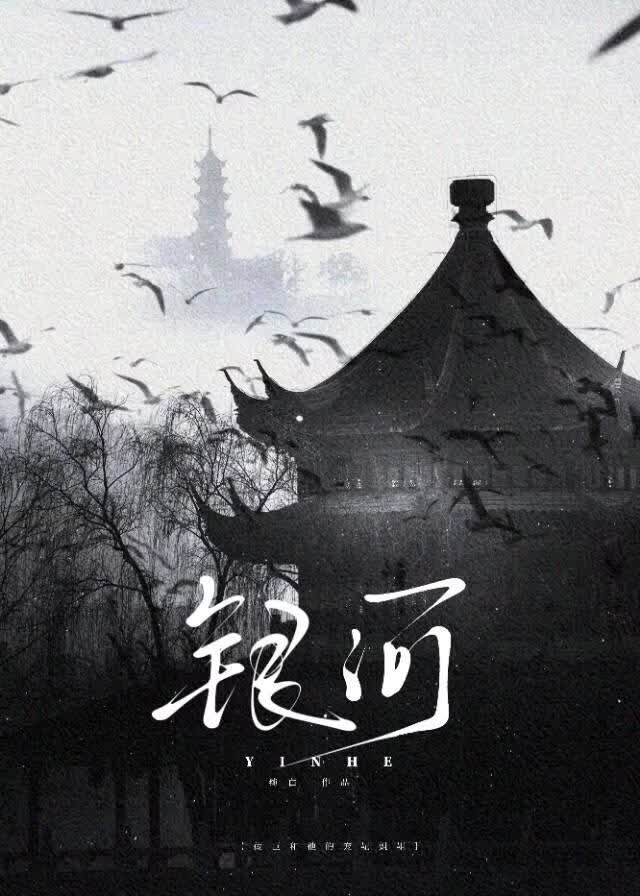


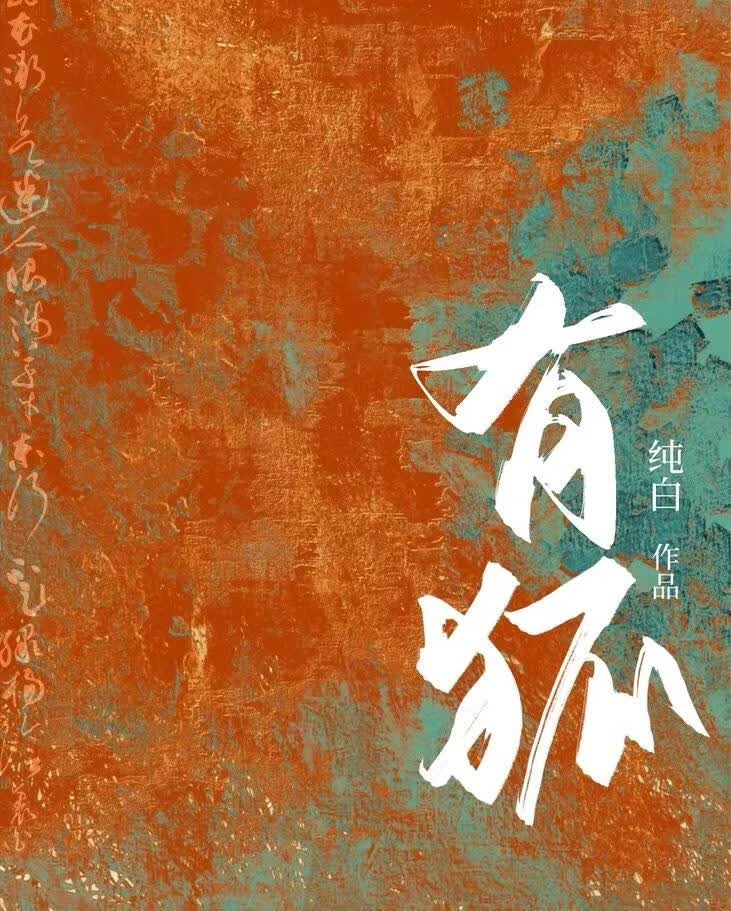
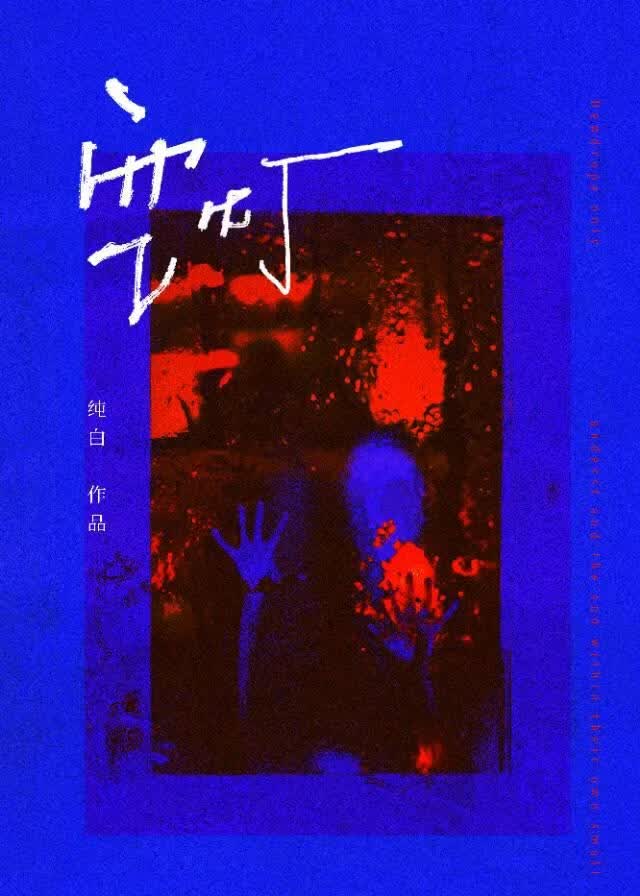

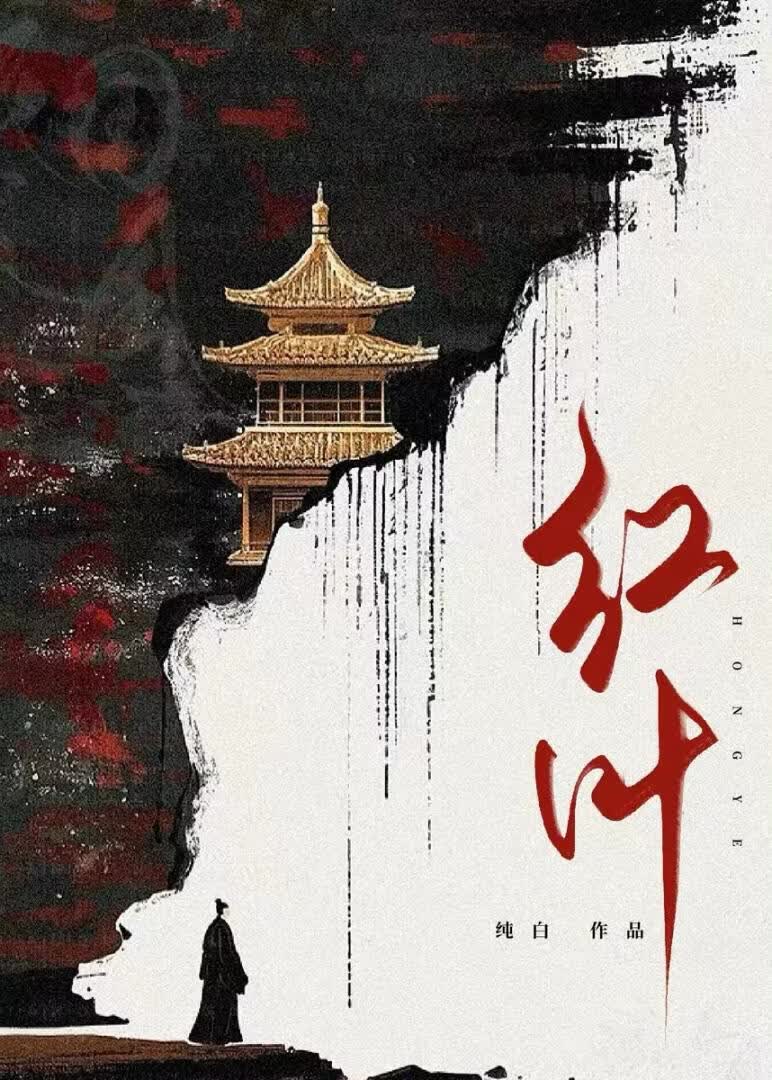
I read this article in a book a few years ago and read it countless times. Unfortunately, I lost the book in the end. I only remember the plot and the protagonist's name: Hebi. This article has so much staying power that I suddenly remembered this novel in 2019. I couldn't remember the name of the novel, so I started looking for a needle in a haystack on Baidu. It took me a long time to find it. I also saved the webpage and printed it out. I started working this year and started looking for a needle in a haystack again. I finally found it. For this article, I registered a Jinjiang account and spent a long time researching before I found a place to write a comment. I really like the author's writing style. The two protagonists are really as bright as the moonlight to me. I cried every time I watched it, and started to shed tears when I read the first sentence. Every time I watched it, I wondered whether Hebi liked the little emperor, and it felt very uncomfortable whether he liked it or not. The little emperor's love was awkward and straightforward, I wonder if Hebi could see it. The little emperor started to know Hebi when he was 5 years old. It took him 9 years to build up his mind about Hebi. He got to know him for 3 years. The days before and after were spent in missing him. The author's emotional description is so powerful. Special thanks to the author for letting Bai Ze give the little emperor a hug when saying goodbye. Thank you very much.
To the north of the road, Bai Ze is the fantasy of childhood, the ignorance and nostalgia of youth, and the lingering thoughts for the rest of my life. Underneath the secretive surface is a paranoid, fragile heart that longs for warmth. The parting hug made him finally let go of Bai Ze, and also allowed him to finally reconcile with his own emotions; Lu Zhibei is more like a younger brother to Bai Ze. He Bi knew Lu Zhibei's feelings for him. The deliberately maintained distance between the emperor and his ministers may not be an insurmountable limit; the complaint of "the first person around the emperor, can he have a term that is not so confusing to everyone?" And the title of "that child" seem to reflect this idea. But Bai Ze actually deliberately indulged Lu Zhibei, indulged him in trying to keep him again and again, indulged him in getting closer to him intentionally or unintentionally, and even tolerated his "love" for him (Bai Ze repeatedly emphasized to the emperor deliberately) Ye Yu secretly killed him. When I first brushed it, I thought that the emperor fell in love with Ye Yu first, and then fell in love with He Bi; I thought that He Bi would only love Ye Yu for the rest of his life; After swiping and swiping again and again, I realized that Lu Zhibei actually fell in love with He Bi at first sight, but at a time of national crisis, his emotions were complicated (and often covered up); looking at Bai Ze, he felt more friendship for Ye Yu than affection. Using Xiao Lin's mouth to convey the message of death cast a veil over the matter of "Bai Ze's death", making Lu Zhibei never forget him for the rest of his life. Bai Ze's emotions are hazy and ethereal, making people think. Family affection and love are as real as they are illusory. "Royal Street Stop" comments: "Drink the mellowest wine in the world, sleep with the most beautiful woman in the world, and sheath the sharpest sword, making that person sit in the imperial chair day after day, and the memory will be unforgettable and the memory will be difficult to get rid of." Alluding to Hebi and Lu Zhibei. Unknowingly, the emperor embarked on the same path as the late emperor. The difference between "Hebi" and "Hebi" represents the surging of secret thoughts and the final release of the inner demons that have been difficult to let go of for a lifetime. The acacia tree falls silently, has an old friend ever been here?
(Sigh) It's all twisted and twisted. ... As long as someone hits a straight ball, it may not be like this. But it's still an exaggeration, and it's very well written!
The extra chapter uses a pseudonym to solve the last mystery for us, which is the truth about the Ye Yu incident. I actually guessed it before, but alas
2333... It's so exciting to see Hebi! I am from Hebi City, Henan Province
It's over! Time flies so fast. I first read my wife's book when I was in college. Now I have graduated and started working, and Wei has grown up. After it was finished, I felt a little bit lost. I used to open the collection first thing in the morning to see if my wife had updated. Now, oh wow, I have started to miss Wei.
BE... The little emperor will never get Hebi's love?
After reading it, I felt really disappointed
I came back for a second brush and it was still amazing.
Bai Bai, you know how to harm people so well.
I rewatched it again, and I still feel a little bit confused.
"The bright white horse is in the Bikong Valley." This was the first sentence that came to Lu Zhibei's mind after seeing Qin Hebi. This description of Qin Hebi runs through the entire article, and also expresses and condenses Lu Zhibei's feelings. I think it may also be regarded as one of the "literary eyes" of this article: that bright, beautiful, jade-like but irresistible white horse, is it not Qin Hebi? The king who cherishes love, attachment, appreciation and finally lets go, isn't he the north of the road? "Preface to Mao's Poems" believes that this poem is about the official's assassination against King Xuan of Zhou Dynasty for not being able to retain wise men in the court. Some people think that this is a poem about King Wu of Zhou Dynasty sending a Jizi as a farewell gift. Because the Yin people loved white, the white pony was a nobleman from the old era; some people think that it was a poem given by the king who wanted to keep his ministers but could not, so he released them into the mountains and forests. One person wants to go and the other wants to stay, but there is no heart-breaking breakup, just gentle attachment, longing and even final relief. Isn't this gentle sentiment a reflection of their relationship? Qin Hebi is a man who goes and comes back. At first, when he came back, there were some doubts and doubts in Lu Zhibei's love at first sight: "Is it the glory of a very human minister that he is attached to, or is it a more profound conspiracy?" From temptation to entrustment, to complete destruction - "It's not bad to die in the hands of such a powerful person." Later, he left again, "I will bid farewell to His Majesty at the beginning of the month." Qin Hebi clearly knew his own life experience and the emperor's feelings for him. He understood the emperor's subtle and unfinished thoughts and his increasingly closed love network. Has he ever been moved during this? I think there is, whether it is the enlightenment that the fourteen-year-old emperor "fell back to where he was and jumped up again" at the moment when he showed his strategy, or the palace maid Qiyun who was a bystander and felt the touch of "it would be fine if they stayed like this forever". Family affection, love, appreciation, and isolation are all mixed together, allowing this white horse to stay in the temple for some days, "to maintain it for the sake of eternity." Just like the barriers between the Yin people and the Zhou people, the barriers between the city and the countryside and the temples, and the barriers between ministers and kings, the time of detention cannot withstand the natural chasm of fate. Suddenly I remembered the lyrics that were popular a long time ago, "My white horse, run slower, I won't take you home this time." I thought of the knight-errant in Cao Zhi's "The White Horse" who looked at death but never came home. The pull between freedom and family affection, freedom and love, freedom and responsibility, is probably the image of a jade white horse itself. Lu Zhibei is a very good emperor image. He is ruthless, and as a power animal, he transcends the so-called traditional family ties - father, mother, uncle. "Those who don't harm me are my relatives. If I don't want to give it to him, he can't take it away. If he takes it away, he will die." This is a quality often possessed by winners in the power vortex. But he is passionate. His sustenance, his sustenance for family affection, his sustenance for beauty, his sustenance for love, are tied to an almost impossible person. From childhood curiosity to adoration when they first met, his love is completely idealized and romantic. He separates the cruelty of reality from the beauty of fantasy, and uses the latter to support the progress of the former. He is a realistic person who lives in the harshest environment, yet he has supported him almost all his life with this unforgettable passion - we die in each other's hands, or melt in a warm embrace, needless to say, it is both good. This is probably the unique style of Mr. Wang and Sun, a kind of allowance for self and love - you are looking at the scenery on the bridge, and the people in the window are looking at you. I thought of a love poem I read recently that was written by a real emperor in history: "When the lion trembled for fear of my angry claws, fate made me become the prey of an antelope with full autumn water." Although Bai Ze cannot be regarded as an "antelope with full autumn water", this kind of overturning of the strength and weakness of fate caused by love always makes people feel very strange and beautiful. The author's work contains a large number of implicit image descriptions and metaphors, as well as prophecies and implicit remarks about the fate of the characters. From the beginning to the end, the puzzles are solved layer by layer, and the mystery of each puzzle is always more or less hinted and revealed in the previous text. I really like this kind of detailed and close writing style, which is very implicit and has a classical taste. The hug at the end and the words "Hebi" are really like the most beautiful dream within a dream, and also like a shout in the ethereal reality. The king and his ministers have a dream, and their names are empty now and in ancient times. A very beautiful, long and melancholy story.
It's really beautiful. As a straight man, I really like the author's writing style. After thinking about it, the author's words and the first sentence are worthy of scrutiny. One paragraph can be worth one chapter of an ordinary online article, and it is endlessly memorable after reading it. Thanks to the author
I have a question Is Bai Ze really dead? So sad?
I think the emperor likes Ye Yu, wants to be friends with Hebi, and wants to kill him. He longs for family affection, but is also afraid, and looks forward to and bored with friends. He longed for companionship and someone to understand him, but he had to push away and lose him again and again.
So it was someone sent by the emperor who killed Ye Yu, right? The emperor didn't like Ye Yu, right? Then Hebi liked both the emperor and Ye Yu? Yeah
If there was no final northern battle in Nirvana in Fire, according to the original plan, would Mei Changsu have left the world and Prince Jing would have disappeared in this life?
One brush to chew peonies, or two brushes?
Has Bai Ze ever liked the little emperor?
There were so many twists and turns, the Queen Mother, the King of Jin, and Hebi, I was constantly shocked all the way. And I thought that the rumors outside were so true and that the late emperor was really related, but it turned out that I was gullible, and it was one thing and not the other. The information Xiaolin brought out later put me under control, but He Bi always knew about these things. Doesn't that mean that he has also been conniving and assisting Bei? But maybe they themselves can tell clearly what their thoughts are. Baize was to the late emperor, Hebi was to Bei, Hebi was to himself, Ye Yu was to him, the unestablished prince, the people who passed away and the words buried in his heart all returned to dust in the end.
Is this actually a double misunderstanding?
These two uncles and brothers have so many twists and turns, but I seem to be on the wrong side. I want to watch [Fireworks] again.
It's really great to write in big letters! Originally I didn't watch BE very much, but it was written so well that I was heartbroken while watching it...
My heavenly brother, this relationship is really entangled and beautiful.
Finished reading, Qi Qiran, woo woo woo
Ahhhhhhhhhhhhhhhhhhhhhhhhhhhhhhhhhhhhhhhhhhhhhhhhhhhhhhhhhhhhhhhhhhhhhhhhhhhhhhhhhhhhhhhhhhhhhhhhhhhhhhhhhhhhhhhhhhhhhhhhhhhhhhhhhhhhhhhhhhhhhhhh.
Why can't I read Chapter 2? ? ?
Damn, do you have a Weibo account? Beg. Have an idea to write a novel? Want to see.
When I saw the extra, I was suddenly confused. These names... Who are they?
This is great. My wife wrote it. Will you write about Danmei again in the future?