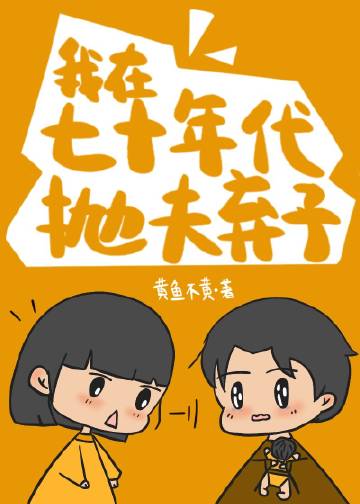
What is even worse than dressing up in the 1970s, when there was no air conditioning or mobile phones, is dressing up as a villain mother who abandons her husband and son.
According to the plot development in the book, after the college entrance examination is resumed, Qin Dongrui will be admitted to university, hide her married status, hook up with the dean's son, and finally resolutely abandon her husband and son to remarry someone else. However, after the lie is exposed, she ends up miserable and freezes to death on the street at the age of forty.
After receiving the original plot, Qin Dongrui looked at the little Douding crying for her mother and the serious-faced husband who was holding Little Douding to divorce her. She swallowed in horror and asked with a guilty conscience, "This marriage... Can I divorce her in the future?"
Unexpectedly, as soon as the matter dragged on, the divorce was never finalized. Not only did she gain a caring little baby, but she also gained a little baby's father.
My preview article: "Dressed as a Bitter Heroine of the 1970s"
Copywriting: Tong Cai traveled to the 1970s and became a heroine.
The book said that she would be abandoned by her first love when she was nineteen years old; she was always willing to help others and treat others sincerely, but she was always misunderstood and framed; she picked up three cubs and had to endure hardships to raise them, and they all grew into white-eyed wolves. The first half of her life was full of ups and downs and hardships.
Finally, she reconnected with her first love when she was in her thirties, and gave birth to a pair of twins for him at the age of thirty-five, achieving a happy ending with a happy family reunion.
Tong Cai, who had just traveled through time, took a look at the script and said that it was okay not to have such an ending.
Her happiness must be fought for by herself!
Concept: The male protagonist gets rich while the female protagonist concentrates on academics
Reader comments
Before I saw the author, I thought Jinjiang was hopeless, but now I realized that Jinjiang's home page recommendation was hopeless.
Last night I saw "Literary Invasion" while browsing Jinjiang aimlessly. Click on the title of the book, open the copy, glance twice, close it, and continue aimlessly... Ten minutes later, forget it, Jinjiang is only at this level, at least the title is interesting, so let's take a look at the content first. Two hours later, lie down! There are authors with such literary quality in Jinjiang! Then I opened the column and browsed the works. Zhao? Ah q? Can.
The author's writing is not very good in Jinjiang. It's not about the structure and structure of the novel. There were many such Jinjiang masters in the past. It's more of an ideological thing. I feel like the author knows a lot about literature, politics, history (especially the history of a certain D), so at first I wondered if it was a male author, but after reading dozens of chapters, I thought it wasn't the author. After all, it's not greasy at all (sorry, I found that I have too many stereotypes about both men and women o>_<o).
Although the author is still a little green (I mean compared to real literary works, it is similar to the original work that won the Contradictory Literature Award), but at least 99% of Jinjiang's writing can be compared.
I'm so sleepy that I don't even know what I'm talking about. In short, it's been a long time since I've seen an author with such empathy and a broad perspective. I look forward to it.
I was also planning to see how Xiaoye sacrificed himself, but I didn't know.
Before I saw the author, I thought Jinjiang was hopeless, but now I realized that Jinjiang's home page recommendation was hopeless. Last night I saw "Literary Invasion" while browsing Jinjiang aimlessly. Click on the title of the book, open the copy, glance twice, close it, and continue aimlessly... Ten minutes later, forget it, Jinjiang is only at this level, at least the title is interesting, so let's take a look at the content first. Two hours later, lie down! There are authors with such literary quality in Jinjiang! Then I opened the column and browsed the works. Zhao? Ah q? Can. The author's writing is not very good in Jinjiang. It's not about the structure and structure of the novel. There were many such Jinjiang masters in the past. It's more of an ideological thing. I feel like the author knows a lot about literature, politics, history (especially the history of a certain D), so at first I wondered if it was a male author, but after reading dozens of chapters, I thought it wasn't the author. After all, it's not greasy at all (sorry, I found that I have too many stereotypes about both men and women o>_<o). Although the author is still a little green (I mean compared to real literary works, it is similar to the original work that won the Contradictory Literature Award), but at least 99% of Jinjiang's writing can be compared. I'm so sleepy that I don't even know what I'm talking about. In short, it's been a long time since I've seen an author with such empathy and a broad perspective. I look forward to it.
I was also planning to see how Xiaoye sacrificed himself, but I didn't know.