["Full of Blessings in the 1970s" and "After I Was Welcomed to Earth, I Married the Bankrupt Richest Man" please receive advance notice.
Xia Yuchun, who is addicted to small business games, became the top rich woman in the gaming world who just received a 2 billion inheritance after a night of fun. Just when she was planning to enjoy this wonderful rich life, she discovered that things in this world were so cheap. The more money she had, the more money she had, and the more money she had, the more money she had.
Xia Yu became a pure Buddha, recognized it, and wanted to go back.
But there are conditions for going back. Unless you spend all the two billion, don't even think about leaving.
Xia Yuchun felt that she alone might not be able to spend so much money in several lifetimes.
Okay, then go outside and pick someone who knows how to spend money to play with and raise. She will pay and the other will help. Both parties will get what they need, and life will be happy.
Yu Jingchen felt that he was so miserable. Not only did he come into this strange world for no reason, but he also became a second-generation negative person with four properties in his hands. Unless he manages these stores to the largest and strongest level, he will never leave. However, he was penniless and powerless.
Fortunately, he was lucky, and he was picked up by the little rich woman and took her home soon. From then on, he went further and further on the road to please the (not) rich woman.
Game enthusiasts have a pseudo-white, rich, American and European heroine and a non-chieftain hero who got stuck on the first level.
——————
Please give me advance notice of the follow-up article "Full Blessings in the 1970s"~
The people of the Mi family discovered that something had changed since their youngest daughter Tiantian was hit by a stone and woke up.
Old man Mi and Mrs. Mi gave Tiantian the biscuits that they were reluctant to eat. The next day, they took Tiantian to the fields and were suddenly praised by the team for their hard work!
The eldest aunt took out the materials she was reluctant to use and made new clothes for Tiantian. She held her in her arms and had a close relationship. Not long after, she was diagnosed with the pregnancy, and the rumor that she could not have children was broken!
My cousins took Tiantian with them wherever they went, and they had a lot of harvest every day. They caught chickens, picked up eggs, and even dug out an old wild ginseng!
Mi's parents and Mi's mom took Tiantian to the town, just in time for the factory to recruit workers, and the two became regular workers that everyone envied!
Everyone in the village said that Xiao Tiantian survived a catastrophe and was blessed with good luck! As long as they are good to her, they can also have good luck.
As for the consequences of treating Xiao Tiantian badly, please take a look at the second aunt who has done all kinds of bad things: divorced, broken leg, even her own children don't want to talk to her, think she is a house spoiler, don't you want to live a good life?
Only Xiao Tiantian knew clearly that she was not favored by God. It was clear that the stone that hit her had turned into a sparkling crystal ball. It not only gave her a halo of good luck, but also helped her predict the next day's luck every day, so that she could go out with good luck.
After all, she won't go out when she's unlucky. She can't learn from the little unlucky guy next door.
——————
Please give me advance notice of the follow-up article "After I Was Welcomed to Earth, I Married the Bankrupt Richest Man"~
The seven-color flower fairy Liucai was welcomed down to earth.
As soon as she arrived in the world, she saw the man: his eyes were empty and he was lying on the bed sickly. Surrounded by a circle of top relatives, they were fiercely fighting for and calculating his inheritance. He was weak, pitiful and helpless.
She helped the man drive away his best relatives, took him away from the hospital, and taught him many skills.
Liucai: You are no longer the richest man. Don't let the gap be too big. Work hard and make money, and you will definitely be able to live a good life again!
Man: ... Okay.
.
Later.
Netizens discovered that the nutritionist, makeup artist, and costume designer of Liucai, who had transformed from an 18th-tier internet celebrity to a trending queen, were actually the same person. That person seemed to be her brother.
Lemon Essence Netizens: Give me a brother like this!
And later.
Netizens also discovered that Liucai and a man behaved intimately, with their fingers intertwined. The man looked familiar. It seemed that he was Fu Jinge, the richest man in bankruptcy in the past, and he was about to return to the position of the richest man again.
Netizens who are confused: Is "brother" actually this "Gege"?
.
After being together.
Fu Jinge reported to his girlfriend the assets he owned: N companies, N luxury cars, N mansions, N overseas islands... Plus countless cash.
Liucai looked confused: What if we agreed to go bankrupt?
Fu Jinge kissed the corners of her lips and smiled flirtatiously: Baby, may you have any misunderstandings about me?
Liucai:! ! !
Intention: Face difficulties with optimism.
Reader comments
"Let me live up to the Tathagata and live up to you"
Qing Dynasty Cangyang Gyatso
Beauty is not born from a mother's womb, but should be grown from a peach tree.
I hate that peach blossoms fall easily, but the falling flowers are more sentimental than yours.
Practice stillness and contemplation in quiet time, and experience the lover hanging in front of you.
If we use this mind to learn the Tao, what difficulty will it be to become a Buddha?
We are united in our hearts and bound together, even though this life is short and lingering,
On the day when I meet you again, I am a young man standing in the wind under the jade tree.
Not observing birth and death and impermanence, but going through reincarnation toward death,
Extremely smart and thoughtful, I lament that he is always confused here.
The wild horse on the mountain is difficult to tame, and even if it is trapped by an opportunity, it cannot be controlled.
I lament that my magical powers are empty and full, but I cannot tame the person beside my pillow.
I want to lean against the green window and accompany you, but I regret my misguided life.
I have the heart to go to the jungle with my bowl, but I have no love for the beautiful woman.
Sit quietly and practice contemplation to open your eyes, and pray to the Three Jewels to descend on the spiritual platform.
Have you ever seen all the saints in the contemplation? Don't invite your lover but come by yourself.
He went to the mountain to pay homage to a Taoist monk, and asked his master for advice.
There is no arrest in the fight for lovesickness, and the desire to be with you is so great.
I once worried that being passionate would harm my holy life, and when I entered the mountains, I was afraid that I would not be able to live in a beautiful city.
In this world, there is peace and harmony, and I will live up to the Tathagata and live up to you.
(Note: The original text is in Tibetan, and this poem was translated into Chinese by Mr. Zeng Mian)
Most of the poems circulated on the Internet originated from the sixth Tsangyang Gyatso: "I was worried that being passionate would harm the holy life, and I was afraid that I would fall in love when I entered the mountain. (It is also said that I was afraid that being passionate would harm the holy life, and I was afraid that I would fall in love by mistake when I entered the mountain.) In this world, I have two things to live up to, and I will live up to the Tathagata and live up to you." Meaning: If you are emotional, you have failed the Tathagata (Buddhism); if you are not emotional, you have failed "her" (love does not refer to the first love Ren Zeng Wangmu, but Yu Qiongzhuoga).
Tsangyang Gyatso was a born living Buddha and a famous poet in Tibet, but he was also a lover. He was brought to the Potala Palace from the people at the age of fifteen. Before that, he had been receiving customary education on marriage. His status as a living Buddha prevents him from being with his lover, and his passion cannot be tolerated by secular etiquette.
Author introduction
Tsangyang Gyatso (1683.03.01-1706.11.15), The sixth generation of the Monba tribe, whose Buddhist name is Lobsang Rinchen Tsangyang Gyatso, is a famous poet and political figure in Tibetan history. In the 22nd year of Kangxi (1683), Tsangyang Gyatso was born into a serf family in Wujianlin Village, Yusong District, at the foot of Menyu Nala Mountain in southern Tibet. His father, Tashi Tenzin, and his mother, Ciwang Lhamo. The family has believed in Nyingma Buddhism for generations. In the thirty-sixth year of Kangxi's reign (1697), he was recognized as the fifth reincarnated soul boy by the then Tibetan regent Diba Sangye Gyatso. In the same year, an enthronement ceremony was held in the Potala Palace under the auspices of Sangye Gyatso. He was deposed in the forty-fourth year of Kangxi (1705) and passed away while being escorted in the forty-fifth year of Kangxi (1706). Tsangyang Gyatso is the most representative folk poet in Tibet. He wrote many delicate and sincere poems, the most classic of which is the Lhasa Tibetan woodcut version of "The Love Song of Tsangyang Gyatso".
Biographies
early years
In the 22nd year of Kangxi's reign (1683), Tsangyang Gyatso was born into a family that believed in the Red Sect of the Nyingma sect of Tibetan Buddhism in the Yusong area at the foot of the Dawang Nala Mountain in the southern gate of Tibet. His father Tashi Tenzin and his mother Ciwang Lhamo. Tsangyang Gyatso's native place is the Monba ethnic group. Tsangyang Gyatso is the only person who is not of Tibetan or Mongolian origin. Tsangyang Gyatso's original name was Jimei Dorje Xiejiagonqin, and he worked with his mother since he was a child. But as early as February 25, the 21st year of Kangxi (1682), in the newly rebuilt Potala Palace, the fifth generation Lobsang Gyatso passed away. His close disciple Sangye Gyatso, in order to continue to use the fifth generation, lost his life. The authority of □ was in charge of the affairs of the Gelug Sect (Yellow Sect) of Tibetan Buddhism. He did not announce his funeral secretly, but announced to the outside world that □ had "entered concentration" and practiced indefinitely. He lived quietly in a high cabinet and saw no one coming. All affairs were handled by "Diba". In Tibetan, Diba means the highest official appointed by the government to manage the administrative affairs of Uizang, commonly known as the "King of Tibet". The Diba at that time was Sangye Gyatso. While Sangye Gyatso deceived the monks, the people and Emperor Kangxi, he quickly sent people to the people to find the reincarnated soul boy. In this way, once the truth was revealed in the future, he could immediately welcome the sixth generation into the palace. The location to search for the reincarnated soul boy was chosen at the foot of Nala Mountain in Menyu, southern Tibet. It is remote, stable and easy to keep secrets, and most of the people there believe in the Red Sect, the Nyingma sect of Tibetan Buddhism. The birth of a Yellow Sect leader will be conducive to the expansion of the Yellow Sect's power. According to the rules of the Yellow Sect at that time, whichever baby grabbed the relics of the previous life was proved to be the reincarnation of the baby. A serf's son named Cangyang Gyatso was selected in this way, but Sangye Gyatso's envoy did not tell the child's parents about their intentions.
In the twenty-fourth year of Kangxi's reign (1685), Sangye Gyatso found Cangyang Gyatso.
In the thirty-fifth year of Kangxi's reign (1696), while suppressing the rebellion in Junggar, Emperor Kangxi accidentally learned from the captives that the fifth emperor of Tibet had passed away for many years. The leader of the Junggar tribe in Mongolia is Galdan. In his early years, he went to Tibet to "seek refuge and learn the Samana Dharma." He had a close relationship with Sangye Gyatso, who was studying at the time. After the two took charge of Mongolia and Tibet respectively, Sangye Gyatso had always hoped to unite Galdan's troops to enhance the strength of the Yellow Sect. Therefore, the prisoners of the Junggar tribe knew the inside story of Lhasa. Kangxi was very angry and wrote a letter to severely accuse Sangye Gyatso. While Sangye Gyatso admitted his mistake to Kangxi, he sent people to Menba to welcome the reincarnated soul boy.
In the thirty-sixth year of Kangxi's reign (1697), Cangyang Gyatso was selected as the "reincarnated soul boy" of the fifth generation. At this time, Cangyang Gyatso was 14 years old. In September of that year, he arrived in Lhasa from southern Tibet. When passing through Langkazi County, he took the fifth generation Lobsang Yeshi (1663-1737) as his teacher. He shaved his hair and received the novice ordination, and took the Buddhist name Lobsang Rinchen Tsangyang Gyatso. On October 25 of the same year, an enthronement ceremony was held at the Potala Palace in Lhasa, and he became the sixth generation.
Lama period
In the Potala Palace, Tsangyang Gyatso was strictly supervised in studying scriptures and cultivating Taoism. He often went out of the courtyard to relax, and the old scripture masters followed him step by step, begging him to continue studying scriptures for fear of being scolded by Diba. Cangyang Gyatso was born in a Red Sect family. Red Sect rules do not prohibit monks from marrying and having children, while Yellow Sect strictly prohibits monks from approaching women, let alone getting married and starting a family. It was difficult for Tsangyang Gyatso to adapt to all the red tapes of the rules and regulations.
Although Tsangyang Gyatso has the reputation of being a leader, he has no real power. Diba has been in power for a long time, and he can only exist as a puppet. Being imprisoned in life and being manipulated politically, Tsangyang Gyatso was depressed and simply indulged in sensuality. This was not only due to his yearning for freedom and love, but also his deliberate rebellion against imposed disciplines and tactics. Just like what he wrote in his famous poem: "Living in the Potala Palace, I am the biggest king in the snowy land. Wandering on the streets of Lhasa, I am the most beautiful lover in the world." According to legend, at night, he changed his name to Dasang Wangbo, and as a noble son, wandered in restaurants and houses on the streets of Lhasa. Later, he "dressed in casual silk and satin clothes, wore rings on his hands, and had long hair. He was obsessed with singing and dancing, and stayed in a women's home outside the palace at night."
Political conflict
At this time, Tibet was experiencing political turmoil and political conflicts had reached an extremely acute period. As early as the late Ming Dynasty and early Qing Dynasty, in order to gain the right to rule Tibet, the Yellow Sect united with the Heshuote tribe, one of the four Mongolian tribes, and used force to defeat Zangba Khan and the Karma Kagyu sect that were in power in Tibet at that time. However, after the Heshuote troops won victory in Tibet, they remained stationed there for a long time and refused to retreat. There was a huge disparity in strength between the Yellow Sect and the Heshuote tribe, and they were never able to regain power. After the death of the fifth generation, Sangjie Gyatso began his struggle with King Heshuote Khan. Some current Tibetan history researchers believe that the actions of Sanggye Gyatso that have been criticized by the past generations were all to defeat the Heshuote tribe to obtain national autonomy, such as not announcing funerals secretly, asking the Qing government to be crowned king in the name of the fifth generation, using the military power of Junggar, etc. They cannot simply be regarded as a personal conspiracy to usurp power.
In the 40th year of Kangxi's reign (1701), Gushi Khan's great-grandson Lhasang Khan succeeded to the throne, and the conflict with Diba (King of Tibet) Sangjie Gyatso became increasingly acute.
In the forty-fourth year of Kangxi's reign (1705), Sangjie Gyatso finally decided to strike first. He secretly sent people to poison the food of Heshuote leader Lazang Khan, but was discovered. Lazang Khan was furious and immediately mobilized an army to defeat him. The Tibetan army killed Sanggye Gyatso and sent a letter to the Qing government reporting that Sanggye Gyatso had rebelled. They also reported that Tsangyang Gyatso, the sixth leader established by Sanggye Gyatso, indulged in drinking and sex and ignored religious affairs. He was not a real leader and should be demoted. Emperor Kangxi then issued an edict: "Lazang Khan has sent an imperial edict to the capital because he has deposed Sangjie and established the sixth generation."
Passed away in old age
In the forty-fifth year of Kangxi (1706), Cangyang Gyatso sat down to meditate when he was escorted to the shore of Qinghai Lake and passed away.
Which anime is Ai Ge? I saw it in Fantasy Carnival. But I don't know which anime it is, please explain.
I used to like these three people, but after seeing this, I want to vomit. I'm quitting the Clover Alliance, I'm going to join the planet fans, my God, why are they tfboys again? I'm going to vomit after watching this...

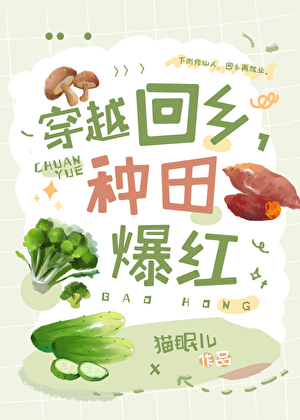 Traveling Back to My Hometown, Farming Became Popular
 I Have a Building in the Countryside
 I'm Doing Ah Piao in the Interstellar
 After Participating in a Variety Show as a Substitute for the Flower Fairy, She Became Famous All over the Internet.
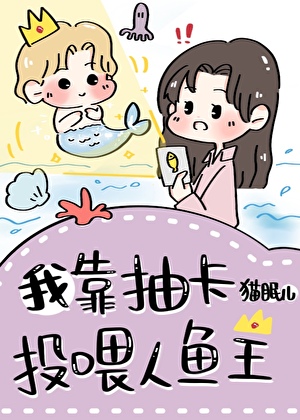 I Feed the Mermaid King by Drawing Cards
 The Seventies Were Full of Blessings
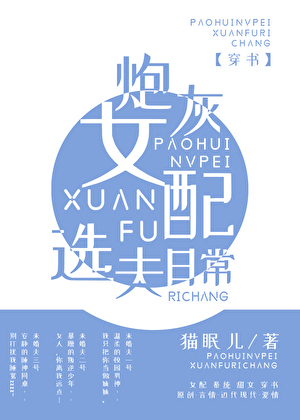 The Daily Routine of a Cannon Fodder Female Partner in Choosing a Husband [Chuishu]
 Farm with Interstellar People
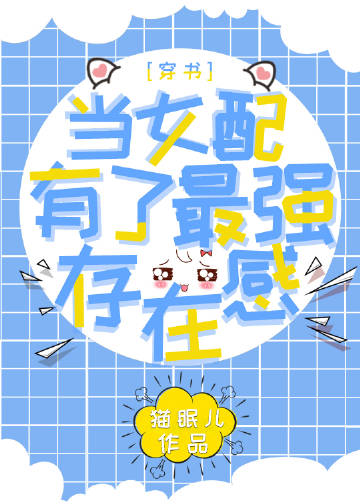 Being a Female Partner Has the Strongest Sense of Presence [Puishu]
"Let me live up to the Tathagata and live up to you" Qing Dynasty Cangyang Gyatso Beauty is not born from a mother's womb, but should be grown from a peach tree. I hate that peach blossoms fall easily, but the falling flowers are more sentimental than yours. Practice stillness and contemplation in quiet time, and experience the lover hanging in front of you. If we use this mind to learn the Tao, what difficulty will it be to become a Buddha? We are united in our hearts and bound together, even though this life is short and lingering, On the day when I meet you again, I am a young man standing in the wind under the jade tree. Not observing birth and death and impermanence, but going through reincarnation toward death, Extremely smart and thoughtful, I lament that he is always confused here. The wild horse on the mountain is difficult to tame, and even if it is trapped by an opportunity, it cannot be controlled. I lament that my magical powers are empty and full, but I cannot tame the person beside my pillow. I want to lean against the green window and accompany you, but I regret my misguided life. I have the heart to go to the jungle with my bowl, but I have no love for the beautiful woman. Sit quietly and practice contemplation to open your eyes, and pray to the Three Jewels to descend on the spiritual platform. Have you ever seen all the saints in the contemplation? Don't invite your lover but come by yourself. He went to the mountain to pay homage to a Taoist monk, and asked his master for advice. There is no arrest in the fight for lovesickness, and the desire to be with you is so great. I once worried that being passionate would harm my holy life, and when I entered the mountains, I was afraid that I would not be able to live in a beautiful city. In this world, there is peace and harmony, and I will live up to the Tathagata and live up to you. (Note: The original text is in Tibetan, and this poem was translated into Chinese by Mr. Zeng Mian) Most of the poems circulated on the Internet originated from the sixth Tsangyang Gyatso: "I was worried that being passionate would harm the holy life, and I was afraid that I would fall in love when I entered the mountain. (It is also said that I was afraid that being passionate would harm the holy life, and I was afraid that I would fall in love by mistake when I entered the mountain.) In this world, I have two things to live up to, and I will live up to the Tathagata and live up to you." Meaning: If you are emotional, you have failed the Tathagata (Buddhism); if you are not emotional, you have failed "her" (love does not refer to the first love Ren Zeng Wangmu, but Yu Qiongzhuoga). Tsangyang Gyatso was a born living Buddha and a famous poet in Tibet, but he was also a lover. He was brought to the Potala Palace from the people at the age of fifteen. Before that, he had been receiving customary education on marriage. His status as a living Buddha prevents him from being with his lover, and his passion cannot be tolerated by secular etiquette. Author introduction Tsangyang Gyatso (1683.03.01-1706.11.15), The sixth generation of the Monba tribe, whose Buddhist name is Lobsang Rinchen Tsangyang Gyatso, is a famous poet and political figure in Tibetan history. In the 22nd year of Kangxi (1683), Tsangyang Gyatso was born into a serf family in Wujianlin Village, Yusong District, at the foot of Menyu Nala Mountain in southern Tibet. His father, Tashi Tenzin, and his mother, Ciwang Lhamo. The family has believed in Nyingma Buddhism for generations. In the thirty-sixth year of Kangxi's reign (1697), he was recognized as the fifth reincarnated soul boy by the then Tibetan regent Diba Sangye Gyatso. In the same year, an enthronement ceremony was held in the Potala Palace under the auspices of Sangye Gyatso. He was deposed in the forty-fourth year of Kangxi (1705) and passed away while being escorted in the forty-fifth year of Kangxi (1706). Tsangyang Gyatso is the most representative folk poet in Tibet. He wrote many delicate and sincere poems, the most classic of which is the Lhasa Tibetan woodcut version of "The Love Song of Tsangyang Gyatso". Biographies early years In the 22nd year of Kangxi's reign (1683), Tsangyang Gyatso was born into a family that believed in the Red Sect of the Nyingma sect of Tibetan Buddhism in the Yusong area at the foot of the Dawang Nala Mountain in the southern gate of Tibet. His father Tashi Tenzin and his mother Ciwang Lhamo. Tsangyang Gyatso's native place is the Monba ethnic group. Tsangyang Gyatso is the only person who is not of Tibetan or Mongolian origin. Tsangyang Gyatso's original name was Jimei Dorje Xiejiagonqin, and he worked with his mother since he was a child. But as early as February 25, the 21st year of Kangxi (1682), in the newly rebuilt Potala Palace, the fifth generation Lobsang Gyatso passed away. His close disciple Sangye Gyatso, in order to continue to use the fifth generation, lost his life. The authority of □ was in charge of the affairs of the Gelug Sect (Yellow Sect) of Tibetan Buddhism. He did not announce his funeral secretly, but announced to the outside world that □ had "entered concentration" and practiced indefinitely. He lived quietly in a high cabinet and saw no one coming. All affairs were handled by "Diba". In Tibetan, Diba means the highest official appointed by the government to manage the administrative affairs of Uizang, commonly known as the "King of Tibet". The Diba at that time was Sangye Gyatso. While Sangye Gyatso deceived the monks, the people and Emperor Kangxi, he quickly sent people to the people to find the reincarnated soul boy. In this way, once the truth was revealed in the future, he could immediately welcome the sixth generation into the palace. The location to search for the reincarnated soul boy was chosen at the foot of Nala Mountain in Menyu, southern Tibet. It is remote, stable and easy to keep secrets, and most of the people there believe in the Red Sect, the Nyingma sect of Tibetan Buddhism. The birth of a Yellow Sect leader will be conducive to the expansion of the Yellow Sect's power. According to the rules of the Yellow Sect at that time, whichever baby grabbed the relics of the previous life was proved to be the reincarnation of the baby. A serf's son named Cangyang Gyatso was selected in this way, but Sangye Gyatso's envoy did not tell the child's parents about their intentions. In the twenty-fourth year of Kangxi's reign (1685), Sangye Gyatso found Cangyang Gyatso. In the thirty-fifth year of Kangxi's reign (1696), while suppressing the rebellion in Junggar, Emperor Kangxi accidentally learned from the captives that the fifth emperor of Tibet had passed away for many years. The leader of the Junggar tribe in Mongolia is Galdan. In his early years, he went to Tibet to "seek refuge and learn the Samana Dharma." He had a close relationship with Sangye Gyatso, who was studying at the time. After the two took charge of Mongolia and Tibet respectively, Sangye Gyatso had always hoped to unite Galdan's troops to enhance the strength of the Yellow Sect. Therefore, the prisoners of the Junggar tribe knew the inside story of Lhasa. Kangxi was very angry and wrote a letter to severely accuse Sangye Gyatso. While Sangye Gyatso admitted his mistake to Kangxi, he sent people to Menba to welcome the reincarnated soul boy. In the thirty-sixth year of Kangxi's reign (1697), Cangyang Gyatso was selected as the "reincarnated soul boy" of the fifth generation. At this time, Cangyang Gyatso was 14 years old. In September of that year, he arrived in Lhasa from southern Tibet. When passing through Langkazi County, he took the fifth generation Lobsang Yeshi (1663-1737) as his teacher. He shaved his hair and received the novice ordination, and took the Buddhist name Lobsang Rinchen Tsangyang Gyatso. On October 25 of the same year, an enthronement ceremony was held at the Potala Palace in Lhasa, and he became the sixth generation. Lama period In the Potala Palace, Tsangyang Gyatso was strictly supervised in studying scriptures and cultivating Taoism. He often went out of the courtyard to relax, and the old scripture masters followed him step by step, begging him to continue studying scriptures for fear of being scolded by Diba. Cangyang Gyatso was born in a Red Sect family. Red Sect rules do not prohibit monks from marrying and having children, while Yellow Sect strictly prohibits monks from approaching women, let alone getting married and starting a family. It was difficult for Tsangyang Gyatso to adapt to all the red tapes of the rules and regulations. Although Tsangyang Gyatso has the reputation of being a leader, he has no real power. Diba has been in power for a long time, and he can only exist as a puppet. Being imprisoned in life and being manipulated politically, Tsangyang Gyatso was depressed and simply indulged in sensuality. This was not only due to his yearning for freedom and love, but also his deliberate rebellion against imposed disciplines and tactics. Just like what he wrote in his famous poem: "Living in the Potala Palace, I am the biggest king in the snowy land. Wandering on the streets of Lhasa, I am the most beautiful lover in the world." According to legend, at night, he changed his name to Dasang Wangbo, and as a noble son, wandered in restaurants and houses on the streets of Lhasa. Later, he "dressed in casual silk and satin clothes, wore rings on his hands, and had long hair. He was obsessed with singing and dancing, and stayed in a women's home outside the palace at night." Political conflict At this time, Tibet was experiencing political turmoil and political conflicts had reached an extremely acute period. As early as the late Ming Dynasty and early Qing Dynasty, in order to gain the right to rule Tibet, the Yellow Sect united with the Heshuote tribe, one of the four Mongolian tribes, and used force to defeat Zangba Khan and the Karma Kagyu sect that were in power in Tibet at that time. However, after the Heshuote troops won victory in Tibet, they remained stationed there for a long time and refused to retreat. There was a huge disparity in strength between the Yellow Sect and the Heshuote tribe, and they were never able to regain power. After the death of the fifth generation, Sangjie Gyatso began his struggle with King Heshuote Khan. Some current Tibetan history researchers believe that the actions of Sanggye Gyatso that have been criticized by the past generations were all to defeat the Heshuote tribe to obtain national autonomy, such as not announcing funerals secretly, asking the Qing government to be crowned king in the name of the fifth generation, using the military power of Junggar, etc. They cannot simply be regarded as a personal conspiracy to usurp power. In the 40th year of Kangxi's reign (1701), Gushi Khan's great-grandson Lhasang Khan succeeded to the throne, and the conflict with Diba (King of Tibet) Sangjie Gyatso became increasingly acute. In the forty-fourth year of Kangxi's reign (1705), Sangjie Gyatso finally decided to strike first. He secretly sent people to poison the food of Heshuote leader Lazang Khan, but was discovered. Lazang Khan was furious and immediately mobilized an army to defeat him. The Tibetan army killed Sanggye Gyatso and sent a letter to the Qing government reporting that Sanggye Gyatso had rebelled. They also reported that Tsangyang Gyatso, the sixth leader established by Sanggye Gyatso, indulged in drinking and sex and ignored religious affairs. He was not a real leader and should be demoted. Emperor Kangxi then issued an edict: "Lazang Khan has sent an imperial edict to the capital because he has deposed Sangjie and established the sixth generation." Passed away in old age In the forty-fifth year of Kangxi (1706), Cangyang Gyatso sat down to meditate when he was escorted to the shore of Qinghai Lake and passed away.
Which anime is Ai Ge? I saw it in Fantasy Carnival. But I don't know which anime it is, please explain.
I used to like these three people, but after seeing this, I want to vomit. I'm quitting the Clover Alliance, I'm going to join the planet fans, my God, why are they tfboys again? I'm going to vomit after watching this...