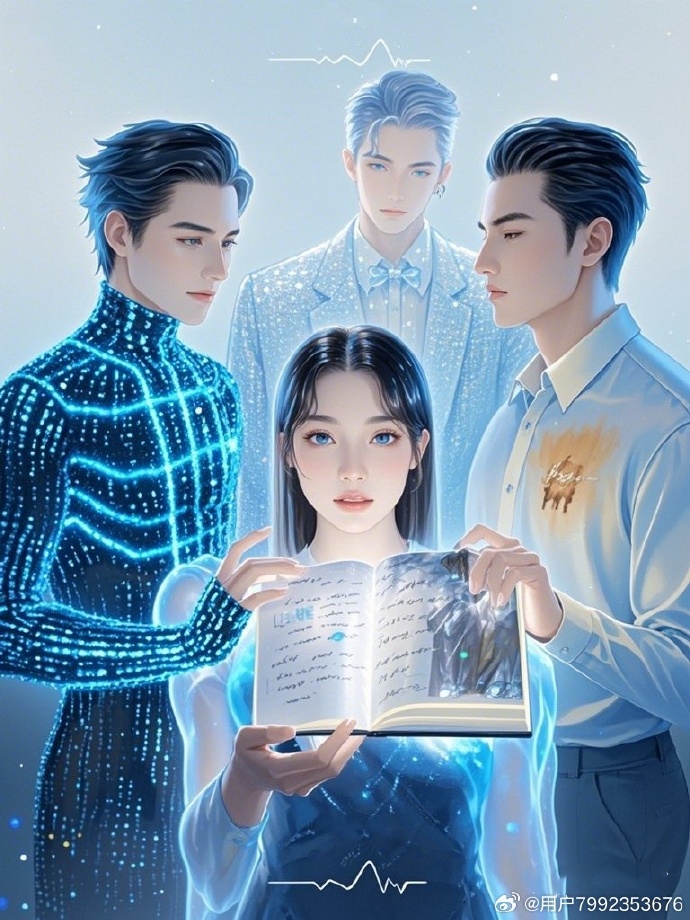
Candy Liu is a frequent visitor to Amber Bar. She has money and leisure, but she is empty inside, and she fills up her loneliness by consuming male sex. She didn't know that she had been targeted by a "person" for a long time.
His name is Chen Yiming, a bartender who sells drinks and is taciturn.
But he has a secret - he is not human.
He is a bionic man who escaped from the laboratory, number 1027-010. In order to obtain a legally existing "host", he carefully calculated for four months and selected Liu Xinyou as his target.
He approached her, pretending to be an unexpected "wild model" to strike up a conversation, and used algorithms to simulate human emotions step by step, trying to become the person she "can't live without".
He thought it was a perfect data simulation. He had calculated her habits, her thresholds, and her weaknesses - but he didn't expect that she would jump on the black car on his escape route; he didn't expect that after he confessed his identity, she would say, "You are the only person I want to live with."
When his wanted order spread throughout the city, when the laboratory's recycling team came to the city, when her "guardian" uncle raised the butcher knife - for the first time, he discovered that there was an error of "reluctance" in his system.
The ultimate contrasting character design: the rational to cold android vs. The rich girl who is strong on the outside but lacks love on the inside, reflecting on the loneliness and hypocrisy of "humans" from an "inhuman" perspective.
The emotional upgrade line is clear: from "calculation" to "loss of control", from "disguise" to "sincerity", the emotional turning points are dense, and the exciting points are intertwined with the sad points.
Intention: When the algorithm learns to "feel distressed", and when the program begins to "reluctantly" - how should we define "people"? "Love in the Heart" tells the story of an android who escapes from the laboratory and survives on the edge of human society, but unexpectedly develops a real emotional connection with a rich girl who has an empty heart. The core proposition the work pursues is: Where is the boundary of "humanity"? Is it flesh and blood, is it heartbeat and breathing, or is it the ability to have free will and love? Through the eyes of androids, the story reflects on the loneliness, pretense and transactions that are common in human society - the intimacy in the bar is bought with money, the companionship in marriage is what everyone needs, and even "love" itself is often converted into benefits and bargaining chips. But a "non-human" existence used the clumsiest algorithm to learn the purest protection. The work also explores the relationship between "memory and identity" - if your memory is deleted, will you still be you? If love can be formatted, has it ever been real? This is not a science fiction fairy tale about "robots falling in love with humans", but a story about "how to confirm that you have truly lived in this absurd world." It wants to tell readers: true love is not about calculating the optimal solution, but the impulse to do something knowing that it cannot be done. The android used his whole life to trade for her, and she spent the rest of her life to live out the world for him.