Beyond the golden wheat fields, layer upon layer of hazy mountains stretched into the distance. Jiang Taimi stood on the ridge between the fields, gazing at the horizon where the wheat met the sky.
In this vast world, where could I find a place to belong? Was I destined to spend my whole life trapped in these mountains?
No. I refuse to accept it.
For the first time, her slightly hunched back straightened. A glimmer of hope shone in her timid, bewildered eyes, and a look of pure resolve appeared on her sunburnt, wind-weathered, rough, dark face.
“I accept everything fate throws at me. Go ahead and make me cry, suffer, and lose my way. I may be trapped forever in the depths of despair and darkness, or even face death, but I will never bow to you. Bring it on!”
“Bring it on!”
“Bring it on!”
“I will never give in!”
“Never!”
Note:
❶ The characters aren't perfect, and this isn't a feel-good story about turning one's life around. It leans toward realism. The setting is fictional, and any similarities in names or places are purely coincidental. There are no real-life inspirations; the plot is entirely fictional. There is a romance, but it isn't the main storyline.
❷ About revisions: I won't change the plot structure. I'll mainly fix typos and polish sentences.
Theme: Only by saving yourself can you save yourself
[Why click on this article]
To be honest, when I first clicked in, I didn't have high expectations. There are too many new articles published every day in Jinjiang, including covers, copywriting, and labels. Reading too many articles will really make you tired. Many novels win in setting, but lose in execution - no matter how novel the setting is, the characters cannot stand up, and reading it feels like reading an instruction manual.
But this article is different. When I read the third chapter, I stopped, not because of how explosive the plot was, but because of the feeling of "getting it right". It reminded me of why I stayed in Jinjiang until three in the morning: not because it was cool, not because it was sweet, but because "I seem to know this person."
[Character: Why remember]
What impresses me most about the protagonist is not how strong, beautiful, or perfect he is, but the "sense of cracks" in him.
A truly empathetic character is never inherently powerful. He is the person who is obviously scared but still takes a step forward; the person who has been hurt many times but still chooses to believe; the person who says it doesn't matter but secretly has red eyes.
The protagonist of this article has this sense of rift. He is not a tool, not a pawn to advance the plot, but a living person. There are hesitations, withdrawals, duplicity, and moments late at night when one person carries all the emotions.
The supporting characters don't stretch their hips either. The protagonists of many articles are outstanding, but the supporting characters are all background and talk like NPCs. But the supporting characters in this article each have their own motivations and obsessions. Even if it's a passerby who only appears in a few chapters, you can feel that there is a complete life behind him.
[Plot: Why don't you give up]
What is Zhui Wen most afraid of? Afraid of water, afraid of collapse, afraid of the author forgetting his original intention as he writes.
But the pacing of this article is well controlled. Don't be sloppy where you should be fast, and don't rush where you should be slow. In order to be "satisfied", many authors will resolve all conflicts in one go, and readers will forget about it after they are satisfied. But this article is different. It knows how to "leave blank space" - some words are not fully stated, some emotions are not fully expressed, but have more aftertaste.
The most rare thing is that its foreshadowing is not the kind of blunt "I told you in advance", but is integrated into the details. Looking back, you will find that a seemingly irrelevant sentence in the previous sentence is actually the key to the climax later. This kind of reading experience is like the pleasure of "that's it" when the last piece of a puzzle is put together.
[Writing: Why is it comfortable]
Whether the writing is good or not does not depend on how many gorgeous words are used, but on whether it is "accurate".
One precise verb is worth ten adjectives. One well-placed dialogue is better than three paragraphs of psychological description. The author of this article knows how to "show" rather than "tell" - instead of saying "he was sad", he wrote "he clutched the note until his knuckles turned white"; instead of saying "they loved each other very much", he wrote "he remembered that she drank coffee without sugar, and she remembered that he turned off two lights when sleeping".
This kind of detail is more powerful than ten thousand sentences "They love each other very much".
[Emotion: Why it hurts the heart]
The emotional lines of many novels are "routine": encounter → misunderstanding → reconciliation → together. The process is correct, but it lacks the sense of fate that "you have to do it".
But the emotion in this article is grown out, not stuffed into it. It is not in a hurry to get two people together, but first allows them to become "irreplaceable existences" in each other's lives. When the reader has already acquiesced that "they should be together", the author slowly peels off the window paper.
This method of emotional advancement may not be "cool" enough, but it is "real" enough.
[End: Why recommended]
As I write this, there is only one thing I want to say most: This article deserves to be seen by more people.
In Jinjiang, a platform where hundreds of new articles are published every day, it is really not easy to encounter an article that makes people willing to stop and write a long review seriously. It may not be the most popular or have the best data, but it must be "written with care."
Readers can feel the articles written with care.
So, if you are still hesitating whether to click it, my suggestion is: click it.
If you have read this, my suggestion is: collect it, follow up, and don't let it sink in.
Good writing deserves to be seen.
[Message to the author]
Thank you for writing this story.
Thank you for not catering to routines just for the sake of traffic. Thank you for insisting on writing what you want to write. Thank you for not giving up when you typed these words late one night.
The days of chasing updates may be long, the days of Kavin may be difficult, and the days of poor data may be frustrating. But please believe that some people are watching seriously, some are waiting seriously, and some are seriously liking it.
Come on, I will keep chasing you.
The author wrote a good article, come on
Could the author give Tammy a happy ending? OK
It's amazing... So many words, and so well written...
Wish you lots of money! Many people like every picture, and everyone likes every article!


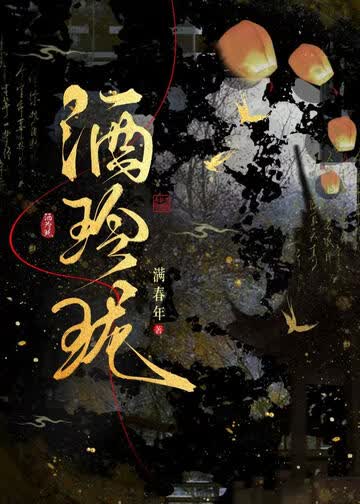

[Why click on this article] To be honest, when I first clicked in, I didn't have high expectations. There are too many new articles published every day in Jinjiang, including covers, copywriting, and labels. Reading too many articles will really make you tired. Many novels win in setting, but lose in execution - no matter how novel the setting is, the characters cannot stand up, and reading it feels like reading an instruction manual. But this article is different. When I read the third chapter, I stopped, not because of how explosive the plot was, but because of the feeling of "getting it right". It reminded me of why I stayed in Jinjiang until three in the morning: not because it was cool, not because it was sweet, but because "I seem to know this person." [Character: Why remember] What impresses me most about the protagonist is not how strong, beautiful, or perfect he is, but the "sense of cracks" in him. A truly empathetic character is never inherently powerful. He is the person who is obviously scared but still takes a step forward; the person who has been hurt many times but still chooses to believe; the person who says it doesn't matter but secretly has red eyes. The protagonist of this article has this sense of rift. He is not a tool, not a pawn to advance the plot, but a living person. There are hesitations, withdrawals, duplicity, and moments late at night when one person carries all the emotions. The supporting characters don't stretch their hips either. The protagonists of many articles are outstanding, but the supporting characters are all background and talk like NPCs. But the supporting characters in this article each have their own motivations and obsessions. Even if it's a passerby who only appears in a few chapters, you can feel that there is a complete life behind him. [Plot: Why don't you give up] What is Zhui Wen most afraid of? Afraid of water, afraid of collapse, afraid of the author forgetting his original intention as he writes. But the pacing of this article is well controlled. Don't be sloppy where you should be fast, and don't rush where you should be slow. In order to be "satisfied", many authors will resolve all conflicts in one go, and readers will forget about it after they are satisfied. But this article is different. It knows how to "leave blank space" - some words are not fully stated, some emotions are not fully expressed, but have more aftertaste. The most rare thing is that its foreshadowing is not the kind of blunt "I told you in advance", but is integrated into the details. Looking back, you will find that a seemingly irrelevant sentence in the previous sentence is actually the key to the climax later. This kind of reading experience is like the pleasure of "that's it" when the last piece of a puzzle is put together. [Writing: Why is it comfortable] Whether the writing is good or not does not depend on how many gorgeous words are used, but on whether it is "accurate". One precise verb is worth ten adjectives. One well-placed dialogue is better than three paragraphs of psychological description. The author of this article knows how to "show" rather than "tell" - instead of saying "he was sad", he wrote "he clutched the note until his knuckles turned white"; instead of saying "they loved each other very much", he wrote "he remembered that she drank coffee without sugar, and she remembered that he turned off two lights when sleeping". This kind of detail is more powerful than ten thousand sentences "They love each other very much". [Emotion: Why it hurts the heart] The emotional lines of many novels are "routine": encounter → misunderstanding → reconciliation → together. The process is correct, but it lacks the sense of fate that "you have to do it". But the emotion in this article is grown out, not stuffed into it. It is not in a hurry to get two people together, but first allows them to become "irreplaceable existences" in each other's lives. When the reader has already acquiesced that "they should be together", the author slowly peels off the window paper. This method of emotional advancement may not be "cool" enough, but it is "real" enough. [End: Why recommended] As I write this, there is only one thing I want to say most: This article deserves to be seen by more people. In Jinjiang, a platform where hundreds of new articles are published every day, it is really not easy to encounter an article that makes people willing to stop and write a long review seriously. It may not be the most popular or have the best data, but it must be "written with care." Readers can feel the articles written with care. So, if you are still hesitating whether to click it, my suggestion is: click it. If you have read this, my suggestion is: collect it, follow up, and don't let it sink in. Good writing deserves to be seen. [Message to the author] Thank you for writing this story. Thank you for not catering to routines just for the sake of traffic. Thank you for insisting on writing what you want to write. Thank you for not giving up when you typed these words late one night. The days of chasing updates may be long, the days of Kavin may be difficult, and the days of poor data may be frustrating. But please believe that some people are watching seriously, some are waiting seriously, and some are seriously liking it. Come on, I will keep chasing you.
The author wrote a good article, come on
Could the author give Tammy a happy ending? OK
It's amazing... So many words, and so well written... Wish you lots of money! Many people like every picture, and everyone likes every article!