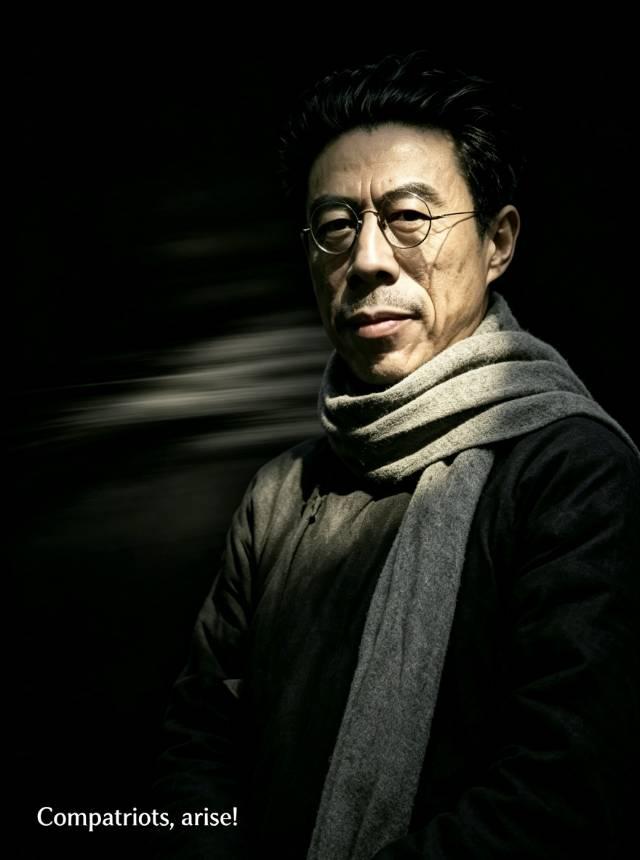
The Revolution of 1911 overthrew the reactionary rule of the Qing Dynasty and announced the end of China's two-thousand-year-old autocratic monarchy.
In April 1919, the People's Liberation Army's million-strong division divided into three groups, crossed the Yangtze River, and occupied Nanjing.
Declared the overthrow of the reactionary rule of the Kuomintang. The remaining forces of the Kuomintang Yangtze Party retreated to Taiwan.
At 3 pm on October 1, 1949, important Chinese leaders and other national leaders climbed onto the Tiananmen Rostrum, and 300,000 soldiers and civilians in the capital gathered in Tiananmen Square to hold a grand founding ceremony. Important Chinese leaders solemnly declared to the world: "The Central People's Government of the People's Republic of China was established today!"
An important leader of China passed away on September 9, 1976.
Evaluation of the middle and later periods of the Qing Dynasty's rule: Under the autocratic rule of the Qing Dynasty, in order to seek promotion or self-protection, officials tried every means to use various relationships in the officialdom, bribe their superiors, and form cliques for private gain. After Qianlong, corruption became more prevalent, and the Qing Dynasty's bureaucracy showed an increasingly corrupt trend in its overall structure. For the sake of their own selfish interests, officials at all levels tried their best to line their pockets, deceiving the court at first and blackmailing the people at worst.
The bureaucracy of the Qing Dynasty was bloated, but during the Kangxi and Qianlong periods, social and economic development, fiscal revenue continued to increase, and the national treasury was full, and it could still withstand huge operating costs. In the late Qianlong period, because the emperor was so happy with his achievements and spent excessively, the financial waste was very serious. In particular, officials at all levels engaged in massive corruption and withheld taxes, which seriously affected the country's fiscal revenue. After Jiaqing, the imperial court's fiscal revenue decreased day by day, while its expenditures continued to increase, resulting in a fiscal crisis. Political corruption leads to economic recession and makes the country increasingly weak.
After the mid-Qing Dynasty, population growth caused a shortage of land, but land was concentrated in the hands of a few people. Big bureaucrats, big landowners and big businessmen used all means to annex land. Peasants who lost their land went bankrupt and became tenants and employees of the landlords, paying high rents to the landlords. Many farmers became refugees and made a living by begging. The polarization between rich and poor in society is very serious, the lives of the general public are becoming increasingly difficult, and social crises are numerous.
The above are selected from the textbooks for nine-year compulsory education, 2016 edition, People's Edition, the history book for eighth grade, Volume 1 and Volume 7, and some materials are selected from the Internet.
Please do not interpret too much
Concept: New Era, New Thoughts, New Zhongguo