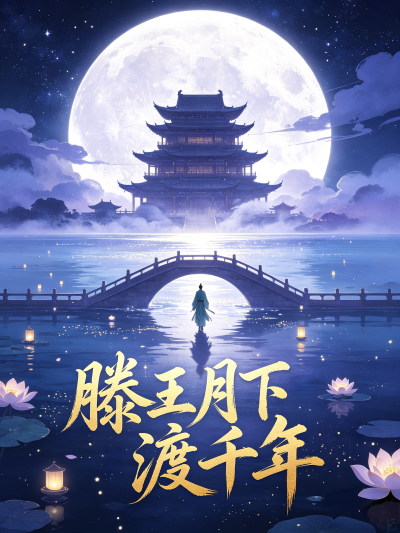
Jiang Yu, a sixteen-year-old high school sophomore boy, has the lowest grades and is tired of studying. One evening, he sneaked alone to Prince Teng's Pavilion and fell into a daze, leaning on the stone steps and falling asleep.
When he opened his eyes again, he actually traveled to Hongzhou in the sixth year of Yuan Dynasty. The lights in Prince Teng's Pavilion were brightly lit, Wang Bogang had written an eternal masterpiece, and the hall was filled with guests who were extremely elegant. Jiang Yu, wearing a school uniform, burst into the Tang Dynasty banquet, but was unexpectedly invited to the table by Wang Bo.
In the dead of night, Wang Bo took him to use the power of the moonlight to review the complete lives of each guest at the banquet.
He saw Governor Yan who guarded the frontier and had great ambitions; he saw the seventh-grade official who wasted half his life studying hard; he saw the ordinary people who lived in the shadow of geniuses and taught silently; he saw the down-and-out poets who traveled among the people and recorded the sufferings of the people; he saw the civil servants who were demoted to Hongzhou and looked at Chang'an every night; he saw the female poets who were full of talents but trapped in the house; he saw the veterans, the poor boys, the hermit masters...
Behind every name is a life of ups and downs. Behind every poem, there are unknown joys and sorrows.
Jiang Yu gradually understood that the boring ancient prose in those textbooks were the swan songs written by each living soul with their lives. The power of time and space is gradually weakening, and he will eventually return to modern times, but he is no longer the messed up boy.
When he opened the "Preface to Prince Teng's Pavilion" again, every sentence had warmth. Behind the sunset is the unwillingness and sincerity of a sixteen-year-old genius; at the end of the long autumn sky is the half-life regrets carried by countless literati thousands of years ago in pen and ink.
Now that I have a long road ahead of me, I should not be trapped in a moment of slackness.
Purpose: The idle youth sees the difficulties, ambitions, and regrets of ancient literati, and compares it with a complete and stable modern life, completing self-transformation; everyone in the world can see the scenery of literati's poetry, but no one knows that behind the pen and ink, half a life has been turbulent.