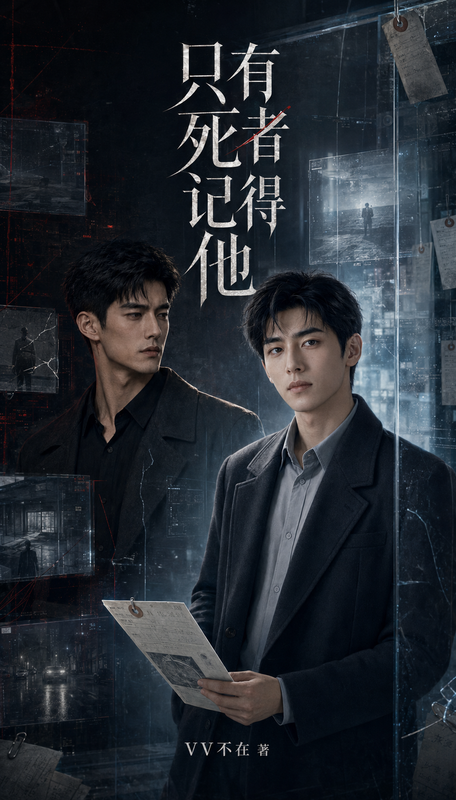
In an era when memories can be retrieved, modified, and even used as evidence of incrimination, the dead are sometimes more trustworthy than the living.
The memory forensic doctor Wen Zhixu examined several deceased people one after another, but saw the same man in the unrelated dying memories.
The police could not find his identity, the city system did not have a file on him, and all living people who had seen him would forget him.
It was as if this person had never been born and had never lived.
Until one rainy night, the man who only existed in the memory of the deceased opened the door of the examination room and asked about the preface:
Do you still remember me?
Wen Zhixu raised his head and called out his name accurately.
He Linchuan.
A person who was wiped out by the entire city, and a person who preserved the memory of the deceased, thus became each other's only witness.
They followed the memories left by each corpse to trace the truth, but gradually discovered that it was not only He Linchuan's identity that had been deleted, but also a set of rules that determined who could be remembered by the world and who would be completely erased.
Everyone says memory can be deceiving.
But if the whole world forgets a person, has he really lived?
Later, He Linchuan realized that what Wen Zhixu wanted to prove was never just his existence.
He also wanted him to stay.
Purpose: Human existence and dignity should not be defined by the system. Memory requires choice, consent and witness.