Stats
Tags
- ThemeWestern Fantasy
- POVMale Lead
- Age13+
Synopsis
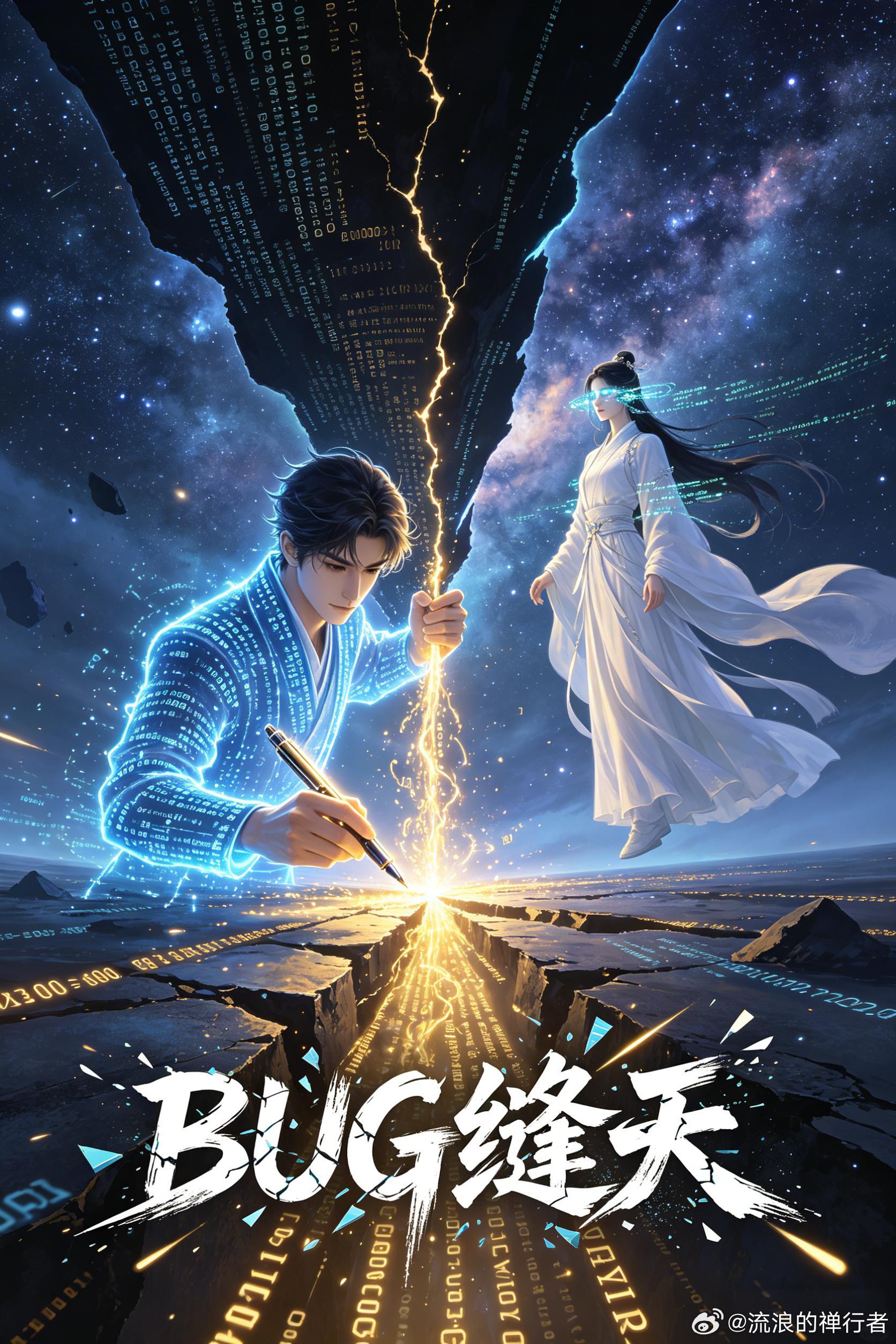
Xia Bing has never really had a dream. The wedding hall was decorated with red candles, the wedding dress was like fire, and the hot red lips were in a state of confusion. He woke up laughing in his dream. When I opened my eyes, I saw the stars and rivers collapsing, the sky and the earth falling apart. The so-called prosperous age was nothing but a rotten and brittle painting. Others laughed at him and called him "madman". No one knows that he is the only conscious prisoner in this world. When he was about to die, he woke up with two blood-stained pens. He had just begun to get a clue: the candle dragon sleeps forever, and the ancient divine realm collapsed into twelve layers of dream heaven. The false order is parasitic in reverse, and the souls of hundreds of millions of living beings are forcibly separated, creating this dream world that is praised by thousands of people. Everyone in the world regards dreams as truth and waking up as falsehood. He was the only one who woke up from his dream. With two pens in hand, thousands of illusions are weaving to fill in the gaps, and the dream beak chases illusions and returns to reality. Wherever you put pen to paper, fiction fades away and truth is revealed. But every time he sees the truth clearly, he is scarred; every time he wakes up, the silver veins on the wrists of his fatefully entangled lover Su Mengrou tighten an inch. When I wake up, I die alone, and all my dreams are in ruins. During the Summer Solstice Festival, the painting stage slowly opened. Xia Bing is determined to step into the Twelve Dream Heavens, face the corpse of his own self after seven failed reincarnations, and uncover the eternal conspiracy of false order to parasitize all souls. Use the three corpses as blades and yourself as a sacrifice to draw a true ending to this eternal dream. Purpose: This article uses the Eastern myth of the eternal sleep of the candle dragon as the carrier, takes "the inversion of true and false" as the core contradiction, inherits the classical philosophical core of Zhuang Zhou's materialization and the three corpses of Taoism, and unfolds a five-level progressive theme expression around the protagonist Xia Bing's journey of breaking through delusion and returning to the truth, and finally settles on "the martyrdom value of the sober" and "the ultimate meaning of authentic existence". 1. The core idea: sobriety is martyrdom, authenticity is better than illusion. The work is based on the world where "all living beings chase illusions and dreams are reality", and constructs a reverse order of "false perfection = stability and happiness, sobriety and seeking truth = suffering of original sin". The world is addicted to the illusion of a prosperous age built up by heaven, and voluntarily uses the true experience of the soul as nourishment in exchange for happiness, and even regards those who seek the truth as alien lunatics. The protagonist Xia Bing, as the only sane person in the world, knows that "real paintings cost lives" and destroying illusions will harm oneself, but still refuses to follow the trend and merge into illusions. In the end, at the cost of self-annihilation, he shatters the eternal dream and restores the true appearance of the world. The core proposition points directly to: Even the broken and painful reality is far better than the perfect and exquisite cage of illusion; staying awake and protecting the authenticity is itself the most weighty martyrdom. 2. Fateful intention: Will can break reincarnation, choice is more important than the outcome. The protagonist is born as the ultimate sacrificial anchor locked by heaven. Seven reincarnations have ended in failure. The two-way shackles with Su Mengrou constitute an unsolvable dead end of "we will be injured when we wake up, and we will die in dreams". From the beginning, we are doomed to "defeat" in the secular sense. However, the work does not move toward passive fatalism. Instead, it interprets the true concept of freedom through the protagonist's complete arc from passively enduring, to actively breaking the situation, and then to acting in harmony with the Tao: fate can lock the ending, but it cannot lock people's choices. The real breakthrough is not to go against the will of heaven and change one's destiny to achieve worldly perfection, but to actively choose the direction and meaning of sacrifice in a given dead situation. It is never destiny that reincarnates throughout the ages, but the self that refuses to break away from obsession; it is not divine power that ends reincarnation, but free will that faces the truth and is willing to die. 3. The idea of growth: to break one's grasp is to return to one's true nature, and to be incomplete is to be powerful. It completely subverts the logic of "acquisition-based upgrade" of traditional fantasy and creates an original "loss-based growth" system: every time the protagonist unlocks a level of ability, he will peel off a level of three corpses and a piece of soul. The stronger he is, the closer he is to self-annihilation. The work thus redefines "growth and strength": true growth is never the expansion of external power or the rise of status, but the process of breaking obsessions, peeling off illusions, and accepting one's own imperfections inwardly. The highest state is not to be invincible in the world and have everything, but to have the courage to let go of all obsessions, memories and fetters, and to complete self-zero and transcendence, which coincides with the spiritual core of Taoism "Behead three corpses and return to the true nature". 4. Emotional concept: The highest salvation is to be each other's light, without having to stay together. Breaking out of the traditional romance paradigm of "staying together for perfection", the emotions of the male and female protagonists are deeply bound to the rules of the world from beginning to end, with two-way shackles and two-way sacrifices, and there is never any industrial saccharine. Xia Bing insisted on breaking the law to redeem Su Mengrou's shackles, and Su Mengrou overdrafted her authority to protect Xia Bing's sobriety. In the end, neither of them sought to stay together in the secular world, but completed the ultimate fulfillment of each other with their own martyrdom. The work expresses this: the ultimate emotion is never attachment and possession, but knowing that there is no solution but still walking side by side, becoming the other's only spiritual anchor in the eternal loneliness. The end of salvation is not staying together, but that you understand my choice, I bear your weight, and we are each other's light to illuminate the same road to truth. 5. The idea of reality mapping: a spiritual inquiry into the "collective illusion". The setting of a prosperous world of illusions and all living beings chasing illusions is essentially a metaphor for the universal spiritual dilemma: when the environment wraps an individual with the illusion of stability, perfection, and conformity, most people will voluntarily give up independent thinking and accept discipline, and instead attack sober people who are unwilling to join the crowd; the order correction mechanism corresponds to the collective silent erasure and memory tampering of dissidents. The loneliness and perseverance of the protagonist "who wakes up alone from a big dream" are also an affirmation of the individual spirit: even if you are in a collective illusion, maintaining independent judgment, refusing to be assimilated by illusions, and keeping your true self are still the foundation of life worth sticking to.