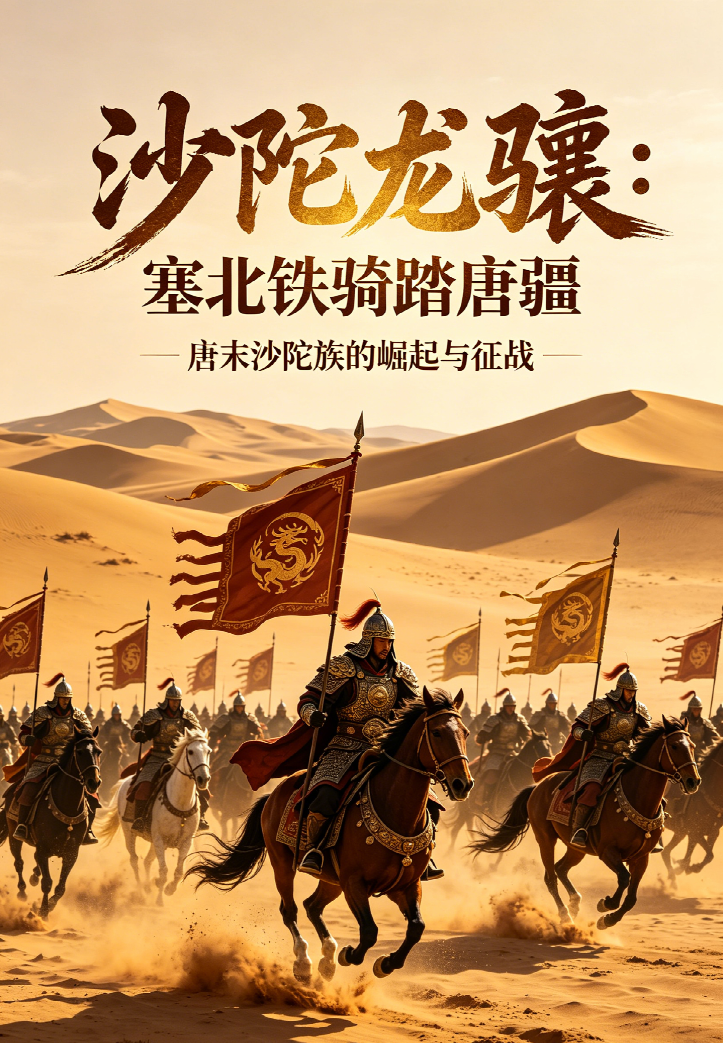
Since the Shatuo clan surrendered to the Tang Dynasty during the Zhenguan period, they have guarded the border and fought for the Tang Dynasty, becoming an iron-blooded force that cannot be ignored in the troubled times of the late Tang Dynasty. In the first year of Guangming Dynasty, because the imperial court was afraid of Shatuo's power and fell under the trap of treacherous officials, the Tang Dynasty ordered the army to encircle and suppress the Shatuo tribe. Li Keyong and his son were defeated and led the remaining tribe into exile in Tatar. The Shatuo foundation was almost overturned. This also became the starting point for the Shatuo people to survive in troubled times.
At that time, the world was in chaos at the end of the Tang Dynasty. The feudal vassals were separatist and the Huangchao Uprising swept across the Central Plains. All forces were eyeing the country and coveting hegemony in the world. The exiled Shatuo people had to avoid the pursuit of the imperial court and hostile vassal towns, while at the same time they wanted to gather their old tribes, accumulate strength, and seek to survive in the cracks. With the assistance of his virtuous wife Liu, Li Keyong suddenly came to his senses, worked hard to govern, and regained control of the Shatuo cavalry to help the Tang Dynasty pacify Huangchao. However, he formed a mortal enemy with Zhu Wen, starting a fierce battle between Liang and Jin for hegemony in troubled times. The Shatuo tribe also gradually grew stronger in the battles and became a key force in the late Tang Dynasty.
Purpose: To tell the story of the Shatuo tribe's difficult journey from exile to rise, intertwined with court suspicions, feudal battles, and internal games.