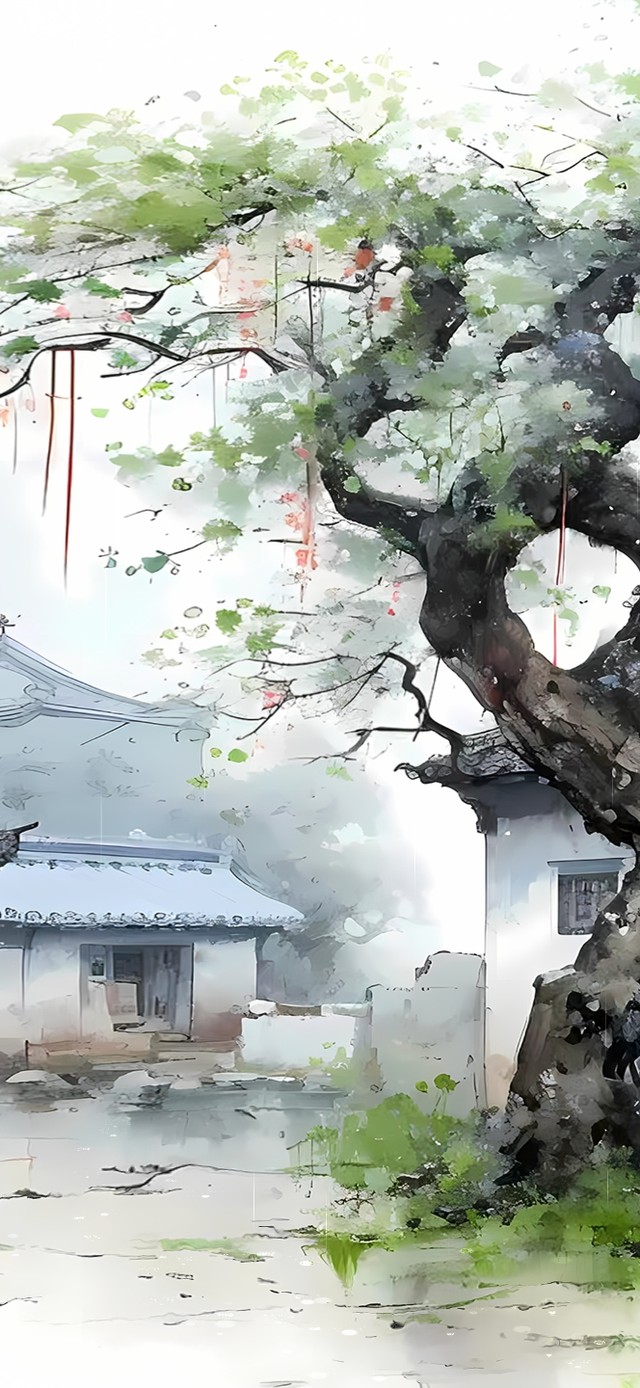
The novel "Old Locust Tree" takes an ancient locust tree planted by hand during the Hongwu period of the Ming Dynasty in the western Henan plain as the spiritual landmark, and takes the ups and downs of the four generations of the Li family as the main line, drawing a century-old rural scroll spanning the late Qing Dynasty, the Republic of China and the eve of the founding of New China.
The novel begins in the 19th year of Guangxu's reign: Eleven-year-old Sophora japonica was sent to the Li family to pay off her debt. The old man pointed to the old locust tree and said: "Remember, where the roots are, the people are there." This tree has since become a metaphor for her life - it has been struck by lightning and its heart is empty, but it sprouts every year.
Sophora japonica supports the fate of three generations of the Li family as an adoptive mother. The eldest son Huairen walked from Huangpu Military Academy to Jinggangshan, pursuing the road to save the country amidst the torn faith and family ties, and finally died heroically; the second daughter Huai Li traveled between the intelligence battlefield in Shanghai and the ice and snow of Moscow, practicing her faith with her life; the third daughter Huai Zhi became a prisoner of the Japanese invaders from a movie star, guarding her dignity with the pride of "White Peony"; the youngest son Huai Xin burned down his ancestral workshop in the war, and rebuilt life with his hands from the ashes.
The hunger of the tenants, the swords and guns of the bandits, the iron hoofs of the Japanese invaders, the war of the civil war - every shock of the times has carved deep marks on the growth rings of the old locust tree. When the storm of land reform swept through western Henan, when the foundation that the family had guarded for generations was turned into powder under the grinding wheel of history, Sophora japonica saw something stronger than the land in the fire that burned the land deeds: the human heart and blood, which are roots that will never be broken in any era.
The work uses the wrinkles of loess and the fragrance of locust flowers to explore an eternal theme: when all the glitz is stripped away by the times, what is the basis for human survival? The answer is: Where the roots are, the people are there.
Intention: Intention is at the "root". The old locust tree has been struck by lightning and its heart is empty, but it sprouts year after year - a metaphor for the nation and family that have endured disasters and continued to thrive. Sophora japonica has practiced it throughout her life: the land is the root, the blood is the root, and the human heart is the root. When the glitz is stripped away, only when the roots remain, can people survive, the family will not be separated, and the soul of the nation will not be broken.