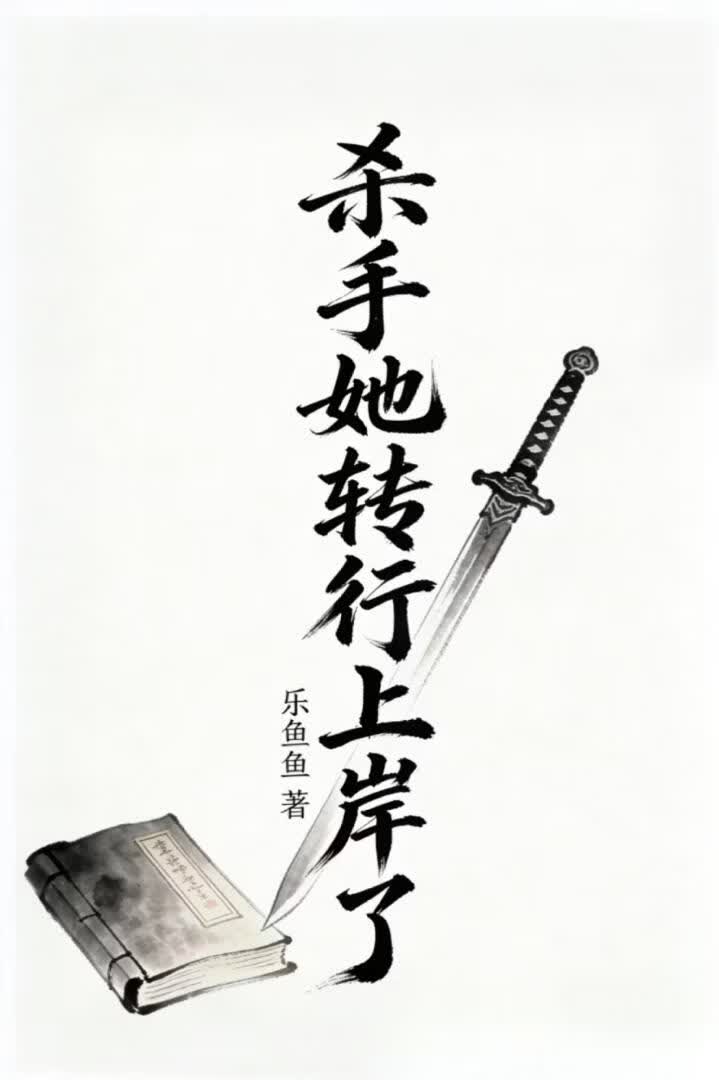
She is the sharpest knife in Wuji Pavilion, codenamed Yulan.
Ten years ago, she was "sold" by her parents to the stupid son of a wealthy businessman as a wife, but was rescued by Master Xuanyinguan. Ten years later, her biological father stood in front of her as a Korean princess - it turned out that she was not an abandoned daughter who was sold, but a lost pawn in a power struggle.
On the day Chen Yu returned to the Duke's Mansion, the imperial edict arrived at the same time and she was granted the title of wife of Taiping County. The whole court was in an uproar. Some people say that the Holy Emperor took pity on the loyal ministers, while others said that it was to balance the growing power of Dongchang and Jinyiwei - the newly appointed county head happened to be the legitimate daughter of the pure minister Chen Shouzheng.
Three forces converged in front of the Duke's Mansion: Jinyiwei wanted to investigate her, Dongchang wanted to use her, and her Chunchen father just wanted to protect her. But Chen Yu has been on the edge of a knife for ten years. What she knows best is not killing people, but how to transform herself from a chess piece into a chess player in a murderous chess game.
She was admitted to Imperial College, became an official in the court, and stepped into the center of power.
Until one day, someone put a note on her desk:
"The person who killed Hui'er was Shen Zuhui."
The three-legged tripod collapsed instantly. The kindness she thought was a trap; the hatred she thought was also a trap. And the two men, who had their own thoughts, finally discovered——
In this game of chess, there can only be one winner.
But she was never a pawn.
Purpose: This article explores "what is real power" through Chen Yu's growth from a chess piece at the mercy of fate to a chess player - not a killing knife, not a tactic, but the right to choose.
She was once a victim (sold), a tool (killer), and a pawn (the object of competition among the three factions), but she finally passed the imperial examination and entered the power system in an institutionalized way, realizing the transformation from "being defined" to "self-defining". At the same time, the pure ministerial character of the fathers (only loyal to the country and the people's livelihood) contrasts with the power struggle in the court, asking the nature of power: is it to fight for power and gain, or to ask for orders for the people?
On the emotional line, Shen Huizu and Jin An's transformation from "using her" to "seeing her" also implies a reflection on "women as tools" in traditional power relations - when she is strong enough, she is no longer anyone's pawn, but the chess player of her own life.
In short: this is a story about "how to not become a pawn on the chessboard of power, but become a human being."