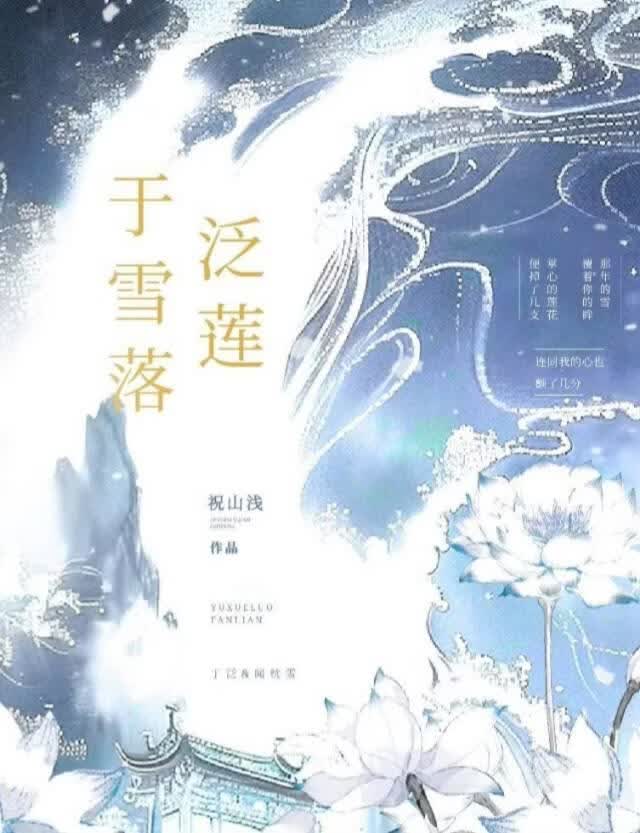
Ding Fan died in a plane crash and his soul fell into the "city that never sleeps". This city is located at the border between life and death, and its rules are strict: residents have no dreams, and the dead forget their feelings. In order to survive, he was arranged to marry the dying Mr. Wang.
On the wedding night, the red candle burned strangely. The groom was supposed to be dying, but when he lifted his hijab, he revealed a pair of eyes that reflected Qinglian. The man claimed to be Wen Zhenxue, the embodiment of the supreme law of the city that never sleeps. The red rope wrapped around his fingertips was tied to Ding Fan's wrist like a living thing, and he whispered: "I have been waiting for this reunion for a thousand years."
Ding Fan soon discovered something unusual: the dream-devouring monster "Nama" in the city was extremely hungry for him; the jade bracelet on his wrist resonated with Wen Zhenxue; and among the scattered memory fragments, there was always the back of a young man in green.
As I travel through other people's bizarre dreams again and again, the obliterated truth emerges.
Only then did Ding Fan realize that his more than twenty years of empty life were not a malfunction.
It is a carefully planned "emotional transplant" and "survivor isolation" that spans life and death. His emptiness is the price he paid for fighting evil together with the people around him in his previous life; every moment of his revived joy, anger, sorrow, and joy is the "contraband" that the other party smuggled back for him night after night, using his soul as a guide.
The conspiracy in the previous life has not ended, and the war has been reignited.
But this time, the weapon was no longer divine power or spells, but something he had lost and was taught little by little by that man's own hands - a mortal heart that would ache, be excited for the one he loved, and risk his own life for them.
Concept: 1. The nature of emotion: Is emotion a weakness or a strength? Is it a "system error" that hinders efficiency, or is it the core code that defines "what I am?"
2. The boundaries of order: Is a "perfect" world that pursues absolute rationality and eternal stability worth sacrificing individual feelings, choices and love?
3. The value of resistance: When individual will conflicts with the grand order, should one obey in exchange for "existence", or should one resist in order to define "what is true existence"?