The Old Testament of the Bible says: "I saw that everything done under the sun is vanity and a pursuit of wind."
As the saying goes, there is nothing new under the sun. Humanity's desires and ambitions, which come at the cost of destruction, and the despicable nature engraved in genes remain unchanged forever. We don't need to be tempted by poisonous snakes to follow the path of digging our own graves by instinct. While my countrymen claim this is the necessary night before dawn, I think otherwise.
In my opinion, once the darkness spreads, the fire of Prometheus will also be extinguished. We praise the dawn of civilization, but the dome of the palace of humanity is shrouded in a bloody cloud formed by the most primitive slaughter.
We create, then destroy, over and over again - worshiping this cycle as the truth of life and death, enshrining the illusory new life at the end of destruction.
On the scale of the universe, we use insignificance as an excuse for exemption, chant death as poetry, and drink death like mead. With our selfish sobriety, we bequeath the final chapter of civilization to our unborn descendants.
Until the Tower of Babel fell by the hand of the Lord. God does not confound his voice, but rests his intelligence in a hotbed of falsehood.
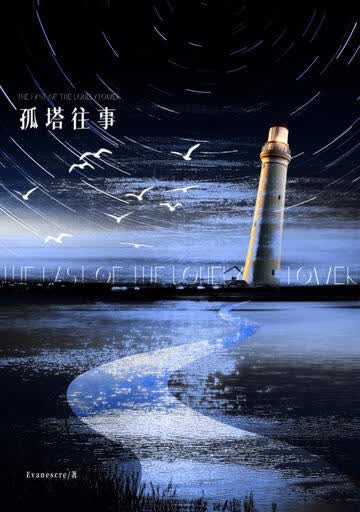
This is the entire parable of the Fall of the Lonely Tower.
PS: This is a prequel to the "Sand Rope" series, with the protagonist's first-person perspective. Interstellar ABO background, conventional ABO gender setting, the protagonist is a female Alpha, with an abnormal female physiological structure, the same is true for male Omegas, avoid those who are exposed. The protagonist's emotional line includes GL and GB, GB is the main one, and the protagonist is the general attacker. There is no real love in the work. The protagonist only loves her own utopia from beginning to end. What she loves is the phantom of self-ideal and desire projected on her lover, rather than a concrete, flesh-and-blood person. Please note that the content must be suitable for certain moods.
Intention: What we call a road is nothing more than our own hesitation.