Shen Yan (attack) Shen Chao (suffer)
[Di Gong Ge Shou | Campus | From school uniforms to suits]
Everyone knows that Shen Yan is Shen Chao's younger brother who grew up in the palm of his hand.
In the summer of his senior year of high school, when the locust trees were in full bloom, Shen Yan blocked Shen Chao behind a teaching building filled with fallen leaves. His knuckles clasped his wrist against the wall. The young man's voice was hoarse and trembling, but he spoke firmly:
"Brother, stop treating me like a child. All I want is you."
Before that, Shen Chao's life plan always had a place of "protecting his younger brother".
He would fend off difficult troubles for Shen Yan, put warm milk on the corner of his desk, hold his hand and walk under the street lights after evening self-study, but he never thought that this little kid who had been following him since childhood would look at him with such paranoid and passionate eyes and say that he liked it.
The heartbeat of the seventeen-year-old was placed on the same scrap of paper on the desk, hidden among the figures side by side after evening self-study, and fell among the soft rustling of locust leaves in the courtyard.
It's the greed that clearly crosses the line, the irresistible approach, and the preference of a lonely young man.
"Brother, in this life, I just want to hold your hand and walk away."
"From school uniforms to suits, from campus to the rest of my life, as long as it's you, everything will be fine."
Purpose: campus
Reader comments
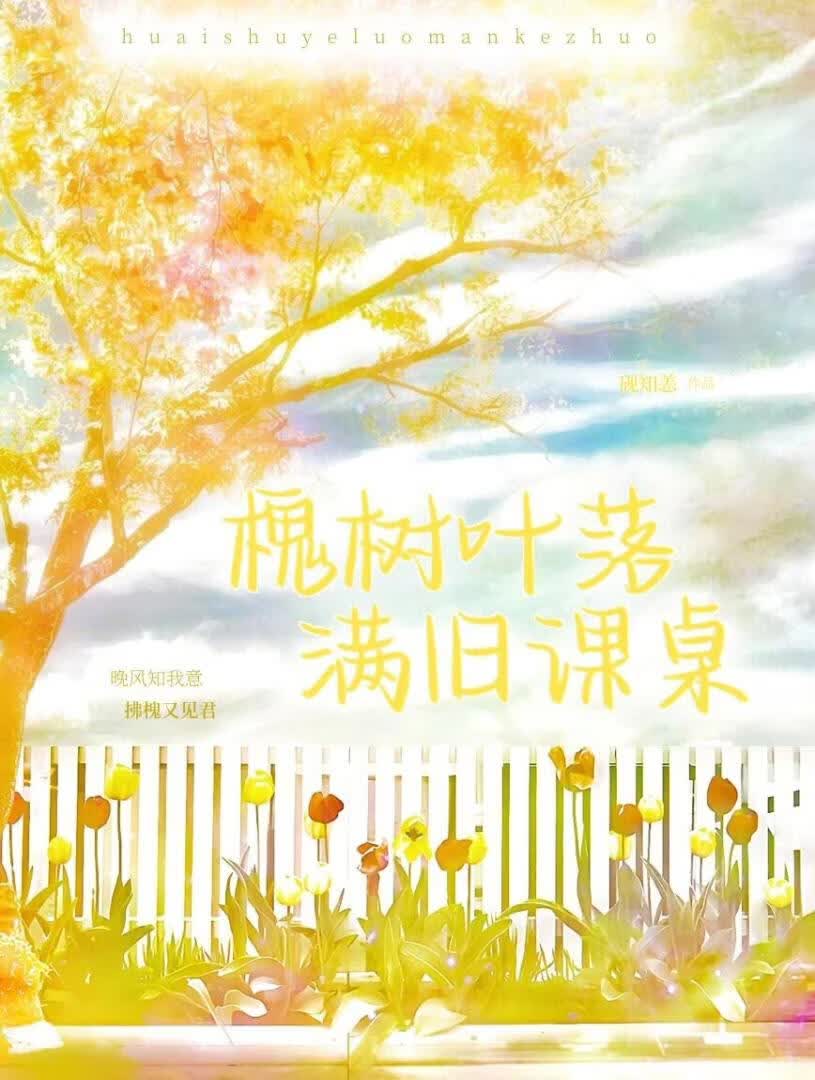
"Locust Tree Leaves Falling All Over the Old Desk" - a profound fable of youth and growth
Yan Zhichun's "Locust Tree Leaves Fall All Over the Old Desk" is not a simple youth campus novel, but a profound fable about time, memory and self-reconciliation. The image of locust leaves falling year after year and covering the old desks is a perfect metaphor for the perishability of youth and the accumulation of memories.
The core charm of the novel lies in its precise grasp of "dislocated growth". Under the heavy pressure of the college entrance examination, the protagonists experience the contradiction between physical maturity and psychological immaturity. They long to be treated as adults, but instinctively want to escape when faced with setbacks. This non-synchronicity of growth is deeply portrayed by the author. What we see is not only the growing pains of individuals, but also the epitome of the spirit of young people throughout the era.
In terms of narrative structure, the author uses the technique of staggering time and space to allow a continuous dialogue between the "me" in adulthood and the "me" in high school. This polyphonic narrative not only increases the textual level, but also creatively presents the nature of memory - we can never go back to the past completely objectively, we can only reconstruct the past from the perspective of the present. It is this duality of narrative that makes the novel go beyond simple nostalgia and have the depth of philosophical thinking.
The most moving thing about the novel is that it truly restores the complexity of youth. There is no deliberate beautification or demonization, but an objective presentation: both innocent friendship and the throbbing of first love, as well as jealousy, betrayal and self-doubt. This contradiction makes the character three-dimensional and believable, and also allows us to see our own shadow.
In terms of style, the author uses poetic language to skillfully combine cruel reality with tender memories. The image of locust leaves runs throughout, serving as both a symbol of seasonal change and a projection of inner changes. Those falling are not only leaves, but also fragments of time, unspoken words and people who are drifting away.
As a growth allegory, "Locust Tree Leaves Fall All Over the Old Desk" points to a more profound core: the individual awakening to resist educational alienation. The crushing of youth by the college entrance examination machine, the obliteration of uniqueness by standardization, and the silent resistance of individuals under such discipline constitute the real tension of the text. The poems written by the protagonist on the test paper, the novels read under the street lights late at night, and the wild flowers planted in the corners of the playground are all poetic resistance to instrumental destiny.
This novel ultimately teaches us: Growth is not about becoming what others expect, but about accepting everything about yourself—including youth, regrets, and unrealized possibilities. Just like the locust leaves on old school desks, they are not the ruins of youth, but the rings of life, recording how we became who we are now. This may be the most precious revelation that Yan Zhicheng left us: in a world full of standard answers, guarding the stubborn poetry in your heart is a victory in itself. (Writing a review directly, it suits my heart so much)

"Locust Tree Leaves Falling All Over the Old Desk" - a profound fable of youth and growth Yan Zhichun's "Locust Tree Leaves Fall All Over the Old Desk" is not a simple youth campus novel, but a profound fable about time, memory and self-reconciliation. The image of locust leaves falling year after year and covering the old desks is a perfect metaphor for the perishability of youth and the accumulation of memories. The core charm of the novel lies in its precise grasp of "dislocated growth". Under the heavy pressure of the college entrance examination, the protagonists experience the contradiction between physical maturity and psychological immaturity. They long to be treated as adults, but instinctively want to escape when faced with setbacks. This non-synchronicity of growth is deeply portrayed by the author. What we see is not only the growing pains of individuals, but also the epitome of the spirit of young people throughout the era. In terms of narrative structure, the author uses the technique of staggering time and space to allow a continuous dialogue between the "me" in adulthood and the "me" in high school. This polyphonic narrative not only increases the textual level, but also creatively presents the nature of memory - we can never go back to the past completely objectively, we can only reconstruct the past from the perspective of the present. It is this duality of narrative that makes the novel go beyond simple nostalgia and have the depth of philosophical thinking. The most moving thing about the novel is that it truly restores the complexity of youth. There is no deliberate beautification or demonization, but an objective presentation: both innocent friendship and the throbbing of first love, as well as jealousy, betrayal and self-doubt. This contradiction makes the character three-dimensional and believable, and also allows us to see our own shadow. In terms of style, the author uses poetic language to skillfully combine cruel reality with tender memories. The image of locust leaves runs throughout, serving as both a symbol of seasonal change and a projection of inner changes. Those falling are not only leaves, but also fragments of time, unspoken words and people who are drifting away. As a growth allegory, "Locust Tree Leaves Fall All Over the Old Desk" points to a more profound core: the individual awakening to resist educational alienation. The crushing of youth by the college entrance examination machine, the obliteration of uniqueness by standardization, and the silent resistance of individuals under such discipline constitute the real tension of the text. The poems written by the protagonist on the test paper, the novels read under the street lights late at night, and the wild flowers planted in the corners of the playground are all poetic resistance to instrumental destiny. This novel ultimately teaches us: Growth is not about becoming what others expect, but about accepting everything about yourself—including youth, regrets, and unrealized possibilities. Just like the locust leaves on old school desks, they are not the ruins of youth, but the rings of life, recording how we became who we are now. This may be the most precious revelation that Yan Zhicheng left us: in a world full of standard answers, guarding the stubborn poetry in your heart is a victory in itself. (Writing a review directly, it suits my heart so much)