Fanqie library
Browse
- Titles
- 15
Every Fanqie book we index, searchable by title, author or tag.
-
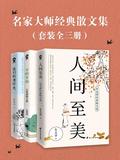 Collection of Classic Prose by Famous Masters (Set of Three Volumes)
"Our Old Time" is a work that laments the passage of time and the changes in destiny. The tone of the work is cordial and simple. By describing the little people's lives, it can soothe the hearts of readers and gain quiet strength in the noisy and impetuous world. "The Most Beautiful in the World: A Collection of Zhu Guangqian's Classic Prose" selects popular and classic articles from Mr. Zhu Guangqian's works in various periods, covering multiple themes such as life, aesthetics, philosophy of l
104Reads9.3Score—Shelves
Collection of Classic Prose by Famous Masters (Set of Three Volumes)
"Our Old Time" is a work that laments the passage of time and the changes in destiny. The tone of the work is cordial and simple. By describing the little people's lives, it can soothe the hearts of readers and gain quiet strength in the noisy and impetuous world. "The Most Beautiful in the World: A Collection of Zhu Guangqian's Classic Prose" selects popular and classic articles from Mr. Zhu Guangqian's works in various periods, covering multiple themes such as life, aesthetics, philosophy of l
104Reads9.3Score—Shelves
-
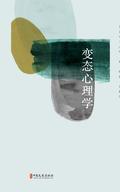 Abnormal***
"Abnormal Psychology", Mr. Zhu Guangqian is a multifaceted scholar. He has not only made outstanding achievements in literature, philosophy, etc., But has also conducted in-depth research and made great contributions in psychology. Mr. Zhu Guangqian was the first to introduce the theories of Freud, Koffka and Kohler as well as "behaviorism". "Schools of Abnormal Psychology: Abnormal Psychology" is his main work in psychology. Includes "Schools of Abnormal Psychology", "Abnormal Psychology" and s
50Reads5.8Score—Shelves
Abnormal***
"Abnormal Psychology", Mr. Zhu Guangqian is a multifaceted scholar. He has not only made outstanding achievements in literature, philosophy, etc., But has also conducted in-depth research and made great contributions in psychology. Mr. Zhu Guangqian was the first to introduce the theories of Freud, Koffka and Kohler as well as "behaviorism". "Schools of Abnormal Psychology: Abnormal Psychology" is his main work in psychology. Includes "Schools of Abnormal Psychology", "Abnormal Psychology" and s
50Reads5.8Score—Shelves
-
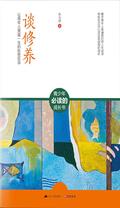 Talk About Self-Cultivation
This book is a work by Mr. Zhu Guangqian, a famous esthetician, literary theorist, educator, and translator, who explains the ways of life cultivation. The book focuses on his extremely subtle and shrewd insights on life. With his psychological expertise and ideological and cultural observation, the author grasps the interaction between personal psyche and community and nation, breaks through various psyche confusions and social barriers one by one, and guides life towards prosperity and abundan
3Reads9.1Score—Shelves
Talk About Self-Cultivation
This book is a work by Mr. Zhu Guangqian, a famous esthetician, literary theorist, educator, and translator, who explains the ways of life cultivation. The book focuses on his extremely subtle and shrewd insights on life. With his psychological expertise and ideological and cultural observation, the author grasps the interaction between personal psyche and community and nation, breaks through various psyche confusions and social barriers one by one, and guides life towards prosperity and abundan
3Reads9.1Score—Shelves
-
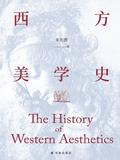 History of Western Aesthetics
"History of Western Aesthetics" by Mr. Zhu Guangqian. It is the first monograph written by a Chinese scholar to systematically elaborate on the development of Western aesthetic thoughts, sorting out the aesthetic thoughts from ancient Greece and Rome, the Middle Ages, the Renaissance, to modern Europe and America, including Soviet Russia. The whole book has a clear structure and comprehensive understanding, and the profound Western cultivation reveals the spirituality of the East. This work is o
—Reads9.2Score—Shelves
History of Western Aesthetics
"History of Western Aesthetics" by Mr. Zhu Guangqian. It is the first monograph written by a Chinese scholar to systematically elaborate on the development of Western aesthetic thoughts, sorting out the aesthetic thoughts from ancient Greece and Rome, the Middle Ages, the Renaissance, to modern Europe and America, including Soviet Russia. The whole book has a clear structure and comprehensive understanding, and the profound Western cultivation reveals the spirituality of the East. This work is o
—Reads9.2Score—Shelves
-
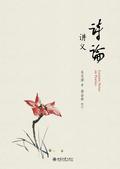 Lecture Notes on Poetry
"Poetic Theory" was originally called "General Theory of Poetics" and was first completed at the end of 1932. When he applied for a job in the Department of Foreign Languages and Literature at Peking University in 1933, Zhu Guangqian submitted "On Poetry" to Hu Shi. Hu Shi was so impressed that he not only hired Mr. Zhu as a professor in the English Department, but also invited him to lecture on "On Poetry" in the Chinese Department for a year. What Professor Shang Jinlin from the Chinese Depa
—Reads8.4Score—Shelves
Lecture Notes on Poetry
"Poetic Theory" was originally called "General Theory of Poetics" and was first completed at the end of 1932. When he applied for a job in the Department of Foreign Languages and Literature at Peking University in 1933, Zhu Guangqian submitted "On Poetry" to Hu Shi. Hu Shi was so impressed that he not only hired Mr. Zhu as a professor in the English Department, but also invited him to lecture on "On Poetry" in the Chinese Department for a year. What Professor Shang Jinlin from the Chinese Depa
—Reads8.4Score—Shelves
-
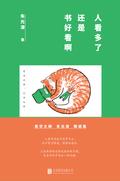 **
"People read too much, but the books are still good to read" is a new selection of essays by Zhu Guangqian, the master of aesthetics. The book contains 21 classic puzzle-solving works, divided into four series: "People have read too much, but books are still good to read", "Suspicious of everything, but also yearning for everything", "Maintain a spirit of resistance", "Work in moderation and sleep reasonably." Zhu Guangqian compares his feelings with his own, and sums up a book with answers to t
—Reads5.8Score—Shelves
**
"People read too much, but the books are still good to read" is a new selection of essays by Zhu Guangqian, the master of aesthetics. The book contains 21 classic puzzle-solving works, divided into four series: "People have read too much, but books are still good to read", "Suspicious of everything, but also yearning for everything", "Maintain a spirit of resistance", "Work in moderation and sleep reasonably." Zhu Guangqian compares his feelings with his own, and sums up a book with answers to t
—Reads5.8Score—Shelves
-
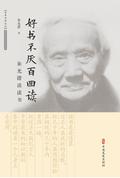 A Good Book Never Tires of Being Read a Hundred Times: Zhu Guangqian Talks About Reading
This book explains to readers what books to read, how to read and why to read from the aspects of reading good books, applying reading, learning about reading, and reading and life. It aims to convey the theme of "reading makes people beautiful most of all". At the same time, it also tells us that if we develop a habit of "loving books, interpreting books, doubting books, thinking in multiple directions, and making connections by analogy", we will read life, experience, society, the world, the s
—Reads8.0Score—Shelves
A Good Book Never Tires of Being Read a Hundred Times: Zhu Guangqian Talks About Reading
This book explains to readers what books to read, how to read and why to read from the aspects of reading good books, applying reading, learning about reading, and reading and life. It aims to convey the theme of "reading makes people beautiful most of all". At the same time, it also tells us that if we develop a habit of "loving books, interpreting books, doubting books, thinking in multiple directions, and making connections by analogy", we will read life, experience, society, the world, the s
—Reads8.0Score—Shelves
-
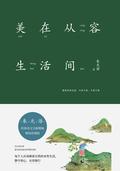 Beauty Lies in a Calm Life
This book is a self-selected collection of Zhu Guangqian's works. The articles are selected from Zhu Guangqian's four works ("On Cultivation", "Twelve Letters to Youth", "On Beauty" and "On Beauty Letters"). The content is classic and clearly expresses Zhu Guangqian's world view, outlook on life, values and aesthetics. It is accompanied by exquisite illustrations and text by the famous painter Wang Yuyuan, interpreting the essence of the master's lifelong thoughts.
—Reads8.8Score—Shelves
Beauty Lies in a Calm Life
This book is a self-selected collection of Zhu Guangqian's works. The articles are selected from Zhu Guangqian's four works ("On Cultivation", "Twelve Letters to Youth", "On Beauty" and "On Beauty Letters"). The content is classic and clearly expresses Zhu Guangqian's world view, outlook on life, values and aesthetics. It is accompanied by exquisite illustrations and text by the famous painter Wang Yuyuan, interpreting the essence of the master's lifelong thoughts.
—Reads8.8Score—Shelves
-
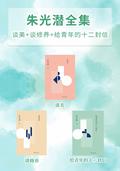 The Complete Works of Zhu Guangqian (On Beauty + on Cultivation + Twelve Letters to Youth) (Three Volumes)
"A More Beautiful Reader of Zhu Guangqian" includes Zhu Guangqian's main representative works: "Twelve Letters to Youth" (published), "On Beauty" (published), "On Cultivation" (published), and "History of Western Aesthetics" (forthcoming), a total of four books. Among them, "Twelve Letters to Youth", "On Beauty" and "On Cultivation" invited professional anchors to record audio and make it into audio books. As long as this series of books is available, you can listen to the audio books for free.
—Reads9.3Score—Shelves
The Complete Works of Zhu Guangqian (On Beauty + on Cultivation + Twelve Letters to Youth) (Three Volumes)
"A More Beautiful Reader of Zhu Guangqian" includes Zhu Guangqian's main representative works: "Twelve Letters to Youth" (published), "On Beauty" (published), "On Cultivation" (published), and "History of Western Aesthetics" (forthcoming), a total of four books. Among them, "Twelve Letters to Youth", "On Beauty" and "On Cultivation" invited professional anchors to record audio and make it into audio books. As long as this series of books is available, you can listen to the audio books for free.
—Reads9.3Score—Shelves
-
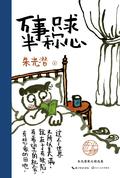 Everything Is Only Half Satisfactory
Everyone has some anxieties, regrets, and unhappiness... This book is an ideal life guide given to everyone by a generation of aesthetic master Zhu Guangqian. He said: "The reason why this world is beautiful is that it has flaws, opportunities for hope, and fields for imagination." He said: "If you want to be happy in life, you must retain a little childishness." The teacher not only gives people aesthetic influence, but also has many thought-provoking life stories to tell readers. He turns his
—Reads8.4Score—Shelves
Everything Is Only Half Satisfactory
Everyone has some anxieties, regrets, and unhappiness... This book is an ideal life guide given to everyone by a generation of aesthetic master Zhu Guangqian. He said: "The reason why this world is beautiful is that it has flaws, opportunities for hope, and fields for imagination." He said: "If you want to be happy in life, you must retain a little childishness." The teacher not only gives people aesthetic influence, but also has many thought-provoking life stories to tell readers. He turns his
—Reads8.4Score—Shelves
-
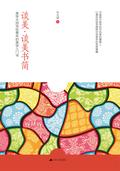 Talking About Beauty·talking About Beauty Letter
"Talking about Beauty" is Zhu Guangqian's two most classic introductory books on aesthetics. The language is easy to understand. This book combines these two works into one volume. "Talking about Beauty" is an introductory book on aesthetics written by Zhu Guangqian in his early years, explaining traditional Chinese aesthetic thoughts; "Talking about Beauty" is Zhu Guangqian's painstaking work in his later years, exploring Western aesthetic ideas. In Talking about Beauty (Illustrated Edition), t
—Reads9.3Score—Shelves
Talking About Beauty·talking About Beauty Letter
"Talking about Beauty" is Zhu Guangqian's two most classic introductory books on aesthetics. The language is easy to understand. This book combines these two works into one volume. "Talking about Beauty" is an introductory book on aesthetics written by Zhu Guangqian in his early years, explaining traditional Chinese aesthetic thoughts; "Talking about Beauty" is Zhu Guangqian's painstaking work in his later years, exploring Western aesthetic ideas. In Talking about Beauty (Illustrated Edition), t
—Reads9.3Score—Shelves
-
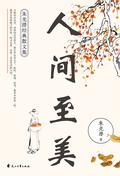 The Most Beautiful Thing in the World
"The Most Beautiful in the World: Zhu Guangqian's Classic Prose Collection" selects popular and classic articles from Mr. Zhu Guangqian's works in various periods such as "On Beauty", "On Beauty Letters", "On Cultivation" and "Twelve Letters to Youth", covering life, aesthetics, philosophy of life, self-cultivation, literature Art and other themes perfectly integrate the beauty of text with life. Every word is exquisite and full of witty sayings, leading readers to understand the beautiful world
—Reads9.6Score—Shelves
The Most Beautiful Thing in the World
"The Most Beautiful in the World: Zhu Guangqian's Classic Prose Collection" selects popular and classic articles from Mr. Zhu Guangqian's works in various periods such as "On Beauty", "On Beauty Letters", "On Cultivation" and "Twelve Letters to Youth", covering life, aesthetics, philosophy of life, self-cultivation, literature Art and other themes perfectly integrate the beauty of text with life. Every word is exquisite and full of witty sayings, leading readers to understand the beautiful world
—Reads9.6Score—Shelves
-
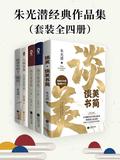 Collection of Zhu Guangqian's Classic Works (Four Volumes)
"Talking about Beauty·Talking about Beauty Letters" is an introductory book on aesthetics written by Zhu Guangqian for young people. It talks about aesthetic knowledge in a heart-to-heart way with friends, explains it in simple terms, is friendly and natural, and is the most classic enlightenment book on aesthetics. "History of Western Aesthetics" is Mr. Zhu Guangqian's most important aesthetic work and the first monograph on the history of Western aesthetics written by a Chinese scholar. "Twelv
—Reads9.2Score—Shelves
Collection of Zhu Guangqian's Classic Works (Four Volumes)
"Talking about Beauty·Talking about Beauty Letters" is an introductory book on aesthetics written by Zhu Guangqian for young people. It talks about aesthetic knowledge in a heart-to-heart way with friends, explains it in simple terms, is friendly and natural, and is the most classic enlightenment book on aesthetics. "History of Western Aesthetics" is Mr. Zhu Guangqian's most important aesthetic work and the first monograph on the history of Western aesthetics written by a Chinese scholar. "Twelv
—Reads9.2Score—Shelves
-
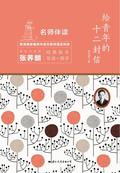 Twelve Letters to Young People
This book is the famous work of Mr. Zhu Guangqian, a master of aesthetics. In the late 1920s, Zhu Guangqian studied in Europe and sent these twelve letters to young friends from overseas. They were first published in the magazine "General" and later published by Kaiming Bookstore in 1929 and reprinted many times. The letters talk about topics that young people are concerned about or should be concerned about, such as reading, composition, love, cleaning up, self-cultivation, life, etc. These let
—Reads9.5Score—Shelves
Twelve Letters to Young People
This book is the famous work of Mr. Zhu Guangqian, a master of aesthetics. In the late 1920s, Zhu Guangqian studied in Europe and sent these twelve letters to young friends from overseas. They were first published in the magazine "General" and later published by Kaiming Bookstore in 1929 and reprinted many times. The letters talk about topics that young people are concerned about or should be concerned about, such as reading, composition, love, cleaning up, self-cultivation, life, etc. These let
—Reads9.5Score—Shelves
-
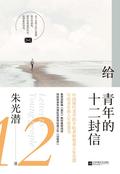 Twelve Letters to Young People
This book is a collection of twelve letters written by Mr. Zhu Guangqian to young friends in China during his stay in Europe. In the letter, Mr. Wang talks like an old friend about matters that young people care about, such as reading, self-cultivation, composition, social movements, love, etc., And provides earnest and thoughtful advice to young friends. He encourages young people to set up lofty ideals, study hard, live a simple life, and not covet worldly fame and fortune. The feelings are si
—Reads9.4Score—Shelves
Twelve Letters to Young People
This book is a collection of twelve letters written by Mr. Zhu Guangqian to young friends in China during his stay in Europe. In the letter, Mr. Wang talks like an old friend about matters that young people care about, such as reading, self-cultivation, composition, social movements, love, etc., And provides earnest and thoughtful advice to young friends. He encourages young people to set up lofty ideals, study hard, live a simple life, and not covet worldly fame and fortune. The feelings are si
—Reads9.4Score—Shelves