Fanqie library
Browse
- Titles
- 4
Every Fanqie book we index, searchable by title, author or tag.
-
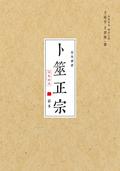 Authentic Divination
"Zhengzong of Divination" is a masterpiece of Yi studies written by Wang Hongxu (alias Hongxu, also known as Linwushanren) of the Qing Dynasty. It is known as the masterpiece of six-yao prediction. This book systematically summarizes, develops and improves the six-line divination method, refutes the fallacies of the ancient method, and emphasizes the principles of yin and yang, movement and stillness, and the restraint of life to achieve vitality, making the divination theory more profound and c
1.7kReads9.5Score659Shelves
Authentic Divination
"Zhengzong of Divination" is a masterpiece of Yi studies written by Wang Hongxu (alias Hongxu, also known as Linwushanren) of the Qing Dynasty. It is known as the masterpiece of six-yao prediction. This book systematically summarizes, develops and improves the six-line divination method, refutes the fallacies of the ancient method, and emphasizes the principles of yin and yang, movement and stillness, and the restraint of life to achieve vitality, making the divination theory more profound and c
1.7kReads9.5Score659Shelves
-
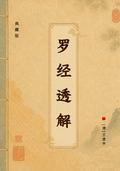 Compass Insight (Collector's Edition)
Among the many Feng Shui classics, "Luo Jing Tuo Jie" wins with the word "Pu Jie". It does not pretend to be profound, but is committed to simplifying the complex. Wang Daoheng, an artist in the Qing Dynasty, was deeply aware of the obscure and fragmented explanations of the compass at that time, so he integrated Sanhe, Sanyuan, Tianxing and other Pan methods into one furnace. Through layer-by-layer analysis, he accurately answered the three core problems of "how to grid the dragon", "how to sta
64Reads7.6Score—Shelves
Compass Insight (Collector's Edition)
Among the many Feng Shui classics, "Luo Jing Tuo Jie" wins with the word "Pu Jie". It does not pretend to be profound, but is committed to simplifying the complex. Wang Daoheng, an artist in the Qing Dynasty, was deeply aware of the obscure and fragmented explanations of the compass at that time, so he integrated Sanhe, Sanyuan, Tianxing and other Pan methods into one furnace. Through layer-by-layer analysis, he accurately answered the three core problems of "how to grid the dragon", "how to sta
64Reads7.6Score—Shelves
-
 A Thorough Explanation of the Compass
"The Compass" is a Feng Shui classic written by Wang Daoheng, a Taoist in the Qing Dynasty. It focuses on the theory and practical skills of the "Compass", a traditional Feng Shui tool. The whole book deeply discusses the construction principle, usage method and application of the compass in site selection, acupoint determination, vertical orientation, etc., Reflecting the author's profound knowledge of Feng Shui. In the book, Wang Daoheng elaborates on the various components of the compass, inc
22Reads7.6Score—Shelves
A Thorough Explanation of the Compass
"The Compass" is a Feng Shui classic written by Wang Daoheng, a Taoist in the Qing Dynasty. It focuses on the theory and practical skills of the "Compass", a traditional Feng Shui tool. The whole book deeply discusses the construction principle, usage method and application of the compass in site selection, acupoint determination, vertical orientation, etc., Reflecting the author's profound knowledge of Feng Shui. In the book, Wang Daoheng elaborates on the various components of the compass, inc
22Reads7.6Score—Shelves
-
 Compass Insight (Collector's Edition)
Among the many Feng Shui classics, "Luo Jing Tuo Jie" wins with the word "Pu Jie". It does not pretend to be profound, but is committed to simplifying the complex. Wang Daoheng, an artist in the Qing Dynasty, was deeply aware of the obscure and fragmented explanations of the compass at that time, so he integrated Sanhe, Sanyuan, Tianxing and other Pan methods into one furnace. Through layer-by-layer analysis, he accurately answered the three core problems of "how to grid the dragon", "how to sta
—Reads8.4Score—Shelves
Compass Insight (Collector's Edition)
Among the many Feng Shui classics, "Luo Jing Tuo Jie" wins with the word "Pu Jie". It does not pretend to be profound, but is committed to simplifying the complex. Wang Daoheng, an artist in the Qing Dynasty, was deeply aware of the obscure and fragmented explanations of the compass at that time, so he integrated Sanhe, Sanyuan, Tianxing and other Pan methods into one furnace. Through layer-by-layer analysis, he accurately answered the three core problems of "how to grid the dragon", "how to sta
—Reads8.4Score—Shelves