Fanqie catalogue
Books by Shen Zhihua
- Matches
- 10
Fanqie books matched on the author's name.
-
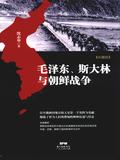 Mao Zedong, Stalin, and the Korean War 毛泽东、斯大林与朝鲜战争
Mao Zedong, Stalin, and the Korean War is one of the most representative works by renowned historian Shen Zhihua, and a new starting point for the study of the Korean War in China. Drawing on the wealth of firsthand materials preserved in China and Russia, it offers a meticulous examination of the origins of the Korean War and China’s decision to enter it. The book not only overturns many familiar accounts and conclusions, but also reveals, on a deeper level, the underlying logic connecting two
877Reads9.4Score234Shelves
Mao Zedong, Stalin, and the Korean War 毛泽东、斯大林与朝鲜战争
Mao Zedong, Stalin, and the Korean War is one of the most representative works by renowned historian Shen Zhihua, and a new starting point for the study of the Korean War in China. Drawing on the wealth of firsthand materials preserved in China and Russia, it offers a meticulous examination of the origins of the Korean War and China’s decision to enter it. The book not only overturns many familiar accounts and conclusions, but also reveals, on a deeper level, the underlying logic connecting two
877Reads9.4Score234Shelves
-
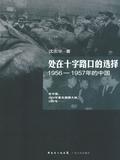 Choices at a Crossroads: China in 1956–1957 处在十字路口的选择1956—1957年的中国
Choices at the Crossroads: China, 1956–1957 collects nine historical essays by Shen Zhihua on China in 1956 and 1957. Each essay stands on its own, yet all are closely connected in their reasoning. Unlike earlier works on this period, the book analyzes the history of China’s socialist construction alongside the history of the international communist movement, arriving at many new insights.
413Reads9.1Score170Shelves
Choices at a Crossroads: China in 1956–1957 处在十字路口的选择1956—1957年的中国
Choices at the Crossroads: China, 1956–1957 collects nine historical essays by Shen Zhihua on China in 1956 and 1957. Each essay stands on its own, yet all are closely connected in their reasoning. Unlike earlier works on this period, the book analyzes the history of China’s socialist construction alongside the history of the international communist movement, arriving at many new insights.
413Reads9.1Score170Shelves
-
 The Rise and Fall of a Great Power: A Study of Soviet History (1917–1991), Part Two 一个大国的崛起与崩溃——苏联历史专题研究(1917-1991)中
From Khrushchev’s reforms to Brezhnev’s stagnation (1953–1982), this volume explores de-Stalinization, failed economic reforms, and the cost of foreign expansion.
165Reads9.2Score—Shelves
The Rise and Fall of a Great Power: A Study of Soviet History (1917–1991), Part Two 一个大国的崛起与崩溃——苏联历史专题研究(1917-1991)中
From Khrushchev’s reforms to Brezhnev’s stagnation (1953–1982), this volume explores de-Stalinization, failed economic reforms, and the cost of foreign expansion.
165Reads9.2Score—Shelves
-
 The Rise and Fall of a Great Power: A Study of Soviet History (1917–1991), Part One 一个大国的崛起与崩溃——苏联历史专题研究(1917-1991)上
From the October Revolution to the establishment of the Stalinist system (1917–1953), this volume examines the construction of the Soviet political system, its path to industrialization, and the Great Purge.
133Reads9.0Score—Shelves
The Rise and Fall of a Great Power: A Study of Soviet History (1917–1991), Part One 一个大国的崛起与崩溃——苏联历史专题研究(1917-1991)上
From the October Revolution to the establishment of the Stalinist system (1917–1953), this volume examines the construction of the Soviet political system, its path to industrialization, and the Great Purge.
133Reads9.0Score—Shelves
-
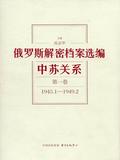 Selected Declassified Russian Archives: Sino-Soviet Relations, Volume One 俄罗斯解密档案选编——中苏关系(第一卷)
The 12-volume Selected Russian Declassified Archives: Sino-Soviet Relations, edited by Shen Zhihua, director of the Center for Cold War International History Studies at East China Normal University, contains 2,625 declassified Russian documents from 1945 to 1991. Some are unique copies, the only ones known to exist anywhere in the world; others were declassified and made available by certain Russian archives in the last century, only to be hidden away again soon afterward. The collection covers
131Reads9.4Score—Shelves
Selected Declassified Russian Archives: Sino-Soviet Relations, Volume One 俄罗斯解密档案选编——中苏关系(第一卷)
The 12-volume Selected Russian Declassified Archives: Sino-Soviet Relations, edited by Shen Zhihua, director of the Center for Cold War International History Studies at East China Normal University, contains 2,625 declassified Russian documents from 1945 to 1991. Some are unique copies, the only ones known to exist anywhere in the world; others were declassified and made available by certain Russian archives in the last century, only to be hidden away again soon afterward. The collection covers
131Reads9.4Score—Shelves
-
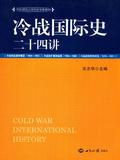 Twenty-Four Lectures on the International History of the Cold War 冷战国际史二十四讲
The Cold War in International History: Twenty-Four Lectures is divided into three parts: Part One, The Origins and Outbreak of the Cold War (1945–1953); Part Two, The Expansion and Continuation of the Cold War (1954–1969); and Part Three, The Transformation and End of the Cold War (1970–1991). The book brings together years of teaching and research by faculty in the History Department at East China Normal University. Within a limited space, it traces the development of contemporary international
96Reads9.3Score—Shelves
Twenty-Four Lectures on the International History of the Cold War 冷战国际史二十四讲
The Cold War in International History: Twenty-Four Lectures is divided into three parts: Part One, The Origins and Outbreak of the Cold War (1945–1953); Part Two, The Expansion and Continuation of the Cold War (1954–1969); and Part Three, The Transformation and End of the Cold War (1970–1991). The book brings together years of teaching and research by faculty in the History Department at East China Normal University. Within a limited space, it traces the development of contemporary international
96Reads9.3Score—Shelves
-
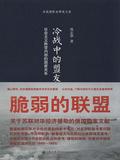 Allies in the Cold War: Relations Between States in the Socialist Bloc 冷战中的盟友——社会主义阵营内部的国家关系
Systematically examines cooperation and conflict within the socialist bloc, including China, the Soviet Union, Eastern Europe, North Korea, and Vietnam, and explores the true nature of relations among these "fraternal countries." Through examples of economic aid, military alliances, and political control, it reveals the contradictions between hegemonic structures within the bloc and nationalism.
64Reads9.4Score—Shelves
Allies in the Cold War: Relations Between States in the Socialist Bloc 冷战中的盟友——社会主义阵营内部的国家关系
Systematically examines cooperation and conflict within the socialist bloc, including China, the Soviet Union, Eastern Europe, North Korea, and Vietnam, and explores the true nature of relations among these "fraternal countries." Through examples of economic aid, military alliances, and political control, it reveals the contradictions between hegemonic structures within the bloc and nationalism.
64Reads9.4Score—Shelves
-
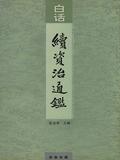 A Plain-Language Continuation of the Comprehensive Mirror to Aid in Government, Volume One 白话续资治通鉴(第一册)
Covers the evolution of the Zhou dynasty's feudal system, the rivalries among the feudal lords during the Spring and Autumn and Warring States periods, and history from the Qin unification of the Six States through the early Chu-Han Contention.
56Reads8.6Score—Shelves
A Plain-Language Continuation of the Comprehensive Mirror to Aid in Government, Volume One 白话续资治通鉴(第一册)
Covers the evolution of the Zhou dynasty's feudal system, the rivalries among the feudal lords during the Spring and Autumn and Warring States periods, and history from the Qin unification of the Six States through the early Chu-Han Contention.
56Reads8.6Score—Shelves
-
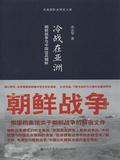 The Cold War in Asia: The Korean War and China's Entry 冷战在亚洲——朝鲜战争与中国出兵朝鲜
Drawing on archival records from China, Russia, the United States, and South Korea, this book reconstructs China's decision-making process during the War to Resist U.S. Aggression and Aid Korea. It reveals the three-way interactions between Stalin, Mao Zedong, and Kim Il Sung, and examines China's motives for entering the war, the costs it incurred, and the far-reaching effects on Sino-Soviet relations and the Cold War order in East Asia.
54Reads9.4Score—Shelves
The Cold War in Asia: The Korean War and China's Entry 冷战在亚洲——朝鲜战争与中国出兵朝鲜
Drawing on archival records from China, Russia, the United States, and South Korea, this book reconstructs China's decision-making process during the War to Resist U.S. Aggression and Aid Korea. It reveals the three-way interactions between Stalin, Mao Zedong, and Kim Il Sung, and examines China's motives for entering the war, the costs it incurred, and the far-reaching effects on Sino-Soviet relations and the Cold War order in East Asia.
54Reads9.4Score—Shelves
-
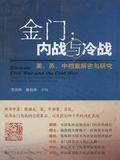 Golden Gate: Civil War and Cold War: American, Soviet, and Chinese Archives and Research 金门:内战与冷战:美、苏、中档案与研究
Golden Gate: Civil War and Cold War: Declassified American, Soviet, and Chinese Archives and Research draws on recently declassified archives from the United States, the former Soviet Union, mainland China, and Taiwan, as well as a wealth of historical sources such as diaries. It offers a fresh, multifaceted interpretation of the major political and military events surrounding Kinmen since the 1940s. Its incisive analysis and penetrating insights make it an important reference for uncovering the
30Reads9.2Score—Shelves
Golden Gate: Civil War and Cold War: American, Soviet, and Chinese Archives and Research 金门:内战与冷战:美、苏、中档案与研究
Golden Gate: Civil War and Cold War: Declassified American, Soviet, and Chinese Archives and Research draws on recently declassified archives from the United States, the former Soviet Union, mainland China, and Taiwan, as well as a wealth of historical sources such as diaries. It offers a fresh, multifaceted interpretation of the major political and military events surrounding Kinmen since the 1940s. Its incisive analysis and penetrating insights make it an important reference for uncovering the
30Reads9.2Score—Shelves