Fanqie catalogue
Books by Pan Qiang'en
- Matches
- 15
Every Fanqie book we index, searchable by title, author or tag.
-
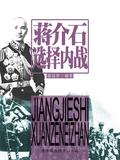 Chiang Kai-shek Chooses Civil War 蒋介石选择内战
After victory in the War of Resistance Against Japan, in order to secure peace and prevent civil war, the Communist Party of China persisted in its efforts until the Kuomintang and the Communist Party formally signed a ceasefire agreement on January 10, 1946. The Communist Party of China strictly upheld the agreement, but the Kuomintang had no intention of honoring the ceasefire. Even as the ceasefire order was issued, it continued moving troops to attack the liberated areas. After completing pr
2.8kReads9.5Score290Shelves
Chiang Kai-shek Chooses Civil War 蒋介石选择内战
After victory in the War of Resistance Against Japan, in order to secure peace and prevent civil war, the Communist Party of China persisted in its efforts until the Kuomintang and the Communist Party formally signed a ceasefire agreement on January 10, 1946. The Communist Party of China strictly upheld the agreement, but the Kuomintang had no intention of honoring the ceasefire. Even as the ceasefire order was issued, it continued moving troops to attack the liberated areas. After completing pr
2.8kReads9.5Score290Shelves
-
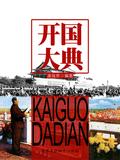 The Founding Ceremony 开国大典
The founding ceremony was held in grand style on October 1, 1949, in Tiananmen Square in Beijing to mark the establishment of the Central People’s Government of the People’s Republic of China. The chairman, vice-chairmen, and members of the Central People’s Government took their places. The band played the provisional national anthem, “March of the Volunteers,” and Chairman Mao Zedong announced, “The Central People’s Government of the People’s Republic of China is established today.” He then per
1.4kReads9.6Score147Shelves
The Founding Ceremony 开国大典
The founding ceremony was held in grand style on October 1, 1949, in Tiananmen Square in Beijing to mark the establishment of the Central People’s Government of the People’s Republic of China. The chairman, vice-chairmen, and members of the Central People’s Government took their places. The band played the provisional national anthem, “March of the Volunteers,” and Chairman Mao Zedong announced, “The Central People’s Government of the People’s Republic of China is established today.” He then per
1.4kReads9.6Score147Shelves
-
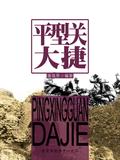 The Great Victory at Pingxing Pass 平型关大捷
The victory at Pingxingguan refers to the battle in which the 115th Division of the Eighth Route Army ambushed the supply convoy of the 21st Brigade of Japan’s 5th Division near Pingxingguan on September 25, 1937, during the War of Resistance against Japan, killing more than a thousand enemy soldiers. It was the first decisive victory won by the Chinese side since the war between China and Japan began. This victory shattered the myth of the Japanese army’s invincibility, lifted the nation’s spir
1.3kReads9.5Score105Shelves
The Great Victory at Pingxing Pass 平型关大捷
The victory at Pingxingguan refers to the battle in which the 115th Division of the Eighth Route Army ambushed the supply convoy of the 21st Brigade of Japan’s 5th Division near Pingxingguan on September 25, 1937, during the War of Resistance against Japan, killing more than a thousand enemy soldiers. It was the first decisive victory won by the Chinese side since the war between China and Japan began. This victory shattered the myth of the Japanese army’s invincibility, lifted the nation’s spir
1.3kReads9.5Score105Shelves
-
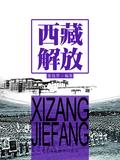 The Liberation of Tibet 西藏解放
On May 23, 1951, plenipotentiary representatives of the Central People's Government and the local government of Tibet signed the Agreement Between the Central People's Government and the Local Government of Tibet on Measures for the Peaceful Liberation of Tibet in Beijing, commonly known as the Seventeen-Point Agreement, declaring the peaceful liberation of Tibet.
1.3kReads9.5Score181Shelves
The Liberation of Tibet 西藏解放
On May 23, 1951, plenipotentiary representatives of the Central People's Government and the local government of Tibet signed the Agreement Between the Central People's Government and the Local Government of Tibet on Measures for the Peaceful Liberation of Tibet in Beijing, commonly known as the Seventeen-Point Agreement, declaring the peaceful liberation of Tibet.
1.3kReads9.5Score181Shelves
-
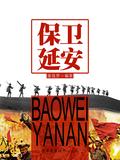 Defending Yan'an 保卫延安
Yan'an, known in ancient times as Yanzhou, lies in northern Shaanxi along the middle reaches of the Yellow River. It has long been the political, economic, cultural, and military center of northern Shaanxi. Yan'an was the destination of the Red Army's Long March and the Chinese Communist Party's base from 1935 to 1948, earning it the title of the “Revolutionary Holy Land.” This book recreates the historical reality of the war years, chapter by chapter.
976Reads9.5Score106Shelves
Defending Yan'an 保卫延安
Yan'an, known in ancient times as Yanzhou, lies in northern Shaanxi along the middle reaches of the Yellow River. It has long been the political, economic, cultural, and military center of northern Shaanxi. Yan'an was the destination of the Red Army's Long March and the Chinese Communist Party's base from 1935 to 1948, earning it the title of the “Revolutionary Holy Land.” This book recreates the historical reality of the war years, chapter by chapter.
976Reads9.5Score106Shelves
-
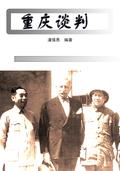 The Chongqing Negotiations 重庆谈判
This book includes stories about people who are difficult to deal with, a shameless scene in court, an attempt to exchange for the liver of the Father of the Nation, a drunken appearance in court, Kong Xiangxi’s letter of testimony, Madam Zhou’s trump card, Chen Gongbo’s flight into exile, a public trial of a notorious traitor on Tomb-Sweeping Day, and the eternal mystery of Jin Bihui, among other things.
187Reads9.5Score—Shelves
The Chongqing Negotiations 重庆谈判
This book includes stories about people who are difficult to deal with, a shameless scene in court, an attempt to exchange for the liver of the Father of the Nation, a drunken appearance in court, Kong Xiangxi’s letter of testimony, Madam Zhou’s trump card, Chen Gongbo’s flight into exile, a public trial of a notorious traitor on Tomb-Sweeping Day, and the eternal mystery of Jin Bihui, among other things.
187Reads9.5Score—Shelves
-
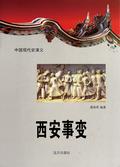 A Tale of Modern Chinese History: The Xi’an Incident 中国现代史演义:西安事变
This book covers topics including the gunshots that heralded the capture of Chiang Kai-shek at Huaqing, Chiang Kai-shek's detention in Xincheng, Soong Mei-ling waking from a nightmare, two-faced opportunists and chameleons, Chiang Kai-shek writing his will, Communist representatives advocating peace, Zhou Enlai going to Xi'an to help Zhang and Yang, a biblical hint about the female bodyguard and the male guard, Soong Mei-ling weeping in the ancient city, the Young Marshal hastily releasing the t
100Reads9.2Score—Shelves
A Tale of Modern Chinese History: The Xi’an Incident 中国现代史演义:西安事变
This book covers topics including the gunshots that heralded the capture of Chiang Kai-shek at Huaqing, Chiang Kai-shek's detention in Xincheng, Soong Mei-ling waking from a nightmare, two-faced opportunists and chameleons, Chiang Kai-shek writing his will, Communist representatives advocating peace, Zhou Enlai going to Xi'an to help Zhang and Yang, a biblical hint about the female bodyguard and the male guard, Soong Mei-ling weeping in the ancient city, the Young Marshal hastily releasing the t
100Reads9.2Score—Shelves
-
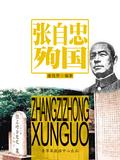 Zhang Zizhong’s Sacrifice 张自忠殉国
Zhang Zizhong (August 11, 1891–May 16, 1940), courtesy name Jinchen, was a Han Chinese man from Tangyuan Village, Linqing, Shandong. He died in service as a lieutenant general in the army of the Republic of China, holding the honorary rank of full general. After his death, he was posthumously awarded the rank of second-class general. He was also the highest-ranking Allied officer to die in World War II.
37Reads9.3Score—Shelves
Zhang Zizhong’s Sacrifice 张自忠殉国
Zhang Zizhong (August 11, 1891–May 16, 1940), courtesy name Jinchen, was a Han Chinese man from Tangyuan Village, Linqing, Shandong. He died in service as a lieutenant general in the army of the Republic of China, holding the honorary rank of full general. After his death, he was posthumously awarded the rank of second-class general. He was also the highest-ranking Allied officer to die in World War II.
37Reads9.3Score—Shelves
-
 Volume 24: Revolt Before the Battle 第二十四卷阵前起义
A cooked duck can still fly away. What a strange thing! Bai Chongxi changed his mind overnight, as if his thoughts were impossible to fathom. Chiang Kai-shek had no choice but to seize Du Yuming again, and the withdrawal from Xuzhou once more became the “Marshall Plan.” With all this back and forth, do you really think they can get away?
27Reads9.2Score—Shelves
Volume 24: Revolt Before the Battle 第二十四卷阵前起义
A cooked duck can still fly away. What a strange thing! Bai Chongxi changed his mind overnight, as if his thoughts were impossible to fathom. Chiang Kai-shek had no choice but to seize Du Yuming again, and the withdrawal from Xuzhou once more became the “Marshall Plan.” With all this back and forth, do you really think they can get away?
27Reads9.2Score—Shelves
-
 Volume 28: The Liberation of Tibet 第二十八卷西藏解放
This book includes "An Argument on the Eve of Disaster," "Liu Wenhui Goes to the Hongmen Banquet," "Another Sincere Plea Falls on Deaf Ears," "Hu Zongnan's Tender Side," "Hu Zongnan Takes the Fall," "The Longxing Temple Headquarters Operation," "Chiang Kai-shek Bids Farewell to the Mainland," "The Military Conference Before the Battle," "Han Chenglie Turns Misfortune into Fortune," "The Fleet That Could Not Return," "An Isolated Force Without Reinforcements," "Fan Wenxiu, a Heroic and Tragic Tal
23Reads9.1Score—Shelves
Volume 28: The Liberation of Tibet 第二十八卷西藏解放
This book includes "An Argument on the Eve of Disaster," "Liu Wenhui Goes to the Hongmen Banquet," "Another Sincere Plea Falls on Deaf Ears," "Hu Zongnan's Tender Side," "Hu Zongnan Takes the Fall," "The Longxing Temple Headquarters Operation," "Chiang Kai-shek Bids Farewell to the Mainland," "The Military Conference Before the Battle," "Han Chenglie Turns Misfortune into Fortune," "The Fleet That Could Not Return," "An Isolated Force Without Reinforcements," "Fan Wenxiu, a Heroic and Tragic Tal
23Reads9.1Score—Shelves
-
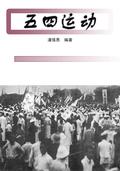 May 4Th Movement 五四运动
The contents of this book include a peace meeting but not peace, victorious countries seeking justice, confrontations with each other, a weak country that cannot be redressed, burning Cao's house to punish national traitors, the May 4th Movement, the spring thunder, Duan Qirui's triumphant military career, Xu Shichang's rise to prominence, the fierce fighting between Anhui and Anhui, the betrayal of relatives and the defeat of Anhui's army, a revolutionary partner seeking to save the country, an
8Reads8.3Score—Shelves
May 4Th Movement 五四运动
The contents of this book include a peace meeting but not peace, victorious countries seeking justice, confrontations with each other, a weak country that cannot be redressed, burning Cao's house to punish national traitors, the May 4th Movement, the spring thunder, Duan Qirui's triumphant military career, Xu Shichang's rise to prominence, the fierce fighting between Anhui and Anhui, the betrayal of relatives and the defeat of Anhui's army, a revolutionary partner seeking to save the country, an
8Reads8.3Score—Shelves
-
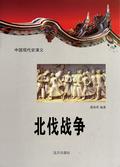 A Tale of Modern Chinese History: The Northern Expedition 中国现代史演义:北伐战争
This book covers topics including establishing a rebel band and setting up a county yamen; Dai Li’s miraculous escape from death; leaving home for Guangzhou; entering the sixth class at Whampoa Military Academy; proving his abilities in the covert investigation group; performing the dragon dance in Guilin during the Jiazi year; Lu Rongting’s crushing defeat; and Li Zongren’s desperate bid to turn the tide.
1Reads8.4Score—Shelves
A Tale of Modern Chinese History: The Northern Expedition 中国现代史演义:北伐战争
This book covers topics including establishing a rebel band and setting up a county yamen; Dai Li’s miraculous escape from death; leaving home for Guangzhou; entering the sixth class at Whampoa Military Academy; proving his abilities in the covert investigation group; performing the dragon dance in Guilin during the Jiazi year; Lu Rongting’s crushing defeat; and Li Zongren’s desperate bid to turn the tide.
1Reads8.4Score—Shelves
-
 A Tale of Modern Chinese History: Chiang Kai-shek Chooses Civil War 中国现代史演义:蒋介石选择内战
This book covers such events as the Hongmen Banquet ending without reconciliation, Hurley returning home in disgrace, Marshall being summoned to the crisis, the two sides reaching an agreement through mediation, the idea that winning over Enlai meant winning the world, Marshall's trip to Yan'an, his return home burdened with worries, the flames of war rekindling as the Northeast was seized, a situation spiraling out of control, Bai Chongxi visiting troops in the Northeast, the chairman and his w
1Reads8.8Score—Shelves
A Tale of Modern Chinese History: Chiang Kai-shek Chooses Civil War 中国现代史演义:蒋介石选择内战
This book covers such events as the Hongmen Banquet ending without reconciliation, Hurley returning home in disgrace, Marshall being summoned to the crisis, the two sides reaching an agreement through mediation, the idea that winning over Enlai meant winning the world, Marshall's trip to Yan'an, his return home burdened with worries, the flames of war rekindling as the Northeast was seized, a situation spiraling out of control, Bai Chongxi visiting troops in the Northeast, the chairman and his w
1Reads8.8Score—Shelves
-
 Chiang Kai-shek in Shanghai 蒋介石在上海滩
This book covers topics including the two-faced opportunist who switched allegiance between the Qing and Chu, the Luzhou-Shunqing Uprising that shook Sichuan, starting a revolution with two cleavers, the ambition to follow Sun Yat-sen, the first encounters with the Communist Party, choosing a new path at a turning point in history, the lowlife Jin Rong, driving out the old and bringing in the new through marriage, scheming to take over a theater, a heaven-sent chance to make a fortune, brave men
1Reads7.8Score—Shelves
Chiang Kai-shek in Shanghai 蒋介石在上海滩
This book covers topics including the two-faced opportunist who switched allegiance between the Qing and Chu, the Luzhou-Shunqing Uprising that shook Sichuan, starting a revolution with two cleavers, the ambition to follow Sun Yat-sen, the first encounters with the Communist Party, choosing a new path at a turning point in history, the lowlife Jin Rong, driving out the old and bringing in the new through marriage, scheming to take over a theater, a heaven-sent chance to make a fortune, brave men
1Reads7.8Score—Shelves
-
 Romance of Modern Chinese History: the May 4Th Movement 中国现代史演义:五四运动
The contents of this book include a peace meeting but not peace, victorious countries seeking justice, confrontations with each other, a weak country that cannot be redressed, burning Cao's house to punish national traitors, the May 4th Movement, the spring thunder, Duan Qirui's triumphant military career, Xu Shichang's rise to prominence, the fierce fighting between Anhui and Anhui, the betrayal of relatives and the defeat of Anhui's army, a revolutionary partner seeking to save the country, an
—Reads8.5Score—Shelves
Romance of Modern Chinese History: the May 4Th Movement 中国现代史演义:五四运动
The contents of this book include a peace meeting but not peace, victorious countries seeking justice, confrontations with each other, a weak country that cannot be redressed, burning Cao's house to punish national traitors, the May 4th Movement, the spring thunder, Duan Qirui's triumphant military career, Xu Shichang's rise to prominence, the fierce fighting between Anhui and Anhui, the betrayal of relatives and the defeat of Anhui's army, a revolutionary partner seeking to save the country, an
—Reads8.5Score—Shelves