Fanqie library
Browse
- Titles
- 13
Every Fanqie book we index, searchable by title, author or tag.
-
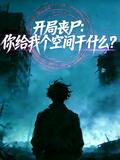 At the Beginning of the Game, Zombies, Why Do You Give Them Some Space?
When Chen Mo opened his eyes, he was holding half of a human leg in his mouth. The system sound exploded in my head: "The apocalypse system is activated! 50 Square meters of free space!" He looked at the empty space, lost in thought. "Humans use space to store supplies, but what do zombies use space for? You are kidding me! I am a zombie, a zombie, a zombie! Are you blind?" Until an accident, he stuffed his colleague who was trying to grab food... [Ding, the zombie has been tamed, loyalty is 100
8Reads—Score—Shelves
At the Beginning of the Game, Zombies, Why Do You Give Them Some Space?
When Chen Mo opened his eyes, he was holding half of a human leg in his mouth. The system sound exploded in my head: "The apocalypse system is activated! 50 Square meters of free space!" He looked at the empty space, lost in thought. "Humans use space to store supplies, but what do zombies use space for? You are kidding me! I am a zombie, a zombie, a zombie! Are you blind?" Until an accident, he stuffed his colleague who was trying to grab food... [Ding, the zombie has been tamed, loyalty is 100
8Reads—Score—Shelves
-
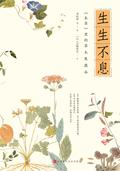 Endless Life: Plants, Fruits and Vegetables in "Compendium of Materia Medica"
Materia Medica is a science that developed from ancient Chinese herbalism. Later, it also spread widely to natural products other than herbs, and gradually became a natural history that studies the morphology and properties of species. "Eternal Life: Plants, Fruits and Vegetables in Materia Medica" selects more than a hundred exquisite illustrations of materia medica from Japan's first large-scale plant atlas, the Materia Medica, supplemented by text about the origin, traits, attributes and func
—Reads7.7Score—Shelves
Endless Life: Plants, Fruits and Vegetables in "Compendium of Materia Medica"
Materia Medica is a science that developed from ancient Chinese herbalism. Later, it also spread widely to natural products other than herbs, and gradually became a natural history that studies the morphology and properties of species. "Eternal Life: Plants, Fruits and Vegetables in Materia Medica" selects more than a hundred exquisite illustrations of materia medica from Japan's first large-scale plant atlas, the Materia Medica, supplemented by text about the origin, traits, attributes and func
—Reads7.7Score—Shelves
-
 Compendium of Materia Medica
"Compendium of Materia Medica" is a world-renowned scientific masterpiece and is known as the "Treasure Book of Oriental Materia Medica". Li Shizhen devoted his whole life to "archaeology to prove the present and exhaustive study of physics" to conduct an unprecedented systematic and scientific summary of Chinese pharmacology before the 16th century. The book has 52 volumes, including 1892 kinds of medicines, more than 10,000 prescriptions, and more than 1,000 illustrations. It pioneered the sci
—Reads8.3Score—Shelves
Compendium of Materia Medica
"Compendium of Materia Medica" is a world-renowned scientific masterpiece and is known as the "Treasure Book of Oriental Materia Medica". Li Shizhen devoted his whole life to "archaeology to prove the present and exhaustive study of physics" to conduct an unprecedented systematic and scientific summary of Chinese pharmacology before the 16th century. The book has 52 volumes, including 1892 kinds of medicines, more than 10,000 prescriptions, and more than 1,000 illustrations. It pioneered the sci
—Reads8.3Score—Shelves
-
 Linhu Pulsology
"Binghu Pulsology", Pulsology Works, 1 volume. Written by Li Shizhen of the Ming Dynasty in the 43rd year of Jiajing (1564), pulseology is highly valued in traditional Chinese medicine. After Wang Shuhe of the Jin Dynasty wrote the "Mai Jing", Gao Yangsheng of the Five Dynasties wrote the "Mai Jue", which was widely disseminated because it was easy to understand and easy to memorize, but it also contained many fallacies. Li Shizhen inherited the orthodox pulse theory, learned from the strengths
—Reads9.2Score—Shelves
Linhu Pulsology
"Binghu Pulsology", Pulsology Works, 1 volume. Written by Li Shizhen of the Ming Dynasty in the 43rd year of Jiajing (1564), pulseology is highly valued in traditional Chinese medicine. After Wang Shuhe of the Jin Dynasty wrote the "Mai Jing", Gao Yangsheng of the Five Dynasties wrote the "Mai Jue", which was widely disseminated because it was easy to understand and easy to memorize, but it also contained many fallacies. Li Shizhen inherited the orthodox pulse theory, learned from the strengths
—Reads9.2Score—Shelves
-
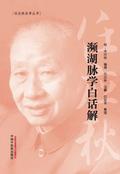 Interpretation of Linhu Pulse Study in Vernacular
"Binghu Pulseology" was compiled by Li Shizhen in the Ming Dynasty. The essence of pulse theory from various schools is collected and summarized into 27 types of pulse conditions. The book not only briefly describes various pulse conditions, the identification of similar pulses, the relationship between pulse conditions and diseases, etc., But also adopts the style of verses (seven-character formulas) to facilitate recitation and memorization. It is a good book for learning pulse theory in tradi
—Reads9.3Score—Shelves
Interpretation of Linhu Pulse Study in Vernacular
"Binghu Pulseology" was compiled by Li Shizhen in the Ming Dynasty. The essence of pulse theory from various schools is collected and summarized into 27 types of pulse conditions. The book not only briefly describes various pulse conditions, the identification of similar pulses, the relationship between pulse conditions and diseases, etc., But also adopts the style of verses (seven-character formulas) to facilitate recitation and memorization. It is a good book for learning pulse theory in tradi
—Reads9.3Score—Shelves
-
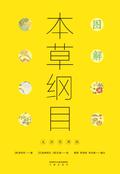 Illustrated Compendium of Materia Medica: Practical Edition for Life
"Illustrated Compendium of Materia Medica" is based on the Jinling edition of the Ming Dynasty, and was edited, translated and annotated by Huang Qian's team, a postdoctoral fellow at Fujian University of Traditional Chinese Medicine. Inheriting the essence of the original version, it pays attention to its concept of health care. It includes daily easily available medicinal (food) ingredients and easy-to-prepare prescriptions for dozens of common diseases in life; it maintains the outline struct
—Reads9.5Score—Shelves
Illustrated Compendium of Materia Medica: Practical Edition for Life
"Illustrated Compendium of Materia Medica" is based on the Jinling edition of the Ming Dynasty, and was edited, translated and annotated by Huang Qian's team, a postdoctoral fellow at Fujian University of Traditional Chinese Medicine. Inheriting the essence of the original version, it pays attention to its concept of health care. It includes daily easily available medicinal (food) ingredients and easy-to-prepare prescriptions for dozens of common diseases in life; it maintains the outline struct
—Reads9.5Score—Shelves
-
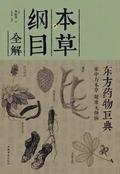 Comprehensive Explanation of "Compendium of Materia Medica"
This book provides a detailed interpretation of the "Compendium of Materia Medica", which mainly includes the use of medicines for the six internal organs and five internal organs to nourish and relieve odor, medicinal formulas for specimens with deficient and excess internal organs, and examples of medication for the four seasons. Based on the principle of taking the essence of the ancients and making it practical for modern people, this book cuts out the complex and simplifies it, carefully se
—Reads9.4Score—Shelves
Comprehensive Explanation of "Compendium of Materia Medica"
This book provides a detailed interpretation of the "Compendium of Materia Medica", which mainly includes the use of medicines for the six internal organs and five internal organs to nourish and relieve odor, medicinal formulas for specimens with deficient and excess internal organs, and examples of medication for the four seasons. Based on the principle of taking the essence of the ancients and making it practical for modern people, this book cuts out the complex and simplifies it, carefully se
—Reads9.4Score—Shelves
-
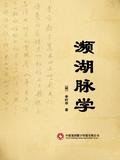 Linhu Pulology
"Binghu Pulseology" was written in 1564 by Li Shizhen in the Ming Dynasty. The whole book is 1 volume. The 27 types of pulse conditions are discussed in detail in the form of verses: floating, sinking, slow, counting, slippery, astringent, empty, solid, long, short, heavy, weak, tight, slow, stringy, leathery, firm, wet, weak, loose, thin, volted, dynamic, quick, knotted, and generational. This book's inductive analysis of 27 pulse conditions is meticulous, concise and highly praised by later ge
—Reads9.4Score—Shelves
Linhu Pulology
"Binghu Pulseology" was written in 1564 by Li Shizhen in the Ming Dynasty. The whole book is 1 volume. The 27 types of pulse conditions are discussed in detail in the form of verses: floating, sinking, slow, counting, slippery, astringent, empty, solid, long, short, heavy, weak, tight, slow, stringy, leathery, firm, wet, weak, loose, thin, volted, dynamic, quick, knotted, and generational. This book's inductive analysis of 27 pulse conditions is meticulous, concise and highly praised by later ge
—Reads9.4Score—Shelves
-
 Compendium of Materia Medica
"Compendium of Materia Medica" extensively covers many scientific fields such as medicine, pharmacology, biology, mineralogy, chemistry, environment and biology, heredity and variation, etc. In the history of chemistry, it recorded a series of chemical reactions of pure metals, metals, metal chlorides, sulfides, etc. Earlier. At the same time, it also records some operating methods used in modern chemistry such as distillation, crystallization, sublimation, precipitation, and drying. It is not o
—Reads9.5Score—Shelves
Compendium of Materia Medica
"Compendium of Materia Medica" extensively covers many scientific fields such as medicine, pharmacology, biology, mineralogy, chemistry, environment and biology, heredity and variation, etc. In the history of chemistry, it recorded a series of chemical reactions of pure metals, metals, metal chlorides, sulfides, etc. Earlier. At the same time, it also records some operating methods used in modern chemistry such as distillation, crystallization, sublimation, precipitation, and drying. It is not o
—Reads9.5Score—Shelves
-
 Compendium of Materia Medica - Complete Collection
Li Shizhen, the best pharmacologist in the Ming Dynasty, "has been addicted to classics as much as eating sugarcane syrup" and "searched and collected extensively" for more than thirty years and traveled thousands of miles until he was compiled in his sixtieth year. It is a collection of the great achievements of Chinese herbal medicine before the 16th century. It is a well-deserved "magnificent book of oriental medicine" and has an immeasurable influence on the development of modern pharmacolog
—Reads9.5Score—Shelves
Compendium of Materia Medica - Complete Collection
Li Shizhen, the best pharmacologist in the Ming Dynasty, "has been addicted to classics as much as eating sugarcane syrup" and "searched and collected extensively" for more than thirty years and traveled thousands of miles until he was compiled in his sixtieth year. It is a collection of the great achievements of Chinese herbal medicine before the 16th century. It is a well-deserved "magnificent book of oriental medicine" and has an immeasurable influence on the development of modern pharmacolog
—Reads9.5Score—Shelves
-
 **
It is a masterpiece of pharmacology compiled by Li Shizhen of the Ming Dynasty on the basis of inheriting and summarizing the achievements of materia medica before the Ming Dynasty, combined with the author's long-term and extensive study and interviews with working people such as herb farmers, folk doctors, hunters, fishermen, etc., With reference to more than 800 kinds of classics, and after long-term hard practice and study, which lasted for decades. "Compendium of Materia Medica" was publish
—Reads5.8Score—Shelves
**
It is a masterpiece of pharmacology compiled by Li Shizhen of the Ming Dynasty on the basis of inheriting and summarizing the achievements of materia medica before the Ming Dynasty, combined with the author's long-term and extensive study and interviews with working people such as herb farmers, folk doctors, hunters, fishermen, etc., With reference to more than 800 kinds of classics, and after long-term hard practice and study, which lasted for decades. "Compendium of Materia Medica" was publish
—Reads5.8Score—Shelves
-
 Top Bullshit: I Move Bricks in Daqin
Li Ke, who is about to graduate from his doctorate, traveled to the Qin State in 227 BC and became the prisoner "Li Shi" for building the Great Wall. Relying on his proficiency in Qin history, he survived every step of the way under the harsh Qin laws. The identity crisis, the raging plague, and the murderous intention of the supervisor Tu Sui pushed him into the abyss. He is also involved in the undercurrent of the mysterious organization "Partridge"...
—Reads—Score—Shelves
Top Bullshit: I Move Bricks in Daqin
Li Ke, who is about to graduate from his doctorate, traveled to the Qin State in 227 BC and became the prisoner "Li Shi" for building the Great Wall. Relying on his proficiency in Qin history, he survived every step of the way under the harsh Qin laws. The identity crisis, the raging plague, and the murderous intention of the supervisor Tu Sui pushed him into the abyss. He is also involved in the undercurrent of the mysterious organization "Partridge"...
—Reads—Score—Shelves
-
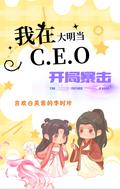 I Am the CEO of Ming Dynasty: a Critical Attack at the Beginning
The coder traveled to the Ming Dynasty and started a humorous time-travel journey. He died suddenly while working overtime. When he opened his eyes, he found himself lying on a large carved bed, surrounded by beauties (concubines) and eunuchs in ancient costumes. In panic, he blurted out "What's the WIFI password?" Causing confusion. It was initially confirmed that he became the emperor, but the dynasty was not sure.
—Reads—Score—Shelves
I Am the CEO of Ming Dynasty: a Critical Attack at the Beginning
The coder traveled to the Ming Dynasty and started a humorous time-travel journey. He died suddenly while working overtime. When he opened his eyes, he found himself lying on a large carved bed, surrounded by beauties (concubines) and eunuchs in ancient costumes. In panic, he blurted out "What's the WIFI password?" Causing confusion. It was initially confirmed that he became the emperor, but the dynasty was not sure.
—Reads—Score—Shelves