Fanqie library
Browse
- Titles
- 30
Every Fanqie book we index, searchable by title, author or tag.
-
Apocryphal Collection
A collection of novels, including nine short stories, which was published together with "The Garden of Forking Paths" as the "Fictional Collection" in 1944, continuing the theme of fictional legendary stories. On Christmas Eve in 1938, Borges hit his head on a window while going upstairs. The wound became infected and worsened into sepsis. He suffered from high fever, hallucinations, and aphasia. It took more than a month to recover. This experience of wandering between life and death became the
—Reads8.7Score—Shelves
-
Biographies of Villains
Borges's first novel, published in 1935, tells the stories of "villains" from all over the world, including slave traders in the American South, gang leaders in New York, and British tramps who pretend to be descendants of noble families. They even include Kira Uenosuke, a courtesy official in Japan's Edo shogunate period who insulted the Ako feudal lord and was eventually avenged, and Widow Zheng, a female pirate in the Qing Dynasty in China. The real historical background is intertwined with t
—Reads8.7Score—Shelves
-
Seven Nights
The collection of lectures, published in 1980, includes the contents of seven lectures given by Borges in the summer of 1977, with the themes of "The Divine Comedy", nightmares, "One Thousand and One Nights", Buddhism, poetry, Jewish mysticism and blindness. It tells about Borges's interaction with the "Divine Comedy", the nightmare of mirrors and labyrinths, Eastern consciousness, the essence of Buddhism, the aesthetics of poetry, the concept of holy books and the tools of art, etc.
—Reads9.0Score—Shelves
-
Borges: the Last Interview
This book includes a famous interview Borges had with Richard Bergin during his tenure at Harvard University, in which he once said, "Richard Bergin made me rediscover myself." He gives insights into his own and other people's literary works, and touches on many political ideas that are often ignored today. A few days before his death, he and his friend Lecubi conducted a private interview involving his life, love, and thoughts on his works and country. It was also a "last interview" in the true
—Reads8.7Score—Shelves
-
Borges, Spoken
Collection of speeches. In May and June of 1978, Borges gave five lectures at the University of Belgrano in Argentina, on the topics of books, immortality, Emmanuel Swedenborg, detective novels, and time. The theme seems grand and abstract, but the author takes a different approach: talking about the history of books from the perspective of oral tradition, using poetry as a starting point to analyze the meaning of immortality, using Swedenborg to talk about the philosophical propositions of life
—Reads9.2Score—Shelves
-
Iron Coin
A collection of poems created by Borges in 1976, containing thirty-five poems. The author has deep knowledge of the aesthetic theory and creative practice of poetry. He proposed that "every thing, no matter how brief and slight, will give us a special sense of beauty. Every word, even though it has existed for many centuries, can still start a new chapter and have an impact on the future." In this collection of poems, Borges strives to discover the unique beauty of things and the overlooked valu
—Reads8.4Score—Shelves
-
Borges' Conversations (2023 Edition)
Jorge Luis Borges (1899-1986), a world-renowned Argentine poet, writer, and translator. The father of Spanish-American literature, his creative style is profound, erudite, and unique. He is especially famous for his labyrinthine conception that blends reality with fiction to achieve mystery. He has a significant influence on contemporary literary creation and literary criticism around the world. In 1976, Borges participated in a series of conversations about his life and work at Indiana Universi
—Reads8.9Score—Shelves
-
Borges, Writing Lesson
Jorge Luis Borges was a world-class writer who knew the rules of writing and how and when to break them. He is a magician of language, like all the best jugglers and poets. Once the trick is revealed and the poem comes out, he will make us feel that this has always been there, somewhere in our hearts, but we have not been able to express it. In the spring of 1971, Borges was invited to lecture at a writing class at Columbia University. He analyzed his own work and used examples to help others im
—Reads9.1Score—Shelves
-
About "Martin Fierro"
★Borges's affectionate gift to Argentine literature is a shortcut to understand and approach Argentine literature, as well as a shortcut to gain a glimpse of Borges's literary interests and literary research methods. ★An objective introduction, comprehensive analysis and complete review of "Martin Fierro", a masterpiece of Argentine literature ★Borges is the Borges of the world and the Borges of Argentina. He has a deep love for his hometown and has unique and insightful insights into Argentine
—Reads7.8Score—Shelves
-
Memory of Shakespeare
★Book of Sand·Shakespeare's Memory ★The final work of Borges's novels ★"I take the risk, I accept the memory of Shakespeare." [About the author] Jorge Luis Borges (1899-1986) was an Argentine poet, novelist, critic, translator, and master of Spanish literature. Born in Buenos Aires on August 24, 1899, he lived in Europe with his family when he was a boy. In 1923, he published his first collection of poems, "The Passion of Buenos Aires", in 1925, his first collection of essays, "Collection of Exp
—Reads8.8Score—Shelves
-
The Language of Buenos Aires
★Focus on the evolution and characteristics of the Argentine language ★Discuss the relationship between language and culture, language and city ★Discover the unique poetry in everyday language [About the author] Jorge Luis Borges (1899-1986) Argentine poet, novelist, critic, translator, and master of Spanish literature. Born in Buenos Aires on August 24, 1899, he lived in Europe with his family when he was a boy. In 1923, he published his first collection of poems, "The Passion of Buenos Aires",
—Reads8.0Score—Shelves
-
Two Memorable Visions
★A collection of fantasy novels by Latin American literary master Borges ★An unexpected and whimsical work that breaks the rules ★The Chinese version is launched for the first time in China. The translation is faithful and smooth, capturing the essence of the original text [About the author] Jorge Luis Borges (1899-1986) Argentine poet, novelist, critic, translator, and master of Spanish literature. Born in Buenos Aires on August 24, 1899, he lived in Europe with his family when he was a boy. In
—Reads8.5Score—Shelves
-
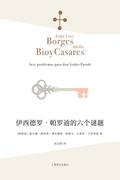
Six Mysteries of Isidro Parodi
★Collection of detective novels by Latin American literary master Borges ★The first imprisoned detective in history is born [About the author] Jorge Luis Borges (1899-1986) Argentine poet, novelist, critic, translator, and master of Spanish literature. Born in Buenos Aires on August 24, 1899, he lived in Europe with his family when he was a boy. In 1923, he published his first collection of poems, "The Passion of Buenos Aires", in 1925, his first collection of essays, "Collection of Explorations
—Reads7.6Score—Shelves
-
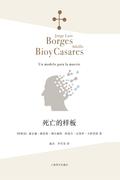
Pattern of Death
★The four-hand collaboration between literary masters Borges and Casares, see how the two literary masters work together to create a detective story ★Translated into Chinese for the first time [About the author] Jorge Luis Borges (1899-1986) Argentine poet, novelist, critic, translator, and master of Spanish literature. Born in Buenos Aires on August 24, 1899, he lived in Europe with his family when he was a boy. In 1923, he published his first collection of poems, "The Passion of Buenos Aires",
—Reads7.5Score—Shelves
-
A New Story About Bustos Domec
A four-hand collaboration between literary masters Borges and Casares. [About the author] Jorge Luis Borges (1899-1986), Argentine poet, novelist, critic, translator, and master of Spanish literature. Born in Buenos Aires on August 24, 1899, he lived in Europe with his family when he was a boy. In 1923, he published his first collection of poems, "The Passion of Buenos Aires", in 1925, his first collection of essays, "Collection of Explorations", and in 1935, his first collection of short storie
—Reads8.2Score—Shelves
-
Chronicle of Bustos Domec
A four-hand collaboration between literary masters Borges and Casares. [About the author] Jorge Luis Borges (1899-1986), Argentine poet, novelist, critic, translator, and master of Spanish literature. Born in Buenos Aires on August 24, 1899, he lived in Europe with his family when he was a boy. In 1923, he published his first collection of poems, "The Passion of Buenos Aires", in 1925, his first collection of essays, "Collection of Explorations", and in 1935, his first collection of short storie
—Reads8.6Score—Shelves
-
Suburbanites·believer's Paradise
Borges × Casares: Top Argentinian writers jointly create a collection of film scripts, published for the first time in China! [About the author] Jorge Luis Borges (1899-1986), Argentine poet, novelist, critic, translator, and master of Spanish literature. Born in Buenos Aires on August 24, 1899, he lived in Europe with his family when he was a boy. In 1923, he published his first collection of poems, "The Passion of Buenos Aires", in 1925, his first collection of essays, "Collection of Explorati
—Reads7.8Score—Shelves
-
Germanic Medieval Literature
Why hang mistletoe at Christmas? Loki, with his heart like a snake, turned into a woman and killed Baldur, the God of Summer? Which is more valuable, Beowulf or The Iliad? How did "Nibelungenlied" influence Wagner's creation? Saga, epic poem, elegy, Edda... English Saxon literature, German literature and Scandinavian literature all come from the same root system - Germania ★Borges's love letter to Germanic literature ★Uncover the mysteries of three mysterious literatures that have the same origi
—Reads8.2Score—Shelves
-
Introduction to English Literature
Private English literature lessons from literary master Borges. Jorge Luis Borges (1899-1986), Argentine poet, novelist, critic, translator, and master of Spanish literature. Born in Buenos Aires on August 24, 1899, he lived in Europe with his family when he was a boy. In 1923, he published his first collection of poems, "The Passion of Buenos Aires", in 1925, his first collection of essays, "Collection of Explorations", and in 1935, his first collection of short stories, "Biographies of Villain
—Reads9.2Score—Shelves
-
Introduction to American Literature
"Introduction to American Literature" is a work co-written by Borges and Estelle Semberlein de Torres Dugan. It starts from the morning when the Puritans on the "Mayflower" landed on the East Coast, sorting out the history of American literature in three centuries. This book does not stop at psychoanalysis, social history and other organizing clues. Instead, it obeys the call of the work and intersperses topics not covered in other large works, such as detective novels, science fiction novels, w
—Reads7.9Score—Shelves
-
Manuscript Missing
A collection of essays, published in 1986, including more than 200 short essays written by Borges when he was the editor-in-chief of the "Foreign Books and Authors" column of the Buenos Aires magazine "Family". The words "Tofu Chunks" range from nightmares, metaphors, and time to the rhetorical intention of "The Divine Comedy" and the narrative rules of detective novels. From Shakespeare and Kafka to Cao Xueqin and Murasaki Shikibu, it is a collection of reading notes and writers' notes. Borges
—Reads8.0Score—Shelves
-
The Complete Works of Borges, Volume 2 (Set of 12 Volumes in Total)
"The Complete Works of Borges, Volume 2 (12 volumes in total)" is a collection of Borges's poetry works, including a total of 12 works, including the first collection of poems "Passion of Buenos Aires" published by Borges at his own expense in 1923, as well as his collections of poems published in the 1920s, 1960s, 1970s and 1980s, "The Moon Before Me: Notes of Saint Martin", "The Poet", "The Tiger's Gold", "Stories of the Night", "Days", etc. The poems written by Borges are "random metaphors, f
—Reads9.2Score—Shelves
-
Book of Sand
The collection of novels, published in 1975, contains 13 short stories, which are the top works of Borges in his late writing period. Facing a "book of sand" with endless pages, at first it was a sense of happiness that we took for ourselves, and finally we realized that it was a terrible monster and the source of all troubles. This book is the embodiment of Borges's book worship complex and symbolizes the infinite universe and world. People try their best to break through the unknown, but in th
—Reads9.2Score—Shelves
-
The Complete Works of Borges Volume 1 (Set of 16 Volumes in Total)
"The Complete Works of Borges Volume 1 (16 volumes in total)" includes "The Villain", "The Garden of Forking Paths", "Apocryphal Collection", "Aleph", "The Brody Report", "The Book of Sand", "Evaristo Calle" Ge", "Discussions", "Eternal History", "Discussions", "Poetry", "Prefaces and Prefaces", "Borges, Oral Narration", "Seven Nights", "Nine Dante Cantos" and "Private Collection: Prefaces", a total of sixteen volumes. Borges led the trend of Latin American literature in the twentieth century an
—Reads9.2Score—Shelves
-
Aleph
A collection of novels, published in 1949, containing seventeen short stories. Aleph (א) is the first letter of Hebrew. In mathematics, it represents infinite numbers and infinite sets. Mysticism understands it as potential energy that transcends the limits of time and space. Borges uses the form of novels to expand his thoughts on time, space, the universe, macro and micro. After the death of the woman I admired, "I" still visited her home every year on her birthday. Her cousin Daneri had been
—Reads9.3Score—Shelves
-
Atlas
The collection of poems written by Borges in 1984 is one of his late mature works. The author writes poems about what he saw and felt when he and Maria Kodama visited various places together. Each topic is an independent chapter, full of interesting things.
—Reads8.3Score—Shelves
-
Deep Rose
Borges's poetry collection "Deep Rose", created in 1975, contains twenty-seven poems. The author has deep knowledge of the aesthetic theory and creative practice of poetry. He proposed that "language is a symbol of magic, but it has been intensified by time. The poet's mission is to restore its original advantages that have now been lost." At the same time, Borges proposed the tasks of poetry: first, to convey accurate facts, and second, to give us practical touches like the close sea. In this c
—Reads9.4Score—Shelves
-
Imaginary Zoology
"Imaginary Animals" is a collection of stories co-written by the Argentinian poet, novelist, critic, and translator Jorge Luis Borges and Margarita Guerrero, masters of Spanish literature. The collection of stories depicts various creatures imagined by humans, various rare birds and animals, and even some unclassifiable beings, such as Abao Aku, metaphysical animals, Kafka's imaginary animals, plant sheep Borametz, hundred-headed fish, ghost-eating monsters, clones, dragons, phoenixes, gluttons,
—Reads8.7Score—Shelves
-
Fictional Set
This book is a representative collection of short stories by Borges, the Argentine poet, novelist, critic, and translator, and a master of Spanish literature. It includes two sixteen novels, "The Garden of Forking Paths" and "The Collection of Fictions." In 1944, Borges officially published these stories under the name "The Collection of Fictions." Borges named his iconic work directly after "fiction", which was also the final form of Borges' version of "The Garden of Forking Paths". "The Garden
—Reads9.3Score—Shelves
-
A Garden with Forking Paths
A collection of novels, published in 1941, including seven short stories. Among them, "The Garden of Forking Paths" is Borges's most well-known work. It is a "detective novel in which the reader sees the implementation process and all the preparations for a crime." The spy Yu Zhun evaded the tracking of British officers and sneaked into the home of Sinologist Albert. He and Albert talked about a messy novel manuscript called "The Garden of Forking Paths", and suddenly shot and killed Albert, the
—Reads9.4Score—Shelves