Fanqie library
Browse
- Titles
- 15
Every Fanqie book we index, searchable by title, author or tag.
-
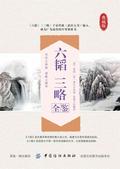 Six Tao and Three Strategies
"Six Tao" and "Three Strategies" are important works reflecting ancient Chinese military thought. "The Six Taoist Commandments", also known as "The Six Taoist Commandments of Taigong" and "The Art of War of Taigong", is a work that collects the military thoughts of Huang and Lao Taoism in the pre-Qin Dynasty. "Three Strategies" is said to have been written by Huang Shigong, a Taoist hermit in the early Han Dynasty. It is different from previous military books in that it is a military book devote
746Reads9.4Score333Shelves
Six Tao and Three Strategies
"Six Tao" and "Three Strategies" are important works reflecting ancient Chinese military thought. "The Six Taoist Commandments", also known as "The Six Taoist Commandments of Taigong" and "The Art of War of Taigong", is a work that collects the military thoughts of Huang and Lao Taoism in the pre-Qin Dynasty. "Three Strategies" is said to have been written by Huang Shigong, a Taoist hermit in the early Han Dynasty. It is different from previous military books in that it is a military book devote
746Reads9.4Score333Shelves
-
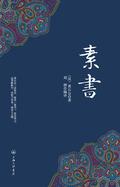 Plain Calligraphy
"Su Shu" occupies an extremely important position in ancient Chinese works on self-cultivation and governance, wisdom in life, and life strategy. This book, which has only six chapters, 132 sentences, and 1,360 words in its original text, is similar to a "quotation style" book. It has been regarded by hermit masters and counselors throughout the ages as a strategy secret book that has not been passed down through the ages and a perfect guide for achieving great things. It has been widely circula
51Reads8.6Score—Shelves
Plain Calligraphy
"Su Shu" occupies an extremely important position in ancient Chinese works on self-cultivation and governance, wisdom in life, and life strategy. This book, which has only six chapters, 132 sentences, and 1,360 words in its original text, is similar to a "quotation style" book. It has been regarded by hermit masters and counselors throughout the ages as a strategy secret book that has not been passed down through the ages and a perfect guide for achieving great things. It has been widely circula
51Reads8.6Score—Shelves
-
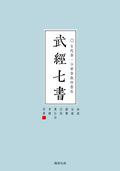 Seven Books of Martial Arts
"Seven Books of Martial Arts" is the first collection of military textbooks in ancient China. It is compiled from seven famous military books: "Sun Tzu's Art of War", "Wu Zi's Art of War", "Six Tao", "Sima's Art of War", "Three Strategies", "Wei Liaozi" and "Li Weigong's Questions". The Seven Books of Martial Arts, which has been a must-read for martial arts since the Song Dynasty, concentrates the essence of ancient Chinese military writings.
—Reads8.6Score—Shelves
Seven Books of Martial Arts
"Seven Books of Martial Arts" is the first collection of military textbooks in ancient China. It is compiled from seven famous military books: "Sun Tzu's Art of War", "Wu Zi's Art of War", "Six Tao", "Sima's Art of War", "Three Strategies", "Wei Liaozi" and "Li Weigong's Questions". The Seven Books of Martial Arts, which has been a must-read for martial arts since the Song Dynasty, concentrates the essence of ancient Chinese military writings.
—Reads8.6Score—Shelves
-
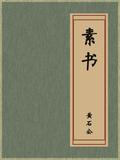 Plain Calligraphy
"Su Shu" proposes that "Tao, virtue, benevolence, righteousness, and etiquette are all integrated into one." The "Su Shu" takes Tao, virtue, benevolence, righteousness, and etiquette as the basis for governing the country, and it also takes Tao, virtue, benevolence, righteousness, and propriety as the basis for governing the country, and explores the principles of the natural movement of all things in the universe to understand the origin of things.
—Reads9.3Score—Shelves
Plain Calligraphy
"Su Shu" proposes that "Tao, virtue, benevolence, righteousness, and etiquette are all integrated into one." The "Su Shu" takes Tao, virtue, benevolence, righteousness, and etiquette as the basis for governing the country, and it also takes Tao, virtue, benevolence, righteousness, and propriety as the basis for governing the country, and explores the principles of the natural movement of all things in the universe to understand the origin of things.
—Reads9.3Score—Shelves
-
 The Complete Book of Plain Strategy
"Su Shu" is said to have been written by Huang Shigong of the Han Dynasty. It is a book similar to "Quotations", which embodies Huang Shigong's life wisdom and way of life, and has a profound impact on future generations. "Su Shu Strategy Complete Edition" carefully annotates, translates, and analyzes the original text of "Su Shu" to make it popular. At the same time, the relevant viewpoints expounded in the book are vividly explained through a large number of examples from ancient and modern ti
—Reads8.7Score—Shelves
The Complete Book of Plain Strategy
"Su Shu" is said to have been written by Huang Shigong of the Han Dynasty. It is a book similar to "Quotations", which embodies Huang Shigong's life wisdom and way of life, and has a profound impact on future generations. "Su Shu Strategy Complete Edition" carefully annotates, translates, and analyzes the original text of "Su Shu" to make it popular. At the same time, the relevant viewpoints expounded in the book are vividly explained through a large number of examples from ancient and modern ti
—Reads8.7Score—Shelves
-
 Six Tips and Three Strategies
"Six Tao" is a military treatise with a complete military academic system and originality. It can be called a masterpiece of pre-Qin military theory. "Six Tao" is written in the form of a dialogue between Jiang Taigong and King Wen and King Wu of Zhou, and explores the two major ideological contents of politics and military science. "Six Tao" incorporates Confucianism's benevolence to the people and love for things, Mohism's admiration of the wise and moderation, Taoism's tranquility and inactio
—Reads9.3Score—Shelves
Six Tips and Three Strategies
"Six Tao" is a military treatise with a complete military academic system and originality. It can be called a masterpiece of pre-Qin military theory. "Six Tao" is written in the form of a dialogue between Jiang Taigong and King Wen and King Wu of Zhou, and explores the two major ideological contents of politics and military science. "Six Tao" incorporates Confucianism's benevolence to the people and love for things, Mohism's admiration of the wise and moderation, Taoism's tranquility and inactio
—Reads9.3Score—Shelves
-
 Plain Calligraphy
"Sushu" is an ancient and mysterious classic, known as "the most wonderful book in the world" and "the most powerful book in ancient and modern times". It was written around the end of the Qin Dynasty and the beginning of the Han Dynasty by Huang Shigong. The book has six chapters, covering the five-in-one ideological system of Tao, virtue, benevolence, righteousness, and etiquette. With concise language and profound wisdom, the book expounds the concepts of self-cultivation, family order, count
—Reads9.3Score—Shelves
Plain Calligraphy
"Sushu" is an ancient and mysterious classic, known as "the most wonderful book in the world" and "the most powerful book in ancient and modern times". It was written around the end of the Qin Dynasty and the beginning of the Han Dynasty by Huang Shigong. The book has six chapters, covering the five-in-one ideological system of Tao, virtue, benevolence, righteousness, and etiquette. With concise language and profound wisdom, the book expounds the concepts of self-cultivation, family order, count
—Reads9.3Score—Shelves
-
 Sushu Quanjian (Collection Reading Edition)
There is a famous story about "Su Shu": Zhang Liang, who once assassinated Qin Shihuang, met an old man when he fled to Xiapi. The old man deliberately threw his shoes under the bridge and asked Zhang Liang to pick them up and put them on for him. He decided that "children can be taught" and then passed him a book and told him, "Reading is the teacher of the king." This old man is Huang Shigong, and this volume is "Su Shu". "Su Shu" is divided into six chapters: Original, Righteous Way, Ambitio
—Reads9.4Score—Shelves
Sushu Quanjian (Collection Reading Edition)
There is a famous story about "Su Shu": Zhang Liang, who once assassinated Qin Shihuang, met an old man when he fled to Xiapi. The old man deliberately threw his shoes under the bridge and asked Zhang Liang to pick them up and put them on for him. He decided that "children can be taught" and then passed him a book and told him, "Reading is the teacher of the king." This old man is Huang Shigong, and this volume is "Su Shu". "Su Shu" is divided into six chapters: Original, Righteous Way, Ambitio
—Reads9.4Score—Shelves
-
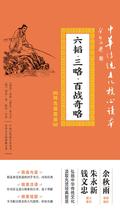 Three Strategies·six Towers·city Defending Record
"Six Secret Strategies" and "Three Strategies" are important military works in ancient China. Later, it generally refers to the book of war and the art of war. It is a representative work reflecting ancient Chinese military thought.
—Reads8.2Score—Shelves
Three Strategies·six Towers·city Defending Record
"Six Secret Strategies" and "Three Strategies" are important military works in ancient China. Later, it generally refers to the book of war and the art of war. It is a representative work reflecting ancient Chinese military thought.
—Reads8.2Score—Shelves
-
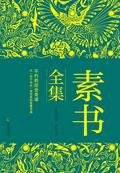 Complete Collection of Su Shu: Immortal Strategies for Advancing the World
"The Complete Works of Su Shu" is a classic of wisdom in ancient China. The original text is divided into six chapters: Originality, Righteous Way, Ambition to Seek Others, Bende Zongdao, Zunyi, and Anli. The content involves the ideological foundation of how to behave in the world, the way to govern a country and cultivate one's moral character, and the way to deal with others. The arguments are incisive, broad and profound. Zhang Liangxi used this book to assist Liu Bang in establishing the Ha
—Reads9.5Score—Shelves
Complete Collection of Su Shu: Immortal Strategies for Advancing the World
"The Complete Works of Su Shu" is a classic of wisdom in ancient China. The original text is divided into six chapters: Originality, Righteous Way, Ambition to Seek Others, Bende Zongdao, Zunyi, and Anli. The content involves the ideological foundation of how to behave in the world, the way to govern a country and cultivate one's moral character, and the way to deal with others. The arguments are incisive, broad and profound. Zhang Liangxi used this book to assist Liu Bang in establishing the Ha
—Reads9.5Score—Shelves
-
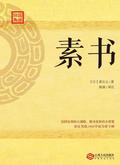 Plain Calligraphy
"Su Shu" is a traditional cultural classic. It is said to have been written by Huang Shigong during the Qin and Han Dynasties and was later taught to Zhang Liang. Zhang Liang relied on the wisdom in "Su Shu" to assist Liu Bang in proclaiming himself emperor. After Zhang Liang's death, the "Su Shu" was buried with him. It was later discovered by thieves and passed down to future generations. The original text of "Su Shu" is not long. Although the words and sentences are not very difficult to unde
—Reads9.5Score—Shelves
Plain Calligraphy
"Su Shu" is a traditional cultural classic. It is said to have been written by Huang Shigong during the Qin and Han Dynasties and was later taught to Zhang Liang. Zhang Liang relied on the wisdom in "Su Shu" to assist Liu Bang in proclaiming himself emperor. After Zhang Liang's death, the "Su Shu" was buried with him. It was later discovered by thieves and passed down to future generations. The original text of "Su Shu" is not long. Although the words and sentences are not very difficult to unde
—Reads9.5Score—Shelves
-
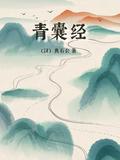 Green Sac Meridian
"Qingnang Jing" is the first feng shui scripture with written records in Chinese history. It is said to have been written by Huang Shigong in the late Qin and early Han dynasties. Although the whole book only contains more than 400 words, it is profound and profound, establishing the philosophical thought and theoretical system of Feng Shui. It expounds the basic principles of Yin-Yang and Five Elements, River Map and Luoshu, and the positioning of heaven and earth, laying the foundation for the
—Reads9.2Score—Shelves
Green Sac Meridian
"Qingnang Jing" is the first feng shui scripture with written records in Chinese history. It is said to have been written by Huang Shigong in the late Qin and early Han dynasties. Although the whole book only contains more than 400 words, it is profound and profound, establishing the philosophical thought and theoretical system of Feng Shui. It expounds the basic principles of Yin-Yang and Five Elements, River Map and Luoshu, and the positioning of heaven and earth, laying the foundation for the
—Reads9.2Score—Shelves
-
 Qingtan Jingbao Zhao Jing
"Qingnang Jing" is said to have been passed down by Huang Shigong in the early Han Dynasty. The whole book is divided into three volumes, which tells the story of "Hua Shi", "Hua Ji" and "Hua Cheng" starting from Yin and Yang Qi and Hetu Luoshu. This is the first Feng Shui book with written records in Chinese history, establishing the philosophical and theoretical system of Feng Shui. In the Tang Dynasty, Yang Songjun elaborated his understanding of Feng Shui geography into the Tianyu Jing, whic
—Reads9.2Score—Shelves
Qingtan Jingbao Zhao Jing
"Qingnang Jing" is said to have been passed down by Huang Shigong in the early Han Dynasty. The whole book is divided into three volumes, which tells the story of "Hua Shi", "Hua Ji" and "Hua Cheng" starting from Yin and Yang Qi and Hetu Luoshu. This is the first Feng Shui book with written records in Chinese history, establishing the philosophical and theoretical system of Feng Shui. In the Tang Dynasty, Yang Songjun elaborated his understanding of Feng Shui geography into the Tianyu Jing, whic
—Reads9.2Score—Shelves
-
 Huangshi Gong Sanlue
According to legend, it was passed down by Huang Shigong, a hermit in the late Qin Dynasty, that Zhang Liang assisted Liu Bang with his wisdom to establish the world, and was praised as "the essence of military strategy and the secret key of emperors' power". The whole book only has more than 4,800 words, but it contains infinite wisdom. It is divided into three volumes: "Upper Strategy", "Middle Strategy" and "Lower Strategy". It progresses layer by layer and points directly to the core princip
—Reads8.5Score—Shelves
Huangshi Gong Sanlue
According to legend, it was passed down by Huang Shigong, a hermit in the late Qin Dynasty, that Zhang Liang assisted Liu Bang with his wisdom to establish the world, and was praised as "the essence of military strategy and the secret key of emperors' power". The whole book only has more than 4,800 words, but it contains infinite wisdom. It is divided into three volumes: "Upper Strategy", "Middle Strategy" and "Lower Strategy". It progresses layer by layer and points directly to the core princip
—Reads8.5Score—Shelves
-
 A Large Collection of Metaphysics and Secret Techniques (Set of 24 Volumes)
"A Collection of Metaphysics and Secret Techniques (Set of 24 Volumes)" is a classic set that brings together the essence of traditional metaphysics. The classic works included in the book cover many metaphysical fields such as Feng Shui, physiognomy, alchemy, thunder magic, and incantation. "Secret Book of Tongxuan Ghost Spirit Sutra", "Qingnang Sutra", "Qingwu Sutra", etc., Deeply explore the wonders of Feng Shui geography, providing guidance for finding dragon points and laying out houses; "S
—Reads9.3Score—Shelves
A Large Collection of Metaphysics and Secret Techniques (Set of 24 Volumes)
"A Collection of Metaphysics and Secret Techniques (Set of 24 Volumes)" is a classic set that brings together the essence of traditional metaphysics. The classic works included in the book cover many metaphysical fields such as Feng Shui, physiognomy, alchemy, thunder magic, and incantation. "Secret Book of Tongxuan Ghost Spirit Sutra", "Qingnang Sutra", "Qingwu Sutra", etc., Deeply explore the wonders of Feng Shui geography, providing guidance for finding dragon points and laying out houses; "S
—Reads9.3Score—Shelves