Fanqie library
Browse
- Titles
- 8
Every Fanqie book we index, searchable by title, author or tag.
-
 The Demon King: Cheng Yaojin
At the end of the Sui Dynasty, thieves were on the rise. Cheng Yaojin gathered people to protect his hometown. He originally thought that guarding one county would be his way to survive, but he was dragged into the Wagang Army by the troubled times. Li Mi was defeated, Wang Shichong was strong, and the King of Qin might not be able to win, but he betted wrongly and rightly again and again, and finally became one of the heroes of the Tang Dynasty from the defeated army. However, it was not until
119Reads—Score—Shelves
The Demon King: Cheng Yaojin
At the end of the Sui Dynasty, thieves were on the rise. Cheng Yaojin gathered people to protect his hometown. He originally thought that guarding one county would be his way to survive, but he was dragged into the Wagang Army by the troubled times. Li Mi was defeated, Wang Shichong was strong, and the King of Qin might not be able to win, but he betted wrongly and rightly again and again, and finally became one of the heroes of the Tang Dynasty from the defeated army. However, it was not until
119Reads—Score—Shelves
-
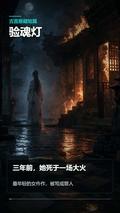 Soul Testing Lamp
Three years ago, the widower Shen Zhaoye discovered the secret of the Zhenguo Palace using poor women to protect the nobles from disasters, and then a fire broke out in the Dali Temple room. The government found that she secretly altered the files and committed suicide in fear of crime. Xie Wujiu, the young minister of Dali Temple, personally signed the document closing the case. Three years later, on a cold night, Shen Zhaoye woke up from an "unnamed female corpse" in Yizhuang, west of the city
29Reads—Score—Shelves
Soul Testing Lamp
Three years ago, the widower Shen Zhaoye discovered the secret of the Zhenguo Palace using poor women to protect the nobles from disasters, and then a fire broke out in the Dali Temple room. The government found that she secretly altered the files and committed suicide in fear of crime. Xie Wujiu, the young minister of Dali Temple, personally signed the document closing the case. Three years later, on a cold night, Shen Zhaoye woke up from an "unnamed female corpse" in Yizhuang, west of the city
29Reads—Score—Shelves
-
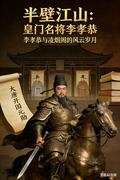 Half of the Country: Li Xiaogong, the Famous Imperial General
During the revolution between the Sui and Tang Dynasties, Li Xiaogong, a descendant of the clan, joined the army with Emperor Gaozu. He could have lived in wealth and prosperity, but he was gradually pushed to the position of commander-in-chief of the Southern Expedition. He first conquered Jingshu, then defeated Xiaoxian, and then wiped out Jiangdong Fu Gonger, so that the Tang royal army descended from Guanzhong to the seaside. Every time he entered a city, he gained not only territory, but al
17Reads—Score—Shelves
Half of the Country: Li Xiaogong, the Famous Imperial General
During the revolution between the Sui and Tang Dynasties, Li Xiaogong, a descendant of the clan, joined the army with Emperor Gaozu. He could have lived in wealth and prosperity, but he was gradually pushed to the position of commander-in-chief of the Southern Expedition. He first conquered Jingshu, then defeated Xiaoxian, and then wiped out Jiangdong Fu Gonger, so that the Tang royal army descended from Guanzhong to the seaside. Every time he entered a city, he gained not only territory, but al
17Reads—Score—Shelves
-
 Prince Consort Joins the Army: Chai Shao
The real novel value of Chai Shao's life lies not in the four words "consort" and "hero", but in the four tensions: First, he was a former official of the Sui Dynasty, but he wanted to bet on rebelling against the Sui Dynasty; second, he was the son-in-law of the Li family, but he had to give up his wife first to join the game; third, he was the husband of Princess Pingyang, but he lived beside the great light of the "Women's Army" for a long time; fourth, he was a founding hero, but he had to c
9Reads—Score—Shelves
Prince Consort Joins the Army: Chai Shao
The real novel value of Chai Shao's life lies not in the four words "consort" and "hero", but in the four tensions: First, he was a former official of the Sui Dynasty, but he wanted to bet on rebelling against the Sui Dynasty; second, he was the son-in-law of the Li family, but he had to give up his wife first to join the game; third, he was the husband of Princess Pingyang, but he lived beside the great light of the "Women's Army" for a long time; fourth, he was a founding hero, but he had to c
9Reads—Score—Shelves
-
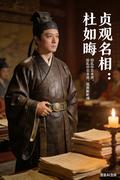 Zhenguan Xianxiang: Du Ruhui
Du Ruhui, the first of the eighteen scholars in the Qin Dynasty, was a famous prime minister in the early Tang Dynasty, one of the twenty-four heroes of Lingyan Pavilion, and was called "Fang Miao Du Duan" together with Fang Xuanling. He was the core adviser of Tang Taizong Li Shimin in creating the "Government of Zhenguan". The separation of young people is to understand the world; the separation of troubled times is to choose the master; the separation of the army is to determine the opportuni
7Reads—Score—Shelves
Zhenguan Xianxiang: Du Ruhui
Du Ruhui, the first of the eighteen scholars in the Qin Dynasty, was a famous prime minister in the early Tang Dynasty, one of the twenty-four heroes of Lingyan Pavilion, and was called "Fang Miao Du Duan" together with Fang Xuanling. He was the core adviser of Tang Taizong Li Shimin in creating the "Government of Zhenguan". The separation of young people is to understand the world; the separation of troubled times is to choose the master; the separation of the army is to determine the opportuni
7Reads—Score—Shelves
-
 Zhenhai Jingbo: a Record of Liu Rengui's Achievements
New works are released. Welcome to Tomato Novel to read my works. I hope you all like them. Your attention is the motivation for my writing. I will try my best to tell every story!
2Reads—Score—Shelves
Zhenhai Jingbo: a Record of Liu Rengui's Achievements
New works are released. Welcome to Tomato Novel to read my works. I hope you all like them. Your attention is the motivation for my writing. I will try my best to tell every story!
2Reads—Score—Shelves
-
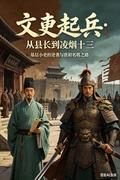 Civil Servants Rise Up: from County Magistrate to Lingyan Thirteen
How did Yin Kaishan go from being a civil servant who could write, read, and arrange people to a center of power that could discuss military affairs, select ministries, and amend laws and regulations? What he wants is not temporary military glory, but step by step from "a small official with a sword and pen" to the core of the founding of the country, proving that the world cannot be conquered by strong generals alone. After Asamizuhara, he lived with the echoes of that defeat all his life. Ever
1Reads—Score—Shelves
Civil Servants Rise Up: from County Magistrate to Lingyan Thirteen
How did Yin Kaishan go from being a civil servant who could write, read, and arrange people to a center of power that could discuss military affairs, select ministries, and amend laws and regulations? What he wants is not temporary military glory, but step by step from "a small official with a sword and pen" to the core of the founding of the country, proving that the world cannot be conquered by strong generals alone. After Asamizuhara, he lived with the echoes of that defeat all his life. Ever
1Reads—Score—Shelves
-
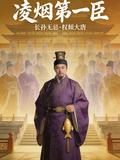 Ling Yan's First Minister
He supported a generation of wise kings with his cunning, maintained a prosperous dynasty with his laws, but eventually died in the dynasty of the new king he had established with his own hands. This was not the failure of one person, but the outcome of the collision between the aristocratic politics and the new imperial power in the early Tang Dynasty.
—Reads—Score—Shelves
Ling Yan's First Minister
He supported a generation of wise kings with his cunning, maintained a prosperous dynasty with his laws, but eventually died in the dynasty of the new king he had established with his own hands. This was not the failure of one person, but the outcome of the collision between the aristocratic politics and the new imperial power in the early Tang Dynasty.
—Reads—Score—Shelves