Fanqie library
Browse
- Titles
- 5
Every Fanqie book we index, searchable by title, author or tag.
-
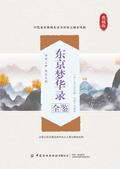 Tokyo Menghualu Complete Book
"Tokyo Menghua Lu" is a note-style prose essay written by Meng Yuanlao in the Song Dynasty. This book was written in the second year of Jingkang of Emperor Qinzong of the Song Dynasty (1127). It is a work that traces the customs and feelings of the Han people in Kaifeng Prefecture, Tokyo, the capital of the Northern Song Dynasty. Most of the records are about the situation of Kaifeng Prefecture in Tokyo, the capital of the Northern Song Dynasty, from Chongning to Xuanhe years (1102-1125). From t
—Reads8.2Score—Shelves
Tokyo Menghualu Complete Book
"Tokyo Menghua Lu" is a note-style prose essay written by Meng Yuanlao in the Song Dynasty. This book was written in the second year of Jingkang of Emperor Qinzong of the Song Dynasty (1127). It is a work that traces the customs and feelings of the Han people in Kaifeng Prefecture, Tokyo, the capital of the Northern Song Dynasty. Most of the records are about the situation of Kaifeng Prefecture in Tokyo, the capital of the Northern Song Dynasty, from Chongning to Xuanhe years (1102-1125). From t
—Reads8.2Score—Shelves
-
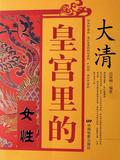 Women in the Qing Imperial Palace
This book combines history and storytelling. By showing the fierce struggles in the palace and the intrigues between the concubines, it presents historical scenes with women as the protagonists. The fate of these queens and concubines is closely integrated with the fate of the entire Qing Dynasty. The book also contains historical interpretations.
—Reads9.5Score—Shelves
Women in the Qing Imperial Palace
This book combines history and storytelling. By showing the fierce struggles in the palace and the intrigues between the concubines, it presents historical scenes with women as the protagonists. The fate of these queens and concubines is closely integrated with the fate of the entire Qing Dynasty. The book also contains historical interpretations.
—Reads9.5Score—Shelves
-
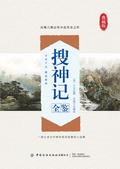 Sou Shen Ji Quan Jian
"Sou Shen Ji" was written by Qian Bao, a famous historian in the early Eastern Jin Dynasty. It has twenty volumes in existence and contains more than 400 stories, large and small. It mainly compiles stories about ghosts and gods, as well as some trivia and many folklores. Most of them are short in length, simple in plot, fantasy in conception, and full of romanticism. They are directly influenced by "The Biography of Emperor Mu" and "The Classic of Mountains and Seas". It represents the highest
—Reads8.7Score—Shelves
Sou Shen Ji Quan Jian
"Sou Shen Ji" was written by Qian Bao, a famous historian in the early Eastern Jin Dynasty. It has twenty volumes in existence and contains more than 400 stories, large and small. It mainly compiles stories about ghosts and gods, as well as some trivia and many folklores. Most of them are short in length, simple in plot, fantasy in conception, and full of romanticism. They are directly influenced by "The Biography of Emperor Mu" and "The Classic of Mountains and Seas". It represents the highest
—Reads8.7Score—Shelves
-
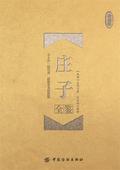 The Complete Mirror of Zhuangzi (Collection Reading Edition)
The book "Zhuangzi" is a representative work of Taoism and a wonderful flower in traditional Chinese culture. The author of "Zhuangzi" is not Zhuangzi alone. According to the research of later generations of scholars, the "internal chapters" were written by Zhuangzi, while the "outer chapters" and "miscellaneous chapters" are more complicated and were mostly written by successors of Zhuangzi's theory. Zhuangzi is a strange person, and "Zhuangzi" is a strange book. The profound and profound "Zhua
—Reads9.4Score—Shelves
The Complete Mirror of Zhuangzi (Collection Reading Edition)
The book "Zhuangzi" is a representative work of Taoism and a wonderful flower in traditional Chinese culture. The author of "Zhuangzi" is not Zhuangzi alone. According to the research of later generations of scholars, the "internal chapters" were written by Zhuangzi, while the "outer chapters" and "miscellaneous chapters" are more complicated and were mostly written by successors of Zhuangzi's theory. Zhuangzi is a strange person, and "Zhuangzi" is a strange book. The profound and profound "Zhua
—Reads9.4Score—Shelves
-
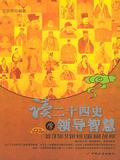 Reading the Leadership Wisdom of Twenty-Four Histories
Observe changes in the current situation, the gains and losses of wrong decisions, and learn leadership wisdom. The leadership wisdom accumulated by the ancients for thousands of years has continuous continuity from a cultural perspective, and has extremely practical and practical significance from an application perspective. Therefore, it is very necessary and urgent to explore the treasure house of wisdom in "Twenty-Four Histories" from the perspective of leadership.
—Reads9.2Score—Shelves
Reading the Leadership Wisdom of Twenty-Four Histories
Observe changes in the current situation, the gains and losses of wrong decisions, and learn leadership wisdom. The leadership wisdom accumulated by the ancients for thousands of years has continuous continuity from a cultural perspective, and has extremely practical and practical significance from an application perspective. Therefore, it is very necessary and urgent to explore the treasure house of wisdom in "Twenty-Four Histories" from the perspective of leadership.
—Reads9.2Score—Shelves