Fanqie catalogue
Books by 邓书杰
- Matches
- 4
From the Fanqie books we index, matched on the author's name.
-
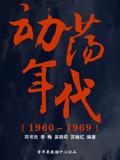 Turbulent Years (1960–1969) 动荡年代(1960-1969)
Turbulent Years recounts major events in the development of modern Chinese history from 1960 to 1969. It covers the Central Committee's Shanghai Conference and its decision to continue the Great Leap Forward, the proposal of the Four Modernizations, the official establishment of the Tibet Autonomous Region, the People's Liberation Army's participation in the fight against U.S. aggression and aid to Vietnam, the Cultural Revolution, the February Countercurrent, and other historical events.
6.9kReads9.3Score768Shelves
-
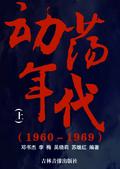 Turbulent Times: A Detailed Guide to Major Events in Chinese History, Part One 动荡年代(中国历史大事详解)(上)
Turbulent Times (A Detailed Account of Major Events in Chinese History, Part One) is a work that offers an in-depth analysis of periods of upheaval in Chinese history. Following a chronological thread, it recounts the major historical events from the Pre-Qin era to the late Qing dynasty. Drawing on abundant historical sources and offering original insights, the author reveals the causes, course, and impact of these events, giving readers a fuller understanding of how Chinese history unfolded. Th
94Reads8.2Score—Shelves
-
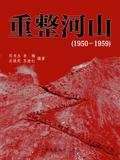 Rebuilding the Nation (1950–1959): A Detailed Guide to Major Events in Chinese History 重整河山(1950-1959)(中国历史大事详解)
Reordering the Rivers and Mountains offers a detailed and objective account of major events in Chinese history from 1950 to 1959. In the early days of the People's Republic of China, “the government was in order, the people at peace, and everything was waiting to be rebuilt.” China embarked on unprecedented construction and development. Change, conflict, and challenge: crisis and opportunity went hand in hand. “A thousand miles of blades flash in the dark; hatred burns through nine cities. On th
70Reads9.4Score—Shelves
-
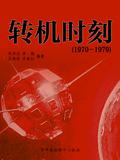 Turning Point: 1970–1979 转机时刻(1970-1979)
Turning Point offers a detailed account of the major historical events that took place in China between 1970 and the end of the Third Plenary Session of the 11th Central Committee. In the fifth year of the Cultural Revolution, Mao Zedong believed that the great chaos of the previous years should have brought about “great order,” allowing the revolution to “come to a perfect end.” Yet even when the trees long for peace, the wind will not cease. Lin Biao stirred up trouble over the question of whe
—Reads8.5Score—Shelves