Fanqie catalogue
Books by 思考小薄荷
- Matches
- 10
From the Fanqie books we index, matched on the author's name.
-
 Zhuge Liang Is Reborn and Restores the Han Dynasty 诸葛亮重生,兴复汉室
(Zhuge Liang, Liu Bei, Guan Yu, Cao Cao, ensemble cast, strategy, conquest, fiery passion) Zhuge Liang is reborn and returns to the time of Liu Bei’s third visit. Looking at the three men before him, he knows what fate awaits him: Guan Yu will be defeated at Maicheng, Zhang Fei will be killed after getting drunk, and Lu Xun’s great fire will wipe out hundreds of thousands of Liu Bei’s troops. This time, before he even enters public service, he decides to lay down three rules for Liu Bei, Guan Yu
11.2kReads7.7Score722Shelves
-
 A Plain-Language Guide to the Four Lessons of Liao Fan 了凡四训通俗易懂解读
Yuan Liaofan wrote The Four Lessons of Liaofan as a set of family instructions for his son during the Ming dynasty. Though it is only a little over ten thousand characters long, it fully explains the idea that "my fate is mine to shape, not Heaven's."
2.6kReads—Score266Shelves
-
 The Guiguzi Explained in Simple Terms 鬼谷子通俗易懂解读
The Guiguzi, traditionally attributed to the reclusive Guiguzi of the Warring States period, is a work whose mysterious author is difficult to pin down. Yet its profound ideas had a deep influence on outstanding disciples such as Su Qin, Zhang Yi, and Sun Bin, who maneuvered between rival states and shaped the turbulent age. Though concise, this classic is like a treasury of strategy buried for a thousand years, every line rich with subtle meaning and astonishing practical wisdom and philosophy
1.8kReads—Score248Shelves
-
 The Art of War Explained in Plain Language 孙子兵法通俗易懂解读
The Art of War was written in the late Spring and Autumn period. It is the oldest surviving Chinese military treatise and is hailed as a sacred classic of military studies. Its author, Sun Wu, used System thinking to explain military philosophy. Its central ideas are "waging war with caution" and "winning completely," advocating the use of strategy and wisdom to reduce the cost of war. The book proposes strategic principles such as "know the enemy and know yourself," "avoid strength and strike w
971Reads—Score133Shelves
-
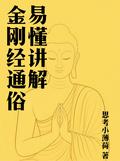 The Diamond Sutra Explained in Plain Language 金刚经通俗易懂讲解
The Diamond Sutra, whose full title is the Diamond Sutra of the Perfection of Wisdom, is a core text of the Mahayana Buddhist wisdom tradition and is hailed as the “king of sutras.” Its name uses the diamond as a metaphor, symbolizing wisdom so sharp and unmatched that it can sever all delusions and attachments. “The Perfection of Wisdom” refers to the path of attaining liberation through supreme insight. The sutra unfolds as a conversation between the Buddha and his disciple Subhuti, pointing d
82Reads7.1Score—Shelves
-
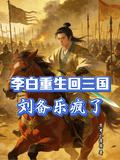 Li Bai Is Reborn in the Three Kingdoms, and Liu Bei Is Ecstatic 李白重生回三国,刘备乐疯了
(Li Bai, Liu Bei, Zhuge Liang, Guan Yu, ensemble cast, passionate, strategy.) The immortal poet Li Bai, drunk and reaching for the moon, travels back to the war-torn late Han and Three Kingdoms period, arriving in Taoyuan in Zhuo Commandery. There, he swears brotherhood with Liu Bei, Guan Yu, and Zhang Fei. Li Bai then becomes Guan Yu's disciple, creates his own sword techniques, kills Lü Bu, takes the Red Hare, and escorts Liu Bei's two wives through five passes, slaying six generals along the
64Reads—Score—Shelves
-
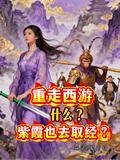 Journey to the West Again: What? Zixia Is Going on the Pilgrimage Too? 重走西游,什么?紫霞也去取经?
[Journey to the West + Zixia + a new journey west + Sun Wukong + healing and redemption through one another + not prehistoric mythology + fun] The immortals are at their wits’ end. When will the Journey to the West finally be over? The candidates have been chosen, and all eighty-one trials are in place. Sun Wukong: “Why are we bringing a fairy along on the Journey to the West to obtain the scriptures?” Tang Sanzang: “She’s saved my life twice.” Guanyin Bodhisattva: “The road ahead will be except
25Reads—Score—Shelves
-
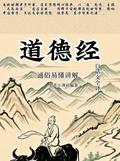 A Complete Translation of the Tao Te Ching: An Easy-to-Understand Explanation 道德经全译通俗易懂讲解
The Tao Te Ching, written by the Spring and Autumn period philosopher Laozi, is a classic work of philosophy and the core text of Taoism. It is hailed as the “pinnacle of Chinese wisdom.” The book contains just over five thousand characters and is divided into two parts, the Tao and the Te. It presents the Tao as the source of the universe and the principle governing its workings, advocating that “the Tao follows nature” and that rulers should govern through non-action. It reveals the dialectica
24Reads6.4Score—Shelves
-
 Global Class Change: I Become an Elemental Mage, Ruler of the World 全民转职:幻化元素师,世界之颠
After an unexpected incident, Shen Xuyan transmigrates into a world where games and reality have merged, and the world’s rules undergo a drastic change. The demon clans of Wei and the beast clans of Wu run rampant, while Zhuge Liang, the sacred nation of Shu’s master inventor, creates a class-change device, forcing humanity into an era where everyone must choose a class. Class holders must clear countless challenges, including dungeons, the Abyss, and secret realms. At last, on his eighteenth bi
1Reads—Score—Shelves
-
 A Bedtime Chat with the Ancients 睡前和古人来一场对话
Open this book and transmigrate through a thousand years of upheaval, meeting more than thirty souls who changed the course of Chinese history. From Ying Zheng, who laid the foundations of China, to the exceptionally gifted Li Bai; from Yang Yuhuan, whose beauty could topple kingdoms and sway the fortunes of a golden age, to the talented and principled scholars, heroic women, and warlords who dominated the court and the chaos of their times. Blending history with vivid storytelling, this book br
—Reads—Score—Shelves