Fanqie library
Browse
- Titles
- 6
Every Fanqie book we index, searchable by title, author or tag.
-
 Thus Said Zarathustra
"Thus Spoke Zarathustra" is a poetic prose. The author borrowed the name of Zarathustra, the founder of Zoroastrianism in ancient Persia, and deliberately opposed the Christian holy cause. He imitated the style of the holy scriptures and used metaphors and anecdotes to describe the process of Zarathustra's sublimation into the realm of the superman. It is a unique crystallization of philosophical thoughts. The subtitle is "A book written for everyone and no one", which symbolically shows Nietzsc
737Reads9.4Score310Shelves
Thus Said Zarathustra
"Thus Spoke Zarathustra" is a poetic prose. The author borrowed the name of Zarathustra, the founder of Zoroastrianism in ancient Persia, and deliberately opposed the Christian holy cause. He imitated the style of the holy scriptures and used metaphors and anecdotes to describe the process of Zarathustra's sublimation into the realm of the superman. It is a unique crystallization of philosophical thoughts. The subtitle is "A book written for everyone and no one", which symbolically shows Nietzsc
737Reads9.4Score310Shelves
-
 The Birth of Tragedy
In the book, Nietzsche created the important concepts of "Apollinian spirit" and "Dionysian spirit". He used this as an entry point to reinterpret ancient Greek culture with a unique perspective and wise language, and then explore the origin, essence and function of art and even the meaning of life. Nietzsche believed that the art of Apollo (Apollo) is represented by sculptures and epics, which is a dream art; the art of Dionysus (Dionysus) is represented by music, which is the art of drunkennes
—Reads8.9Score—Shelves
The Birth of Tragedy
In the book, Nietzsche created the important concepts of "Apollinian spirit" and "Dionysian spirit". He used this as an entry point to reinterpret ancient Greek culture with a unique perspective and wise language, and then explore the origin, essence and function of art and even the meaning of life. Nietzsche believed that the art of Apollo (Apollo) is represented by sculptures and epics, which is a dream art; the art of Dionysus (Dionysus) is represented by music, which is the art of drunkennes
—Reads8.9Score—Shelves
-
 Look! This Person
"Look! "This Man" is a summary and interpretation of Nietzsche's main works and ideological propositions before he became delirious due to illness. In the book, Nietzsche uses his major works as clues to describe his thoughts and ideas. This is a unique autobiography centered on thought. It is also a guide for reading Nietzsche's other works and understanding Nietzsche's philosophical thoughts. During the translation process of this book, the translator "completely adopted the literal translatio
—Reads9.3Score—Shelves
Look! This Person
"Look! "This Man" is a summary and interpretation of Nietzsche's main works and ideological propositions before he became delirious due to illness. In the book, Nietzsche uses his major works as clues to describe his thoughts and ideas. This is a unique autobiography centered on thought. It is also a guide for reading Nietzsche's other works and understanding Nietzsche's philosophical thoughts. During the translation process of this book, the translator "completely adopted the literal translatio
—Reads9.3Score—Shelves
-
 Happy Science
If "Thus Spoke Zarathustra" is a long philosophical poem, then "The Science of Joy" is like a collection of short philosophical poems. Western classical philosophy has always respected rationality, but Nietzsche boldly challenged rationality and injected a large number of poetic elements into his works, thus opening up a new world for Western poetic philosophy. This book is an important work of Nietzsche's later period. It was written after recovering from a serious illness and is the product of
—Reads9.2Score—Shelves
Happy Science
If "Thus Spoke Zarathustra" is a long philosophical poem, then "The Science of Joy" is like a collection of short philosophical poems. Western classical philosophy has always respected rationality, but Nietzsche boldly challenged rationality and injected a large number of poetic elements into his works, thus opening up a new world for Western poetic philosophy. This book is an important work of Nietzsche's later period. It was written after recovering from a serious illness and is the product of
—Reads9.2Score—Shelves
-
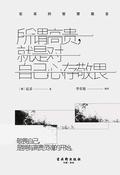 The So-Called Nobility Is to Have Awe of Oneself: Nietzsche's Wise Words
This book selects more than 200 of the most representative sentences from all the works of Nietzsche in his life. It encompasses the essence of Nietzsche's thoughts, shows the thoughts and mind of this sage, and brings infinite enlightenment to readers. This book is divided into seven chapters: "I·Self", "Woman·Humanity", "Life·Life", "Heart·Thought", "Love·Happiness", "Action·Communication", and "Transcendence·Detachment", covering all aspects of Nietzsche's thought and speech, and every senten
—Reads8.9Score—Shelves
The So-Called Nobility Is to Have Awe of Oneself: Nietzsche's Wise Words
This book selects more than 200 of the most representative sentences from all the works of Nietzsche in his life. It encompasses the essence of Nietzsche's thoughts, shows the thoughts and mind of this sage, and brings infinite enlightenment to readers. This book is divided into seven chapters: "I·Self", "Woman·Humanity", "Life·Life", "Heart·Thought", "Love·Happiness", "Action·Communication", and "Transcendence·Detachment", covering all aspects of Nietzsche's thought and speech, and every senten
—Reads8.9Score—Shelves
-
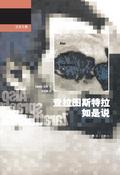 Thus Said Zarathustra
"Thus Spoke Zarathustra" is Nietzsche's landmark work, which includes almost all of Nietzsche's thoughts. The whole book is written in a wild and unrestrained poetic style. It combines the drunkenness of Dionysus and the sobriety of Apollo. It preaches the revelation of the future world through the mouth of "Superman" Zarathustra. It occupies a unique and immortal position in the history of world philosophy and poetry. This masterpiece, written in prose and poetry, preaches "Superman Philosophy"
—Reads9.3Score—Shelves
Thus Said Zarathustra
"Thus Spoke Zarathustra" is Nietzsche's landmark work, which includes almost all of Nietzsche's thoughts. The whole book is written in a wild and unrestrained poetic style. It combines the drunkenness of Dionysus and the sobriety of Apollo. It preaches the revelation of the future world through the mouth of "Superman" Zarathustra. It occupies a unique and immortal position in the history of world philosophy and poetry. This masterpiece, written in prose and poetry, preaches "Superman Philosophy"
—Reads9.3Score—Shelves