Fanqie library
Browse
- Titles
- 4
Every Fanqie book we index, searchable by title, author or tag.
-
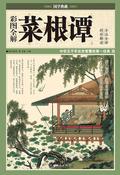 Complete Explanation of Cai Gen Tan with Color Pictures
"Cai Gen Tan" was written during the Wanli period of the Ming Dynasty, which has a history of nearly 400 years. The author Hong Yingming, whose courtesy name is Zicheng, is also known as the First Taoist. He was keen on career success in his early years. In his later years, he retired to the mountains and forests to devote himself to reading and writing. Finally, he put his life experience, reading experience and life insights into the tip of his pen and poured ink into this eloquent collection
—Reads8.4Score—Shelves
Complete Explanation of Cai Gen Tan with Color Pictures
"Cai Gen Tan" was written during the Wanli period of the Ming Dynasty, which has a history of nearly 400 years. The author Hong Yingming, whose courtesy name is Zicheng, is also known as the First Taoist. He was keen on career success in his early years. In his later years, he retired to the mountains and forests to devote himself to reading and writing. Finally, he put his life experience, reading experience and life insights into the tip of his pen and poured ink into this eloquent collection
—Reads8.4Score—Shelves
-
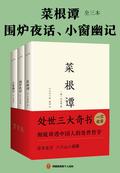 Cai Gen Tan + Evening Talks Around the Fireplace + Small Window Secrets
"Chinese People's Unique Knowledge of Life" is a collection of three books: "Cai Gen Tan", "Night Talk around the Stove" and "Little Window". It is known as the "Three Wonderful Books on Life". The predecessors planted trees, and the descendants enjoy the shade. The three books are all good words and "wonderful" words on life summarized by the predecessors with their lifetime wisdom. The principles of how to behave in the world will never go out of style. Reading the article carefully will be of
—Reads9.4Score—Shelves
Cai Gen Tan + Evening Talks Around the Fireplace + Small Window Secrets
"Chinese People's Unique Knowledge of Life" is a collection of three books: "Cai Gen Tan", "Night Talk around the Stove" and "Little Window". It is known as the "Three Wonderful Books on Life". The predecessors planted trees, and the descendants enjoy the shade. The three books are all good words and "wonderful" words on life summarized by the predecessors with their lifetime wisdom. The principles of how to behave in the world will never go out of style. Reading the article carefully will be of
—Reads9.4Score—Shelves
-
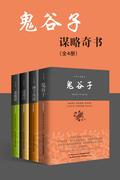 Guiguzi's Strategy Book (4 Volumes in Total)
The book "Guiguzi" was compiled by later scholars based on his remarks. This masterpiece of strategy more than 2,000 years ago is a wonder in traditional Chinese culture and has always been called "the forbidden fruit of wisdom and the most extraordinary book in the world." Its ideological content is very rich, covering philosophy, political science, military science, psychology, sociology, literature, information science and other disciplines. It is a work that can be widely interpreted. It has
—Reads9.4Score—Shelves
Guiguzi's Strategy Book (4 Volumes in Total)
The book "Guiguzi" was compiled by later scholars based on his remarks. This masterpiece of strategy more than 2,000 years ago is a wonder in traditional Chinese culture and has always been called "the forbidden fruit of wisdom and the most extraordinary book in the world." Its ideological content is very rich, covering philosophy, political science, military science, psychology, sociology, literature, information science and other disciplines. It is a work that can be widely interpreted. It has
—Reads9.4Score—Shelves
-
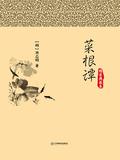 Vegetable Roots********
"Cai Gen Tan" is a collection of quotations from the Ming Dynasty that discusses cultivation, life, conduct, and rebirth. The author combines the Confucian doctrine of the mean, the Buddhist thought of transcendence, and the Taoist thought of inaction, and combines his own experience to write this set of rules for transcending the world to help people cultivate their minds and cultivate their moral integrity. Its writing is concise, clear and meaningful, suitable for both refined and popular tas
—Reads5.8Score—Shelves
Vegetable Roots********
"Cai Gen Tan" is a collection of quotations from the Ming Dynasty that discusses cultivation, life, conduct, and rebirth. The author combines the Confucian doctrine of the mean, the Buddhist thought of transcendence, and the Taoist thought of inaction, and combines his own experience to write this set of rules for transcending the world to help people cultivate their minds and cultivate their moral integrity. Its writing is concise, clear and meaningful, suitable for both refined and popular tas
—Reads5.8Score—Shelves