"This is not the romantic history of a man, but the growth history of a soul. From pursuing a 'beauty' to cherishing a 'bosom friend,' Shen Yanzhi's transformation reveals the true meaning of love: passion will eventually fade, but only understanding and companionship will last forever." "The Beauty Is Gone, the Bosom Friend Is Hard to Find" is a novel that writes about emotions to the extreme.
"The Play Next Door": Three stories that reflect you and me. Have you ever met such a person? He can obviously follow the crowd and reap benefits, but he insists on setting the strictest rules and turning himself into a "villain" that everyone calls for beating. He said: "Management is not welfare, it is cultivation." He could just write down a conclusion and hand over the work, but he insisted on writing down everyone's words, even if the voices were so quiet that no one could hear them. He said: "What I remember is history, and it is also a mirror of the future." He could obviously learn to write those "infuriating" cruel words that would make the county magistrate take them seriously at first sight, but he chose to write in plain language as plain as a running account. He said: "The Zhuangzi is not a play, it is a fact." These three people come from the same book - "The Play Next Door". The first story is called "Rotating Manager of Family Property". The clan's property is managed by each house in turn. When it's your turn, it's welfare; when you're done taking care of it, you've made enough money, just pat your butt and leave. One year is not as good as the other, and everything is lost in three years. Someone stood up and said: Do you want to take care of it? Study for a year first. After studying, you will be qualified to take charge if you get 90% or above in the test. Once you are in charge, you will be assessed every year. If you fail, you will be replaced. The clan was in a state of shock. Some say he bullies others, some say he seizes power, some say he is crazy. He didn't explain, he just went to the field every day, kept accounts, taught people, and conducted assessments. One year, two years, three years. Three years later, the family property was revived. Those who scolded him at first became capable men later. They said: "Cultivation is hard, but what you cultivate is a human being. Welfare is sweet, but what you cultivate through welfare is a bug." The second story is called "The Clerk of the Ancestral Hall Meeting". During the clan meeting, he sat in the corner, took a pen, and kept writing down. Remember what everyone said, the reasons for everyone's objections, and the opinions that were voiced so quietly that they were almost inaudible. Once, when it came to building a bridge, most people were in favor of one approach, and only one person was against it. That person has a small voice, is not famous, and no one listens to what he says. The bridge was repaired but collapsed within a month. He dug out the records and found that everything the opponents said came true. From that day on, every time he held a meeting, he would read the last record first, especially the opinions of the minority. Some people say he is annoying, others say he wastes time. Later, those who annoyed him said: "If he hadn't remembered, how many mistakes would we have made?" The third story is called "The County Office Scrivener". An old woman came to write the petition. Her land was occupied by a wealthy family. She had been cultivating the land for forty years, paid for forty years of grain, and had forty years of grain strings in her hands. He wrote truthfully and plainly, like a running account. When the petition was handed over, the county magistrate took one look at it and thought it was "nothing special" and put it down. Two months later, the old woman died. When he died, he held the land deed in his hand. He came to the county government office, and in the courtroom, he recited what the old woman had said word for word - which year was drought, which year was flooded, which year had a good harvest, and which year he paid double grain. I carried it for half an hour. The magistrate was dumbfounded. Everyone in the hall was dumbfounded. The case was retried and the truth came out. But the old woman couldn't see it. Someone asked him: If you write those real complaints, no one will read them, so what's the use? He said: The truth is reliable. The truth can withstand investigation, can withstand questioning, and can withstand forty years. Why should you watch "The Show Next Door"? Because these three stories are not about things in ancient times, but about things today. Have you ever seen people who treat public affairs as private welfare? Have you ever seen organizations that only listen to loud voices in meetings, not quiet voices? Have you ever seen those people who rely on sensationalism to win and those who rely on "cruel words" to gain power? You've seen it. We've all seen it. "The Play Next Door" puts these things in an ancient clan, using the simplest stories to tell the hardest truths. It doesn't make sense. It only talks about people. Talk about those who accept death, talk about those who do not listen to advice, talk about those who have a low voice, and talk about those who have a good memory. It allows you to see: A good system can turn lazy people into capable people. A bad system can turn capable people into lazy people. It lets you see: respect for minority opinions is the most important safety valve for an organization. If it is closed, it will explode sooner or later. It lets you see: the truth is always the hardest trump card. Sensation can win for a while, but only the truth can win for a lifetime. It doesn't tell you the answer. It just lets you see it and think about it for yourself. Three Stories, Three Questions After reading "Rotating Managers of Family Assets", you can ask yourself: Is my organization cultivating people or consuming people? Are you cultivating people, or are you benefiting people? After reading "The Clerk of the Ancestral Hall Meeting", you can ask yourself: When I have a meeting, do I only listen to what I want to hear, or do I also listen to what I don't want to hear? Should we only record the conclusion, or also the process? After reading "The County Government Scrivener", you can ask yourself: Which of the information I see every day is the truth and which is sensational? Am I someone who is easily moved by harsh words, or am I someone who is willing to wait for the truth? There are no standard answers to these questions. But asking is better than not asking. "The Show Next Door" can't give you the answer. But it allows you to see. See how others stumble, see how others get up. I saw what happened to those people who accepted death. I saw what happened to those people with low voices. Once you see it, you will know how to go. Turn to the first page "The Play Next Door" is a book that can be placed by the bedside and turned to two pages at any time. Every story is not long. But every story can make you think about it for a long time. It doesn't talk about big principles, it only talks about little people. Those little people are doing the most ordinary things: managing family property, taking notes of meetings, and writing petitions. But it is these ordinary things that hide the deepest truth. You can watch one during your lunch break, one before going to bed, and one while waiting for someone. After reading, close the book and think about it. Think about what's going on around you. Think about yourself. Maybe you will find that those stories from more than a hundred years ago are repeating themselves around you. Maybe you will find that Zhou Shi, who accepts death, Bo Qing, who has a good memory, and Bo An, who is scolded by others, are by your side. Maybe you will find that you are one of them. Let's turn to the first page. Walk into the ancestral hall called "Chengde Hall", sit under the old locust trees, and listen to the stories of those people. They will tell you: Management is not welfare, it is cultivation. Recording is not coping, it is a mirror. Zhuangzi is not a drama, it is a fact. They will tell you: sooner or later someone will see the truth. To be honest, sooner or later someone will believe it. Turn to the first page. Look at what happened to those who accepted death.
When I was 28 years old, I suffered a stroke and became paralyzed. My father changed my sanitary napkins. The boyfriend who said he wanted to marry me got down on his knees to propose, but I threw the ring back. The story of a 28-year-old woman's self-redemption.
Fate kisses me with pain, and I repay it with fire. The growth line of the Chosen One is super igniting, the emotional line is very exciting, and the writing is exquisite. Every chapter makes people fall for it.
As a fan work of Journey to the West, it completely subverts the image of Journey to the West. He went from lustful to a doting wife; he went from being lazy and lazy to being a tough guy dedicated to others. Because of one benevolent thought, he was demoted to the mortal world, and because of one kind thought, he was reborn. For a person, he is willing to give up his position and farm the fields; for a family, he dares to fight against the heavens and fight bloody battles with the Xiongnu; for a city, he is willing to transform into earth veins and guard the mountains and rivers with his soul; for a country, he is willing to command hundreds of thousands of troops and fight bloody battles on the battlefield. "I Use My Mortal Life to Protect My Demonic Wife" is a novel that writes about emotions to the extreme.
 There Is No Such Thing as the Most Stubborn One, Only the More Stubborn Ones.
12.4kReads9.0Score1.5kShelves
There Is No Such Thing as the Most Stubborn One, Only the More Stubborn Ones.
12.4kReads9.0Score1.5kShelves
 Self-Rescue Guide in Shura Field: Social Fear Sword Immortal Is Too Difficult
12.1kReads6.1Score1.4kShelves
Self-Rescue Guide in Shura Field: Social Fear Sword Immortal Is Too Difficult
12.1kReads6.1Score1.4kShelves
 Beauty Has Passed Away, but a Confidant Is Hard to Find
5Reads—Score—Shelves
Beauty Has Passed Away, but a Confidant Is Hard to Find
5Reads—Score—Shelves
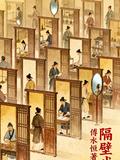 Next Door Drama
—Reads—Score—Shelves
Next Door Drama
—Reads—Score—Shelves
 Fake Fortune Telling, Real Spoiler, I Was Worshiped as a God!
4kReads7.7Score661Shelves
Fake Fortune Telling, Real Spoiler, I Was Worshiped as a God!
4kReads7.7Score661Shelves
Ex-Husband Regrets Heartbreak? Sorry, I Am Already in the Morning Class 176.1kReads8.8Score37.9kShelves
 Quick Travel: When the Vixen Takes the Evil Girl Whitewash Script
158.4kReads9.3Score9.5kShelves
Quick Travel: When the Vixen Takes the Evil Girl Whitewash Script
158.4kReads9.3Score9.5kShelves
 Survival Copy: Beauty Is Determined to Survive
43.6kReads8.9Score5.3kShelves
Survival Copy: Beauty Is Determined to Survive
43.6kReads8.9Score5.3kShelves
 Ding, Your Achievements Will Last Forever. My Cousin Has Opened the Book.
376.7kReads9.6Score80.5kShelves
Ding, Your Achievements Will Last Forever. My Cousin Has Opened the Book.
376.7kReads9.6Score80.5kShelves
 I Have Infinite Retracements and Know All the Trump Cards
373.1kReads9.5Score52.4kShelves
I Have Infinite Retracements and Know All the Trump Cards
373.1kReads9.5Score52.4kShelves
 I Have Bai Qi, Huo Qubing and Zhuge Liang, Who Am I Afraid Of?
6.4kReads9.3Score884Shelves
I Have Bai Qi, Huo Qubing and Zhuge Liang, Who Am I Afraid Of?
6.4kReads9.3Score884Shelves
 Male Fan Brother and Female Fan Sister Fight Through the World of Immortality
66.5kReads9.2Score11.9kShelves
Male Fan Brother and Female Fan Sister Fight Through the World of Immortality
66.5kReads9.2Score11.9kShelves
 Kuai Chuan: I Don't Want to Be so Bad Either.
36.5kReads9.0Score4.6kShelves
Kuai Chuan: I Don't Want to Be so Bad Either.
36.5kReads9.0Score4.6kShelves
 I Turned the Liangliang Script into a Shuangwen Script
7.3kReads9.4Score1kShelves
I Turned the Liangliang Script into a Shuangwen Script
7.3kReads9.4Score1kShelves
 To Make You a Concubine, You Kill the Master?
26.8kReads9.6Score4.5kShelves
To Make You a Concubine, You Kill the Master?
26.8kReads9.6Score4.5kShelves
 [Quickly Wear] the Disaster at Full Level Has Become a Little Pitiful Thing
2.7kReads8.6Score197Shelves
[Quickly Wear] the Disaster at Full Level Has Become a Little Pitiful Thing
2.7kReads8.6Score197Shelves
 Quickly Transform into a Vicious Female Supporting Character, and Cry in Barrages, Please Don't Torture Me
77.4kReads9.5Score12.2kShelves
Quickly Transform into a Vicious Female Supporting Character, and Cry in Barrages, Please Don't Torture Me
77.4kReads9.5Score12.2kShelves
 My Father Is the Sea, My Boyfriend Is the Shore
3Reads8.6Score—Shelves
My Father Is the Sea, My Boyfriend Is the Shore
3Reads8.6Score—Shelves
 Girlfriend************
—Reads5.8Score—Shelves
Girlfriend************
—Reads5.8Score—Shelves
 Girls and Vehicles Fight in Super-Designed Dimensions
—Reads—Score—Shelves
Girls and Vehicles Fight in Super-Designed Dimensions
—Reads—Score—Shelves
 Hellfire: the Chosen One
17Reads5.8Score—Shelves
Hellfire: the Chosen One
17Reads5.8Score—Shelves
 Running to the Mountains and Seas Is Absurd
—Reads5.8Score—Shelves
Running to the Mountains and Seas Is Absurd
—Reads5.8Score—Shelves
 Breeze Meets White Dew
160Reads6.5Score—Shelves
Breeze Meets White Dew
160Reads6.5Score—Shelves
 I Use *****
—Reads5.8Score—Shelves
I Use *****
—Reads5.8Score—Shelves