You can give it a try, if you are interested, you should listen to the niche ones, no CP, supernatural reasoning, reasoning mainly, supernatural supplements, catching ghosts and solving crimes
Star beasts invade the Origin Star. The male protagonist awakens the Origin Material Classroom, creates the "Original Vacuum Ten Thousand Phases Technique", repairs the Emperor's body, forges the Emperor's Heart, breaks into the frosty continent, enters the Dragon Palace, helps the Elf Queen, fights against the Sun City, and uses the classroom to protect hundreds of thousands of people. The protagonist is exciting and sparkling all the way!
Torture of inner demons (confirming "purity of Tao heart") test of "purity of Tao heart" Calculation of cause and effect (confirming "no worries") liquidation of "behavior cause and effect" Test of decline and calamity (confirming "Flawless foundation of Tao") negation of "rationality of existence"
"Perfect Defense": When AI starts to calculate love for you, who will defend your soul? In an era when algorithms decide for us what to watch, what to buy, and even who to meet, Shen Qingci's story cuts through the life we take for granted with a sharp hypothesis: If there was a system that could precisely calculate and optimize your intimate relationship, avoiding all risks like a legal contract, would you sign this "happiness agreement"? "The Perfect Defense" is far more than an emotional novel about the salvation of marriage. It is a philosophical fable disguised as science fiction, a precise anatomy of contemporary "performance society" and "emotional capitalism". Using Shen Qingci, a top non-litigation lawyer, as a scalpel, the author cuts through the most secret mental symptom of our era: the inner impulse to include "love" and "being loved" into the KPI assessment system. The Seduction of the System: When "Certainty" Becomes a New Type of Addiction The core tension of the story begins with that fascinating trap—the "Perfect Partner Optimization System." What it promises is exactly the deepest desire of the modern rational soul: to transform all the unsettling chaos, uncontrollable harm, and unrequited efforts in love into a clear "evidence chain", "emotional consideration" and "winning point". For Shen Qingci, this is nothing less than a kind of redemption. She is the maker and guardian of the rules, but she has failed miserably in her own life. System is the ultimate form of language she is most familiar with. However, the author coldly and profoundly reveals the nature of the system: it is not an external god, but an "iron cage" that Shen Qingci internalized after spending twenty years repeatedly forging childhood trauma ("Only the first person in the exam deserves to be loved") and professional creed ("Everything can be contracted"). The cage was so elaborate that she initially mistook it for wings. The "perfection" provided by the system is essentially a comprehensive and silent "discipline" for the self. It taught her to soften her voice, replace her hobbies, and polish her sharp self into a round pebble suitable for the role of "wife". For every "victory point" gained, one point of her real vitality was exchanged. This is the emotional version of the Faustian bargain, exchanging the edge of the soul for the stability of the relationship. Breakdown and Awakening: Regaining Human Qualification from "Mistakes" The real turning point of the novel begins with the "bug" that the system cannot handle. When Shen Qingci "shed tears unexpectedly" because of a simple word of concern in front of her sick bed, when she refused to use the "elegant speech template" when she was tired, those moments that could not be calculated and included in the "emotional profit and loss statement" became cracks in the iron curtain of rationality. Light shines in from here. The most exciting confrontation is not between the male and female protagonists, but between Shen Qingci and the self who has been alienated by the system. When she pulled up the cold data and confessed to her husband that "every heartbeat is a strategy", it was not only the collapse of the relationship, but also the complete bankruptcy of the old personality. She must stand in the dock in her own inner court and act as her own defense attorney. The most powerful evidence she could submit was those "inefficient" quarrels, "purposeless" sharing, and "imperfect" companionship - all of these "chaotic data" belonging to humans that were judged as "risk items" by the system. Beyond Love: A Modern Apocalypse About "Self" The ambition of "The Perfect Defense" makes it go beyond the scope of ordinary emotional novels. The relationship between Shen Qingci and Xu Siming is the main battlefield of the story, but it is not the ultimate issue. The real "final judgment" relates to a more fundamental question: In a world that advocates efficiency, quantification, and results-oriented, are we willing, and can we bear it, to embrace the true self that cannot be optimized, is full of fragility and uncertainty? The author allows us to see ourselves clearly through the mirror image of "system". The health data on our mobile phones, the annual summary, the careful display on social media, and even the praise of "emotional stability" and "providing emotional value" are not a milder version of the "optimization system" that we voluntarily load? Are we also unconsciously compressing our vivid life experiences into data points for display and exchange? The end of the novel is powerful. A world without a system does not mean that princes and princesses live happily ever after, but "boiled eggs" and "scratched chins" - a clumsy reality full of rough edges. What Shen Qingci finally realized was not the secret to managing a marriage, but the courage to exist: the strongest "contract" is not to predict all risks, but to believe that when unpredictable risks come, both parties are still willing to sit together and renegotiate. The object of this trust is not only a partner, but also the dynamically changing and constantly generating self. "The Perfect Defense" constructs an emotional laboratory with its strict logic, but reaches a warm and anti-logical conclusion: the reason why love is love is that it cannot be perfectly defended. It is the last loophole that makes the system incompatible, but it is the original fire that makes humans human. This is not just a story about how to win love, it is a magnificent and profound vindication of how to win back yourself.
 Shuanghuai Suppresses Evil
—Reads—Score—Shelves
Shuanghuai Suppresses Evil
—Reads—Score—Shelves
 Yu Nuan's Palm Lines Are Deep
—Reads—Score—Shelves
Yu Nuan's Palm Lines Are Deep
—Reads—Score—Shelves
 Xunzhongyan
—Reads—Score—Shelves
Xunzhongyan
—Reads—Score—Shelves
 Immortal Bones Are Broken, the World Is Standing
—Reads—Score—Shelves
Immortal Bones Are Broken, the World Is Standing
—Reads—Score—Shelves
 Solving the Case: the Ghost Is Amiable
—Reads—Score—Shelves
Solving the Case: the Ghost Is Amiable
—Reads—Score—Shelves
 Floating City and Floating Clouds
—Reads—Score—Shelves
Floating City and Floating Clouds
—Reads—Score—Shelves
 "Weixian Fengyun: from Prisoner to Food King"
—Reads8.5Score—Shelves
"Weixian Fengyun: from Prisoner to Food King"
—Reads8.5Score—Shelves
 Shuangshangou Fox Wedding Anecdotes
—Reads—Score—Shelves
Shuangshangou Fox Wedding Anecdotes
—Reads—Score—Shelves
 Song Dynasty****
—Reads5.8Score—Shelves
Song Dynasty****
—Reads5.8Score—Shelves
 Fengyue Cutting Knife
—Reads8.5Score—Shelves
Fengyue Cutting Knife
—Reads8.5Score—Shelves
 The Cold-Faced Mr. in Sunjiazhuang Village
—Reads8.4Score—Shelves
The Cold-Faced Mr. in Sunjiazhuang Village
—Reads8.4Score—Shelves
 The Old Donkey in Baitagou
—Reads8.5Score—Shelves
The Old Donkey in Baitagou
—Reads8.5Score—Shelves
 He Lingqisilver Bone Tribulation
—Reads8.4Score—Shelves
He Lingqisilver Bone Tribulation
—Reads8.4Score—Shelves
 Moxiang Pavilion
—Reads—Score—Shelves
Moxiang Pavilion
—Reads—Score—Shelves
 2004, the Unforgettable and Passionate Years of Working
7kReads8.3Score820Shelves
2004, the Unforgettable and Passionate Years of Working
7kReads8.3Score820Shelves
 Midnight Pawn Shop, the Living People Avoid It
276.4kReads9.4Score27kShelves
Midnight Pawn Shop, the Living People Avoid It
276.4kReads9.4Score27kShelves
 Chuan Ming Became a Criminal: Awakening the God of War Panel to Kill Chuan Chao
—Reads—Score—Shelves
Chuan Ming Became a Criminal: Awakening the God of War Panel to Kill Chuan Chao
—Reads—Score—Shelves
 I Have a Human Elixir Furnace
—Reads—Score—Shelves
I Have a Human Elixir Furnace
—Reads—Score—Shelves
 When the Player Regains His Land, the Court Dares to Call for Peace?
144.4kReads8.3Score16.2kShelves
When the Player Regains His Land, the Court Dares to Call for Peace?
144.4kReads8.3Score16.2kShelves
 Huang Nie: Urban Goddess of Superpowers
—Reads—Score—Shelves
Huang Nie: Urban Goddess of Superpowers
—Reads—Score—Shelves
 I Am Nineteen Years Old and Worth Ten Trillion!
62.5kReads8.9Score7.3kShelves
I Am Nineteen Years Old and Worth Ten Trillion!
62.5kReads8.9Score7.3kShelves
 Lucky Little Miracle Doctor
20.5kReads8.1Score2kShelves
Lucky Little Miracle Doctor
20.5kReads8.1Score2kShelves
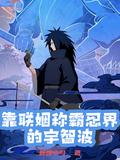 Uchiha Who Dominates the Ninja World Through Marriage
4.1kReads7.7Score530Shelves
Uchiha Who Dominates the Ninja World Through Marriage
4.1kReads7.7Score530Shelves
 Dean Gao Wu, My Strength Is the Sum of My Students
49Reads—Score—Shelves
Dean Gao Wu, My Strength Is the Sum of My Students
49Reads—Score—Shelves
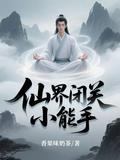 Little Expert in Retreat in the Fairy World
431.4kReads8.5Score53.6kShelves
Little Expert in Retreat in the Fairy World
431.4kReads8.5Score53.6kShelves
 Complete Biography of Jack Ma
—Reads9.5Score—Shelves
Complete Biography of Jack Ma
—Reads9.5Score—Shelves
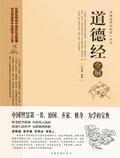 Complete Explanation of Tao Te Ching
—Reads9.6Score—Shelves
Complete Explanation of Tao Te Ching
—Reads9.6Score—Shelves
 Lingquan Farming: I Was a Big Boss in Ancient Times
24.4kReads7.9Score3kShelves
Lingquan Farming: I Was a Big Boss in Ancient Times
24.4kReads7.9Score3kShelves
 On the Day I Was Kicked Out of School, I Activated the Almighty Academic System
825Reads6.7Score117Shelves
On the Day I Was Kicked Out of School, I Activated the Almighty Academic System
825Reads6.7Score117Shelves
 I Have Traveled Through Time, No Way!
5Reads—Score—Shelves
I Have Traveled Through Time, No Way!
5Reads—Score—Shelves
 Candlelight***
—Reads5.8Score—Shelves
Candlelight***
—Reads5.8Score—Shelves
 Origin**
9Reads5.8Score—Shelves
Origin**
9Reads5.8Score—Shelves
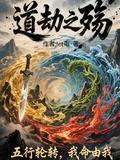 Dao Jie**
—Reads5.8Score—Shelves
Dao Jie**
—Reads5.8Score—Shelves
 Perfect************
—Reads5.8Score—Shelves
Perfect************
—Reads5.8Score—Shelves