A very good Star Wars article. The first few dozen chapters were a bit poor, but then steadily improved. There are no training and ancient martial arts mechas, but giant ships, cannons and sci-fi weapons. It is suitable for friends who like to watch pure star-sea battles. The main line of the article unfolds as one after another star sea battle, starting from a small person in the gaps of the battle, having his own ship, becoming a captain, a fleet commander, and then a warlord. With the Milky Way as the base, it depicts a sea of stars with technological gaps and numerous political powers. The protagonist relies on high-tech warships to defeat the natives. The fleet battles are well described and richly layered. Battles and preparation periods are interspersed, and the rhythm is well controlled. It would be better if there were more routines. The disadvantage is that the power management is rather sloppy. The perspective has a tendency to gradually move from people to the entire force. The overall progress is slow. After 2 million words, the contact with civilization is only a palm, and it feels like you have not left the novice village.
The description of the "forbidden ruins" in "I Learned to Kill Gods in a Mental Hospital" is really mind-numbing! When the protagonist calmly recited "No Precepts Airspace", the fate of the entire city was quietly rewritten - in the night sky of the old city, dark red triangles spread out silently, the rules were forcibly distorted, and reality and abnormality were separated here. This is not magic, but a cold, systematic, sci-fi "forbidden ruins" full of geometric beauty. The process of the blood letter on the notice board fading and suddenly brightening is like some kind of energy-draining ritual, and the contrast between the caster sitting down and complaining about being "emptied out again" instantly fills the room with suspense: this power comes at a heavy price, and the world is being quietly divided by more such "forbidden ruins". The most attractive thing about the novel is this abnormal setting at the core of science fiction - what is being killed is not gods, but rules; what is being fought is not ghosts, but cracks in reality where logic breaks down. Under the guise of a mental hospital, the protagonist learns a set of cruel techniques to reconstruct the laws of physics. When the dark red triangle closes over the city, you know that an extreme game between rationality and madness has just begun. If you are obsessed with the sense of system in "Lord of Mysteries" or the urban anomalies in "From Red Moon", the "god-killing" world described in this book with a science fiction style will definitely keep you up all night. Click to enter this city composed of forbidden ruins - is your sanity enough?
It's pure science fiction, I've never seen anything like it before, it makes people feel chills down their backs. It talks about a new form of warfare that may emerge in the future: genetic agricultural warfare. This reminds me of the recent incident of spies stealing parent seeds. Could the author rely on some speculation? The author uses the hardest agricultural science knowledge to construct a possible doomsday scenario. The most shocking thing is that the author does not seem to be writing in the wild. Every genetic technology in the book may have been realized now or in the future. My back felt cold after reading it, and I felt so energetic. .
As a reader who is tired of reading mindless cheating apocalyptic stories, I was immediately shocked when I read "Special District 9"! The whole process is taken from the perspective of the protagonist Qin Yu, crawling around in the wasteland world filled with yellow sand. There is no golden finger, only the determination to survive. The suffocatingly real survival game + the heart-breaking brotherhood. After reading it, my mind is filled with the weight of human nature in the apocalypse!
"The Realm of Symbiosis" - When the predators of the universe come, the last line of defense for mankind is actually a "home". This is no ordinary family. The father, Lei Mo, accommodates three sets of contradictory systems and walks a tightrope between humanity and divinity; the mother, Lei Dian, completes the fusion of silicon and carbon, nourishing civilization with the maternal territory; and the healer, Guiya, weaves the existential agreement and repairs the cracks in civilization. The three children are even more extraordinary - the eldest son can reconcile the folds of time, the daughter is born with a silicon-carbon symbiosis, and the youngest son can write the laws of existence. The "Nine Dragon Chariot" they drive is not an ordinary means of transportation, but a civilized instrument that brings together the nine fundamental forces of the earth. Its nine seats bind the whole family, becoming the first "Cradle of Civilization" family unit in the universe. The story begins with the "meaning plunder" of the earth by the "phage system" of silicon-based life, but it has evolved into a war of existential philosophy across the stars: dynamic symbiosis vs. Eternal stillness, coexistence of differences vs. Absolute unity. When radical scientists transform women into fertility vessels in the name of "human evolution," and when the ancient consciousness deep in the universe calls for help, the Leimo family must prove that the most fragile emotional connection is precisely the strongest foundation of civilization. There is a grand cosmic epic here, as well as concrete and subtle family warmth; there is an abstract philosophy of existence, and there are more vivid character choices. If you are tired of the black and white interstellar wars and long for a picture of a truly "heterogeneous symbiosis" universe, this work will take you on a soul-shaking journey. In "Realm of Symbiosis", the way to protect the world may be just to sit together as a family and have a reunion dinner.
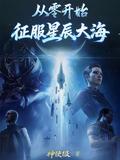 Conquer the Stars and the Sea from Scratch
23kReads8.1Score2.5kShelves
Conquer the Stars and the Sea from Scratch
23kReads8.1Score2.5kShelves
 I Learned to Kill Gods in a Mental Hospital
2.1MReads9.9Score334.1kShelves
I Learned to Kill Gods in a Mental Hospital
2.1MReads9.9Score334.1kShelves
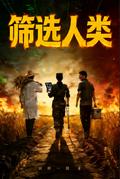 Screening Humans
5.5kReads7.5Score929Shelves
Screening Humans
5.5kReads7.5Score929Shelves
 Is It Reasonable for a Second-Level Civilization to Have Two-Way Foil?
122.6kReads9.6Score14.1kShelves
Is It Reasonable for a Second-Level Civilization to Have Two-Way Foil?
122.6kReads9.6Score14.1kShelves
 Extraordinary Destiny, Who Put the Fishing Rod in My Head?
4.8kReads6.1Score548Shelves
Extraordinary Destiny, Who Put the Fishing Rod in My Head?
4.8kReads6.1Score548Shelves
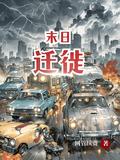 Doomsday Migration!
35.9kReads7.1Score2.7kShelves
Doomsday Migration!
35.9kReads7.1Score2.7kShelves
 District 9
341.5kReads9.6Score55.1kShelves
District 9
341.5kReads9.6Score55.1kShelves
 Starship Troopers: I'm Covered in Fantasy Firepower
48.5kReads9.5Score7.6kShelves
Starship Troopers: I'm Covered in Fantasy Firepower
48.5kReads9.5Score7.6kShelves
 I'm a Space Junk Guy
98.4kReads9.4Score14.2kShelves
I'm a Space Junk Guy
98.4kReads9.4Score14.2kShelves
 Star Lord: Recruit a Succubus as Secretary
71.2kReads9.1Score7.9kShelves
Star Lord: Recruit a Succubus as Secretary
71.2kReads9.1Score7.9kShelves
 The Scientific Evolution of Worms
557Reads6.6Score—Shelves
The Scientific Evolution of Worms
557Reads6.6Score—Shelves
 Chronicles of the AI Revolution
—Reads—Score—Shelves
Chronicles of the AI Revolution
—Reads—Score—Shelves
 Guardian of National Destiny: Dragon Vein Awakening
—Reads—Score—Shelves
Guardian of National Destiny: Dragon Vein Awakening
—Reads—Score—Shelves
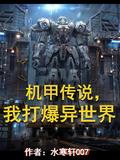 Mecha Legend, I Will Destroy Another World
44Reads5.8Score—Shelves
Mecha Legend, I Will Destroy Another World
44Reads5.8Score—Shelves
 Void***
—Reads5.8Score—Shelves
Void***
—Reads5.8Score—Shelves
 Symbiosis**
—Reads5.8Score—Shelves
Symbiosis**
—Reads5.8Score—Shelves