Are There Any Books Where There Is a Story Behind the Weird Stories?
Views
1.6k
Books
15
Recommendations
10
Updated
11mo ago
I would like to read a book similar to "Rule Ghost Story: I am the Ghost Story". When ghost stories first emerged, there were often stories about injustices/tragedies behind the ghost stories. They were very interesting and meaningful. But now, ghost stories are so boring and are written only for blood and horror.
The Story of Mo Weng Living in the Valley During the Spring and Autumn Period and the Warring States Period, there was a Qingya Mountain next to Yunmengze in the Chu region. There was a hermit named Mo Weng in the mountain. Unlike other hermits, he neither went on a hunger strike to collect sesame seeds nor pretended to be crazy to hide from the world. He also did not seek fame from the government. He only opened a medicinal field at the foot of the mountain and occasionally went down the mountain to exchange for some salt and rice. The neighbors said he was "weird but not pedantic." One day, a hunter from a neighboring village gave half a wild deer in exchange for herbs for treating bruises. Before leaving, he gave Mo Weng a small bag of broken silver: "Sir, he often helps people in our village see illnesses. Don't deny this kindness." Mo Weng did not refuse and accepted it with a smile: "Since I accept your kindness, I will save it to buy some good charcoal for the winter - I can't really live by drinking wind." Someone saw it and joked: "Mr. Love money?" Mo Weng twirled his beard and smiled: "I am greedy for money, so I can trade salt with you for rice. If I really talked about "not eating the fireworks of the world", I would not be able to get along with you." But the neighbors know that most of the money Mo Weng receives is to help the orphans buy food. He still wears coarse clothes and eats corn and vegetables - all of his seriousness is hidden in his quiet duty. In the late autumn of that year, the Chu government sent officials into the mountains to recruit civilians to build post roads. When the officials saw that Mo Weng could read and digit, they wanted to drag him into writing. But Mo Weng rolled up his sleeves and looked at a loss: "My eyes are dim and I can't even recognize the words. I'm afraid I'll miss the official's business when I write the document. Besides, winter wheat has just been planted in this medicine field. If I leave, what will the villagers do if they don't have any medicines to use next year?" As he spoke, he deliberately knocked over the ink on the case, making the pages black. Seeing that he was "confused and useless", the officials cursed him as "an old waste" and left. When the officials walked away, Mo Weng picked up the dirty paper and wrote on the back the secret of the post road recruitment - he had long seen through the government's use of building post roads to plunder people's wealth, but it was only because of his confusion that he hid it from the officials and prevented himself and his neighbors from being involved in trouble; those seven points of clarity were all hidden in his transparency that he would not argue with others. Six months later, a group of bandits broke into the mountain village to steal food. The villagers were so frightened that they hid in the mountains. The robbers were about to burn down Mo Weng's medicine hut when they saw Mo Weng standing at the door, leaning on a wooden staff wrapped with an iron tip, his eyes as cold as ice: "My medicine hut contains the 'Broken Heart Grass' for treating snake venom, and the 'Mountain Rope' for catching wild beasts." "If you want to rob me of food, I can't control it; but if you dare to burn my house or hurt me, ask me first whether I will accept this stick." Seeing that he didn't seem to be a good person, the bandit was afraid that he might have fallen into a poisonous weed trap, so he cursed and left. The next day, a monk from the temple at the foot of the mountain came to ask for alms. Mo Weng scooped up a ladle full of corn and took out the herbs he dried: "Master travels hard, so I brought this thing with me for use on the road." The monk asked him: "Why are you cruel to bandits and kind to poor monks?" Mo Weng said: "When you encounter thieves, you take out your gun to protect yourself; when you encounter the Buddha, you offer incense to have a kind heart - don't be soft when you should be hard, and don't be hard when you should be soft. Only then can you survive." Later, a villager asked Mo Weng: "Since you know so many things, why don't you go out to be an official?" Mo Weng pointed at the cactus beside the medicine field and smiled: "Look at this cactus, it doesn't take the initiative to sting people, but it won't spare anyone who dares to touch its thorns. . In my life, I have kept one-third of my worldly thoughts to be gregarious, seven-tenths of my duty to stay safe, and seven-tenths of my ignorance to avoid trouble, and hide my mind to look at the world with a clear mind. This is how you should behave, being thorny but not actively hurting others. Only when you have a bottom line can you live comfortably. " After hearing this, the neighbors thought this was reasonable. From now on, people at the foot of Qingya Mountain will all learn from Mo Weng: they don't pretend to be arrogant, don't try to be tough, have a kind heart and a good temper, but live a solid and stable life. People at that time remembered this and sighed: "Three points of vulgarity, to avoid being isolated from the world; seven points of righteousness, to avoid losing one's original intention; three parts of stupidity, to avoid getting into trouble; seven points of sobriety, to avoid being confused. People use thorns not to hurt others, but to protect themselves - this is the true meaning of life."
 Strange Talk Live Room!
281.1kReads9.7Score36.8kShelves
Strange Talk Live Room!
281.1kReads9.7Score36.8kShelves
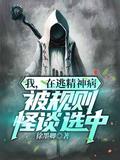 I, a Fugitive Psychopath, Was Chosen by the Strange Stories About Rules
95.5kReads9.6Score15.9kShelves
I, a Fugitive Psychopath, Was Chosen by the Strange Stories About Rules
95.5kReads9.6Score15.9kShelves
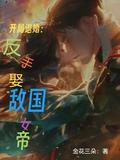 Breaking Off the Engagement at the Beginning: Marrying the Empress of the Enemy Country Backhand
1Reads—Score—Shelves
Breaking Off the Engagement at the Beginning: Marrying the Empress of the Enemy Country Backhand
1Reads—Score—Shelves
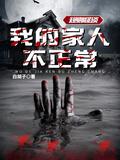 Strange Story About Rules: My Family Is Not Normal
62.1kReads9.4Score9.8kShelves
Strange Story About Rules: My Family Is Not Normal
62.1kReads9.4Score9.8kShelves
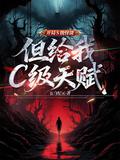 Start with an S-Level Weird Story, but Give Me a C-Level Talent?
175.8kReads8.9Score23.9kShelves
Start with an S-Level Weird Story, but Give Me a C-Level Talent?
175.8kReads8.9Score23.9kShelves
 Sleeping Is Prohibited in the Ancestral Home
—Reads—Score—Shelves
Sleeping Is Prohibited in the Ancestral Home
—Reads—Score—Shelves
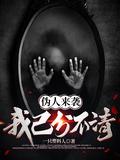 The Fake People Are Coming, I Can't Tell the Difference Anymore
20.6kReads8.9Score2.7kShelves
The Fake People Are Coming, I Can't Tell the Difference Anymore
20.6kReads8.9Score2.7kShelves
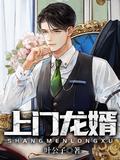 Long Son-In-Law Who Comes to the Door
287.6kReads9.2Score15.7kShelves
Long Son-In-Law Who Comes to the Door
287.6kReads9.2Score15.7kShelves
The Yi Jin Jing Passed Down by the Eight Parts of Tian Long 19.4kReads7.4Score1.9kShelves
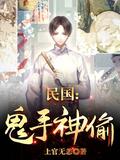 The Republic of China: the Thief with Ghost Hands
23.7kReads9.3Score3.6kShelves
The Republic of China: the Thief with Ghost Hands
23.7kReads9.3Score3.6kShelves
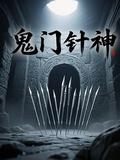 Ghost Gate**
—Reads5.8Score—Shelves
Ghost Gate**
—Reads5.8Score—Shelves
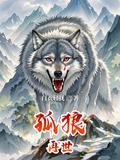 The Lone Wolf Is Reincarnated
1.3kReads7.6Score447Shelves
The Lone Wolf Is Reincarnated
1.3kReads7.6Score447Shelves
 Hengji Fengjie
—Reads5.8Score—Shelves
Hengji Fengjie
—Reads5.8Score—Shelves
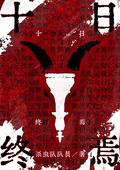 End of Ten Days
2.4MReads9.9Score384kShelves
End of Ten Days
2.4MReads9.9Score384kShelves
 Montenegro***********
—Reads5.8Score—Shelves
Montenegro***********
—Reads5.8Score—Shelves