It's so cruel to readers [crying] This abridged version deepens the pathos of the governor and Xiao Jing. The two met in the secret guard camp. They were young sweethearts at first. Later, one was sent to the palace by his father to become a eunuch, and the other was brainwashed by drugs and became the most loyal secret guard in the hands of the powerful.
There are many novels in Tomato's free novels that meet the requirements. The following are recommended for you: - "After Rebirth, I Abducted the Sick and Weak Governor": author Cheng Yu'an. The male protagonist is a real eunuch. He has low self-esteem due to his status and is delicate and frail. He is both physically and emotionally abusive to him. The heroine is bold and bright. She is reborn twice. After the second rebirth, she will marry the hero. The male protagonist was the fiancé of the female protagonist three years ago, and his becoming an eunuch was the result of the second male protagonist (the emperor). The emperor was jealous that the male protagonist could be liked by the female protagonist and killed him viciously. The male protagonist recognized the female protagonist on the night they got married, but the female protagonist did not know it. The female protagonist was actually reborn because of the male protagonist's request. The plot is sadistic yet a little sweet. - "After being raped by the eunuch": The author is Thirteen Swords/Masculine Man Xian Shang. Li Qin, the master of Dongchang Factory, is a real eunuch with a violent temper but has a soft spot for secret guard Ke Jingyin. Ke Jingyin once provided warmth to Li Qin when he was down and out, and was later given to Li Qin by His Highness. Li Qin took Ke Jingyin away from His Highness to detoxify him and awakened Ke Jingyin's dusty memories while getting along. The two went in both directions. There were elements such as forced love in the process, and there were many emotional entanglements and sadistic feelings. - "A salted fish marries a eunuch and is completely flat": The author is salty and oily. The male protagonist is a ruthless eunuch with a palm print, and the female protagonist is a reborn beauty who is extremely smart and has a good attitude. The plot of the story advances quickly. The male protagonist is extremely partial to the female protagonist. Although he is a eunuch, he has deep feelings for the female protagonist. It is a short story overall. There are some sweet plots to make up for the cruelty, and the extras are also very sweet.
Twelve-year-old Amei got on the sedan chair with her brother's cries. When Amei touched her brother's face for the last time, his tears were still stained on the back of her hand. The window paper of the shabby earth house was torn into pieces by the wind, and the moonlight filtered in, illuminating the little body of his brother with ribs - he hadn't had a sip of gruel in three days. Amei broke the last half of the hard bun into pieces, soaked it in cold water and fed it to him. However, the little boy was tired from crying, so he sniffed and fell asleep with only the soaked bun residue in his mouth. "Dad, take care of your brother after I leave." Amei knelt at her father's feet. The brother in her arms suddenly turned over and wrapped her small arms around her neck. "We can't gamble anymore. When we have money, we will buy food first..." Her throat was tight, and her voice was as hoarse as sandpaper rubbing against a pottery urn, "If you can't do it..." "Mei Yatou!" Dad suddenly interrupted her harshly, his cloudy eyes dodge, not daring to look at her red eyes, "At dawn tomorrow, Manager Wang will come to pick me up." He squatted down, touched the back of his brother's head with his rough palm, and sighed heavily, "Your mother left early, Dad... I can't forgive you." Amei didn't answer. She knew where her father's "sorry" came from - last month he pawned the last half bag of rice in the house to a gambling house in exchange for a pile of empty wine jars; half a month ago, he raised a hoe to hit his mother in the hospital bed, but was grabbed tightly by a neighbor; and three days ago, when Manager Wang's carriage stopped at the entrance of the village for the first time, her father cowered behind the threshold and dug his nails into his palms. "I don't blame you." Amei finished for him, "As long as my brother lives, as long as..." She looked up at the leaky roof, "As long as dad can quit gambling." Later in the night, his brother woke up. He was so hungry that he kicked up his legs, smashed his fists into Amei's arms, and cried until he was out of breath. Amei pressed his little head into the crook of her neck and hummed an off-key nursery rhyme—the tune that her mother used to coax him when she was alive. The moonlight filtered through the broken window and fell on Dad. He was curled up in the corner, like a scarecrow with cramped bones. As soon as it started to dawn, Amei took her brother out of the house. She put her brother on the earthen bed, covered him with her patched gown, and stuffed the last half of the bun into his hand. When she turned around, she touched the cloth bag under the pillow - inside was her brother's little tiger-toe shoes, which she had stayed up for three nights to get. The stitches were crooked, but the stitches were full of warmth. Manager Wang's carriage and horses were parked outside the courtyard. It was a middle-aged man wearing a blue cloth shirt, with a copper key chain hanging around his waist, and his eyes were piercing like knives. He slapped the marriage contract with the red seal in front of his father and said impatiently: "Hurry up and put your thumbprints, my wife is still waiting for the girl to have sex." Amei's father's hands were shaking. He stared at the "worth fifty taels of silver" on the marriage contract, his Adam's apple moved, but he still dipped it in ink pad. When it was Amei's turn, she stared at the square red seal, and suddenly remembered the red hijab worn by Sister Chuntao when she got married last year during the New Year - bright red, embroidered with lotus flowers. Sister Chuntao stood at the door of the courtyard wearing it, like a pomegranate flower in full bloom. But Amei didn't have a hijab. Manager Wang threw a piece of dusty coarse cloth to her and said, "Wrap it up, don't dirty my car." Amei wrapped the coarse cloth tightly, picked up her brother and kissed her again and again. The little kid nuzzled her chin in a daze, drooling on her collar. She gently put him on the kang, and then checked the small tiger-toe shoes scattered in the bag. "Girl Mei!" Dad suddenly chased her out, holding a cloth bag in his hand, "This is the silver bracelet left by your mother..." Amei shook her head. She knew that the bracelet was the last piece of property her father lost in gambling, and she couldn't take it. She turned around and walked towards the carriage. A corner of the coarse cloth was lifted by the wind, revealing the white washed coarse cloth underneath. Manager Wang snorted and pulled her: "Follow me." The carriage rolled over the bluestone road at the entrance of the village, and Amei looked back. The low mud house looked like a flattened mud cake, and my father's figure shrank in the doorway, like an old locust tree that had been broken by the wind. She touched the cloth bag in her arms, and the stitches of the little tiger-toe shoes made her palms ache - that was the last thing she could do for her brother. The carriage creaked and creaked forward, and Amei looked at the half-waning moon in the sky. She remembered her brother's last words before he fell asleep: "Sister, when I grow up, I will buy you the biggest and sweetest steamed buns." She wiped the tears on her face and said to herself, "Amei, you have to live. When my brother grows up, wait for him to bring steamed buns to your mouth." But the twelve-year-old Amei didn't know that there were some promises that she had to spend her whole life to repay.
The story unfolds from the perspective of Ning An, who observes the familiar people and things in her life in the form of a soul. Through her perspective, readers see the complexity of the entertainment industry and the multifaceted nature of human nature. In the novel, Ning An's image is gentle and tough, and her story is full of regret and helplessness. At the same time, it also shows the preciousness of life and the power of love. Theme The novel explores profound themes such as life and death, family ties, friendship and love. Through Ning An's perspective, readers not only feel the fragility of life, but also experience the greatness of love and the power of tolerance. The character relationships and emotional entanglements in the story trigger profound thinking about human nature and social reality. Overall, "The Third Year After My Death" is a novel with sincere emotions and fascinating plot. It not only tells a touching story, but also triggers readers' profound thinking about life and love. This book is a good choice for readers who like modern romance novels.
I cried to death. I burst into tears after watching it. Falling in love with the eunuch may sound absurd and bizarre, but it can create a different kind of spark.
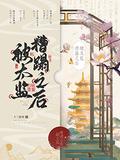 After Being Raped by Eunuchs
3.2kReads8.9Score402Shelves
After Being Raped by Eunuchs
3.2kReads8.9Score402Shelves
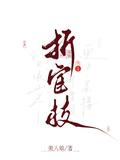 Zhehuanzhi
17.8kReads9.1Score3.3kShelves
Zhehuanzhi
17.8kReads9.1Score3.3kShelves
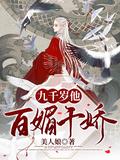 He Is Nine Thousand Years Old and Charming
10.6kReads9.4Score1.4kShelves
He Is Nine Thousand Years Old and Charming
10.6kReads9.4Score1.4kShelves
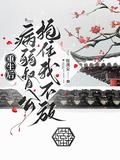 After My Rebirth, the Sick and Weak Governor Hugged Me and Wouldn't Let Me Go.
4.1kReads9.0Score354Shelves
After My Rebirth, the Sick and Weak Governor Hugged Me and Wouldn't Let Me Go.
4.1kReads9.0Score354Shelves
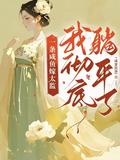 A Salted Fish Marries a Eunuch, and I Feel Completely Helpless
40.7kReads9.2Score5.1kShelves
A Salted Fish Marries a Eunuch, and I Feel Completely Helpless
40.7kReads9.2Score5.1kShelves
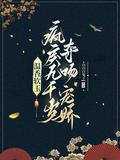 Warm and Fragrant Soft Jade, Crazy and Violent for Nine Thousand Years, Seizing Kisses and Pampering
4.8kReads9.0Score333Shelves
Warm and Fragrant Soft Jade, Crazy and Violent for Nine Thousand Years, Seizing Kisses and Pampering
4.8kReads9.0Score333Shelves
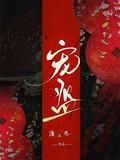 Pampered Prisoner
8.4kReads9.2Score1.2kShelves
Pampered Prisoner
8.4kReads9.2Score1.2kShelves
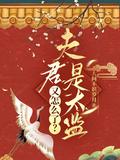 So What If the Husband Is a Eunuch?
37.8kReads9.2Score6.8kShelves
So What If the Husband Is a Eunuch?
37.8kReads9.2Score6.8kShelves
 Three Years After My Death
10Reads9.0Score—Shelves
Three Years After My Death
10Reads9.0Score—Shelves
 After Rebirth, I Hugged the Angry Boy with Red Eyes.
30kReads9.4Score3.5kShelves
After Rebirth, I Hugged the Angry Boy with Red Eyes.
30kReads9.4Score3.5kShelves
 The Princess Fell in Love with the Emperor and Forced Her to Become His Concubine. to Protect Herself, She Begged a Eunuch.
—Reads5.8Score—Shelves
The Princess Fell in Love with the Emperor and Forced Her to Become His Concubine. to Protect Herself, She Begged a Eunuch.
—Reads5.8Score—Shelves