The protagonist travels back in time to become Qi Tongwei in "In the Name of the People", rejecting the tragic fate of "the half-son who wins the day", starting as a village cadre, breaking the suppression of Liang Qunfeng and Zhao Lichun, and finally taking charge of a province. The plot incorporates elements of popular dramas such as "Hurry Up" to satisfy readers' uneasy feelings about Qi Tongwei. Classic operation: The male protagonist takes advantage of the "Liang Ping Overturning" incident to rebel against Li Dakang's army.
It's a very informative article. After reading it, I have gained a better understanding of the overall style of the system, which I didn't know at all. It is said that it is the male protagonist Luo Ziqing, but I think it is actually a double male protagonist. The author's ink and portrayal of Ji Zizhou is even better than that of Luo Ziqing. The relationship between Ji and Manman is like boiling plum wine, warm and with a long aftertaste. Luo Ziqing is also a very good guide. Everything is almost perfect, but a little less solid than Ji Zizhou, who has a full character. Luo and Manman's love is more like tea, healthy and needs to be savored slowly, plain yet fragrant. At the end, when Qiu Man said he wanted to go to Shunde together, the sourness and complexity brought about by Ji Man accumulated throughout the entire article burst out. The emotions were very complicated, including regret, loss, melancholy and a little relief. (The ending single loops around the love of your life, which is so fitting for Ji's character background.) The shortcomings do not hide the good points. I think it is worth reading among many romance novels. Everyone can learn a lot from it. The novel fully shows that everyone has his or her own destiny, but it is up to us to choose. This is also an inspiration for us.
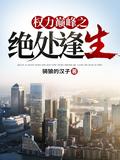 Survival from Desperate Situation at the Pinnacle of Power
109.1kReads9.2Score14.7kShelves
Survival from Desperate Situation at the Pinnacle of Power
109.1kReads9.2Score14.7kShelves
 Qi Tongwei, the Half-Son of Shengtian, Secretary Qi, the Righteous Path in the World
54.1kReads9.4Score4.3kShelves
Qi Tongwei, the Half-Son of Shengtian, Secretary Qi, the Righteous Path in the World
54.1kReads9.4Score4.3kShelves
 Just in the World
24.8kReads9.4Score3.5kShelves
Just in the World
24.8kReads9.4Score3.5kShelves
 Everyone Calls Me Mr. Jing, and I Use Sichuan and Shu to Ascend the Dragon Platform.
200Reads5.8Score—Shelves
Everyone Calls Me Mr. Jing, and I Use Sichuan and Shu to Ascend the Dragon Platform.
200Reads5.8Score—Shelves