These books are very good. They are very suitable for your taste. They are very good. They are really good. They are really good. I like these books very much. I think these books are really good. They are very beautiful. I read them carefully, so I recommend them. I think they are very good. These books
This story about an overseas foreign security intelligence unit and field service has just been released, and it is still a seedling. The style is relatively realistic, not a cool novel, and there is no female protagonist.
From "sister faked death" to "sister was shot", from "amnesia disguise" to "substitute faked death", the density of plot reversals is comparable to a roller coaster, the more you read, the more you get addicted!
[Positioning of the work] Chinese suspense and supernatural / archive decryption / Cthulhu-style horror / science fiction suspense [Narrative highlights] 1. Creation of immersion in archival narrative The novel begins with an official document format of "File Number + Classification + Case", and each chapter is an independent "Special Event File" (DF-001 to DF-008), from the "Collective Sleep Village" in Yichun, Heilongjiang, to the "Rejuvenants" in Baoding, Hebei, to the "Whispering Walls" in Shanxi Coal Mines and the "Skin Monster" in the Northeast Forestry - this pseudo-documentary style gives the story a strong official declassification texture. The reader seems to be reading a banned top-secret dossier, and every page exudes a dangerous atmosphere that "should not be seen". 2. "Well" as the symbolic system of the core image "Well" is the core metaphor throughout the book - it is not only a physical space (the ancient well in HX Village, the mirror deep in the mine tunnel, the mural on the factory altar), but also a time passage (the time node of August 17, 1999), and it is also a "door" in an ontological sense (the way back to the "other side"). The author cleverly transforms the concept of "wells connecting yin and yang" in Chinese folk beliefs into dimensional folding points in science fiction settings, allowing traditional cultural symbols to be reinterpreted in modernity. When Shen Mo discovers that "my sister Shen Mian is not missing, but has gone to where we came from," the sense of suspense instantly sublimates into existential fear. 3. The rational and emotional game between the two protagonists. The partnership between Shen Mo and Su Qing constitutes a dialectic between scientific rationality and emotional obsession. As a doctor of neuroanatomy, Su Qing insists on explaining all supernatural phenomena with "detection methods are not good enough", and her calmness is the anchor of the story; while Shen Shen, as the brother who lost his sister, is gradually eroded by the power of the "well" - from dreaming of sleeping with an empty face, to almost being tempted to jump into the well, to finally discovering that he was also a "child who was sent in" - his collapse and awakening form the main emotional line. The conversation between the two is full of tension: "There are no ghosts in the world, only phenomena that have not yet been explained" vs "What if there really are ghosts?" 4. Localized expression of Cthulhu-style horror. The creatures on the "other side" in the novel follow the core laws of the Cthulhu mythology: indescribable, unlookable, and incomprehensible. The "roots" growing out of the soles of the old lady in HX Village, the "face" of Wang Jianguo in LS County that was burned out from the inside, the "huge black eyes" of the patchwork creature in ZLT City, Liu Dahai's "blank face without facial features" in CC City - these images all have strong body horror qualities. But the author rooted it in the local context of China: the "Chu Ma Xian" belief in the northeastern forest area, the underground superstition in Shanxi coal mines, and the "Guiyi Jiao" cult in rural Hebei - giving the horror the flesh and blood of local culture. 5. Precise weaving of long-term puzzles. From DF-001 to DF-008, each unit case is an independent and complete suspense story, but the hidden threads are closely intertwined: the time node of August 17, 1999, the woman in white, the "seeding plan" and Silent's life experience, the true purpose of the Archives Department - these clues spread like roots, and finally broke out in the chapter "Sleep Signal". When Mo Shen learned that his father had been the first person to enter the "other side", and when the video records of his mother Lin Xiuzhi revealed the truth that "he was sent into the well to cure his illness," personal tragedy and grand science fiction settings completed a shocking fusion. [Suitable for the crowd] - Fans of suspense dramas who like "The X-Files" and "Stranger Things"-style unit investigations + long-term puzzles - Readers who are interested in the Cthulhu Mythos and SCP Foundation-style "abnormal containment" settings - Local culture enthusiasts who pursue Chinese horror aesthetics (wells, ancestral halls, old houses, cult rituals) - Imaginative readers who enjoy the mix of hard science fiction and supernatural elements - Thinking readers who are concerned about philosophical issues such as "scientific boundaries", "cognitive limitations" and "existential fear" [Reading Suggestions] This book adopts the rhythm of strong suspense and slow revelation. The first four chapters (DF-001 to DF-004) lay the foundation for the world view. It is recommended to patiently appreciate the symbolic meaning of the description of the environment (such as the tea set in HX Village, the empty wall in LS County, and the mirror in the coal mine). Chapter 5, "Reunification", accelerates into the main plot, Chapter 8, "Bloodline" and Chapter 9, "Reunion" complete the double explosion of emotion and setting. Watch for recurring symbols: leaves with silvery white veins, a chubby bear toy, a burn scar on a wrist—these are the keys to unlocking the ultimate truth. [One sentence recommendation] "When the searchlight of the Archives Department illuminates the well, what is illuminated is not the truth, but the abyss of our own cognition - "Unsolved Mysteries: China Archives" uses China's most daily symbols (wells, doors, filing cabinets) to construct the most transcendent horror."
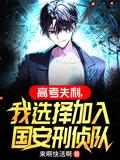 After Failing the College Entrance Examination, I Chose to Join National Security Criminal Investigation
18.6kReads8.3Score1.9kShelves
After Failing the College Entrance Examination, I Chose to Join National Security Criminal Investigation
18.6kReads8.3Score1.9kShelves
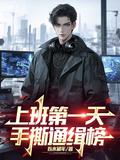 On the First Day of Work, I Tore up the Wanted List with My Hands
150kReads9.3Score19.6kShelves
On the First Day of Work, I Tore up the Wanted List with My Hands
150kReads9.3Score19.6kShelves
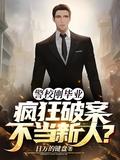 He Just Graduated from the Police Academy and Is Solving Crimes Like Crazy, so He Is Not a Rookie.
21.6kReads8.8Score1.6kShelves
He Just Graduated from the Police Academy and Is Solving Crimes Like Crazy, so He Is Not a Rookie.
21.6kReads8.8Score1.6kShelves
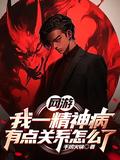 Online Games: What's Wrong with Me Being Mentally Ill?
10.6kReads9.2Score1.3kShelves
Online Games: What's Wrong with Me Being Mentally Ill?
10.6kReads9.2Score1.3kShelves
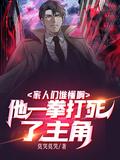 Who Knows, Family Members, He Killed the Protagonist with One Punch
763Reads6.9Score—Shelves
Who Knows, Family Members, He Killed the Protagonist with One Punch
763Reads6.9Score—Shelves
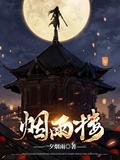 Yanyu Tower
1.3MReads9.6Score128.3kShelves
Yanyu Tower
1.3MReads9.6Score128.3kShelves
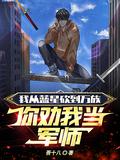 I Cut Down All the Tribes from Blue Star, and You Persuade Me to Become a Military Advisor
67.8kReads9.1Score7.3kShelves
I Cut Down All the Tribes from Blue Star, and You Persuade Me to Become a Military Advisor
67.8kReads9.1Score7.3kShelves
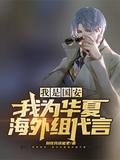 I Am Guoan: I Represent China Overseas Group
22.1kReads9.4Score2.4kShelves
I Am Guoan: I Represent China Overseas Group
22.1kReads9.4Score2.4kShelves
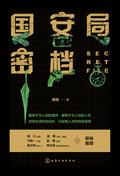 National Security Bureau Secret Files
—Reads9.5Score—Shelves
National Security Bureau Secret Files
—Reads9.5Score—Shelves
 Eighth Bureau of the General Staff
4.1kReads7.6Score553Shelves
Eighth Bureau of the General Staff
4.1kReads7.6Score553Shelves
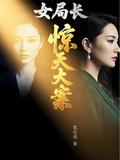 The Shocking Case of the Female Director
13.3kReads8.0Score1.6kShelves
The Shocking Case of the Female Director
13.3kReads8.0Score1.6kShelves
 I Want All the Casino and Official Love Scenes in the Pinnacle Reboot!
614Reads7.3Score106Shelves
I Want All the Casino and Official Love Scenes in the Pinnacle Reboot!
614Reads7.3Score106Shelves
 I Am*************
—Reads5.8Score—Shelves
I Am*************
—Reads5.8Score—Shelves
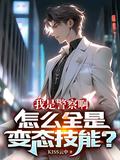 I'm a Police Officer, Why Do I Have All These Abnormal Skills?
72.2kReads9.4Score10.1kShelves
I'm a Police Officer, Why Do I Have All These Abnormal Skills?
72.2kReads9.4Score10.1kShelves
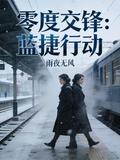 Zero Degrees of Confrontation: Operation Blue Jet
6.3kReads8.1Score908Shelves
Zero Degrees of Confrontation: Operation Blue Jet
6.3kReads8.1Score908Shelves
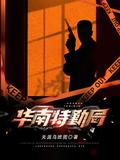 South China Secret Service
821Reads7.7Score116Shelves
South China Secret Service
821Reads7.7Score116Shelves
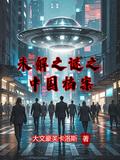 Unsolved******
—Reads5.8Score—Shelves
Unsolved******
—Reads5.8Score—Shelves
 National Security *********
—Reads5.8Score—Shelves
National Security *********
—Reads5.8Score—Shelves
 Spy **
—Reads5.8Score—Shelves
Spy **
—Reads5.8Score—Shelves