Focusing on the ten-year transformation of five medical students from campus to society, how do they find the courage to love and the reconciliation of growth between the impermanence of life and the calmness of medicine? A story about choice, price and forgiveness, an elegy dedicated to all youth who grow up between ideals and reality.
These two books are written by the same author. If you like traditional Chinese medicine, read them. You will never step into any pitfalls and gain a lot.
A must-read book for medical students, especially TCM enthusiasts. Jiang Yunchu starts the journey of learning TCM for you and me by telling stories about pulse conditions and TCM cases. There are recommended TCM enlightenment books in the book [Explore]. The second one is Su Ziyang taking us to see various strange cases [Fear]. After reading this book, you will learn a lot of little knowledge about TCM and fall in love with TCM [Explore]
This book is a must-read for those who want to learn Chinese medicine. Start from Chapter 84 to Chapter 90. You will definitely not be able to put it down. Believe me, after reading these chapters, your understanding of Chinese Medicine will surpass that of a Chinese medicine professor...
My top recommendations are 3 and 4. The first two books have been read recently and I think they are good. The last two books have been read. The author is really a good doctor and wants to promote traditional Chinese medicine.
A relatively realistic medical novel. As a medical student, in my opinion, Chinese medicine: One person supports a top-level hospital. Written by real medical graduates. Here you can follow the protagonist to improve your thinking in the diagnosis and treatment of traditional Chinese medicine. Very good. Full-time Chinese medicine was mentioned by others when I was reading this book.
The first book, I like it very much. It covers metaphysics, psychology, single prescriptions of traditional Chinese medicine, I Ching and Feng Shui. If I am impatient, I will just read the extras. The treasure book. The rest of the traditional Chinese medicine books I have heard of are all very good.
🔥"A Family of Traditional Chinese Medicine" uses a character novel to introduce the protagonist's experience. Cases are written out one by one in the protagonist's experience, accompanied by traditional Chinese medicine prescriptions. The novel introduces the patient's condition in detail, and lists the detailed prescriptions, which is a bit like reading a medical record. 🌸 🔥 "Mai Jing" actually does not need to be introduced by me. It is a must-read book for anyone who studies Chinese medicine. It is recommended that people who read this book first learn classical Chinese. It is indeed quite profound. Once you understand it, you must combine it with reality. 🌸 🔥. "The Art of Testing Words" is a novel integrating Taoism and medicine. In addition to teaching how to behave, the book also lists many prescriptions that can be used in daily life. 🌸 🔥The book "Medical Student" is a novel purely written about the life experience of a medical student. The work is very well written, the story is touching, the writing is delicate, the characters in the novel have distinctive characteristics, and the protagonist is a role model. 👍
Lin Feng, a young man who graduated from a major in traditional Chinese medicine, took over the "Feng Shui Medical Clinic" left by his grandfather. He had a solid theory of traditional Chinese medicine and a good knowledge of Feng Shui techniques. He thought he would just stick to the dilapidated shop and drink from the northwest wind, but unexpectedly, he made a name for himself by relying on the "Feng Shui acupuncture technique" passed down from his ancestors. He distinguishes Feng Shui and unblocks meridians, which not only treats the body but also changes fortune; he uses traditional Chinese medicine to consolidate the foundation and Feng Shui to regulate qi, which can forcefully bring out a glimmer of vitality. The human body is regarded as a small world, and Feng Shui is used to adjust the universe. Traditional Chinese medicine diagnoses pulse and disease, and Feng Shui eliminates disasters. In a shabby medical clinic, a young doctor uses "side theories" that are disdainful of Chinese and Western medicine to treat difficult and complicated diseases in the world and solve the world's Feng Shui dilemma.
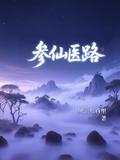 Shenxianyi Road
80Reads—Score—Shelves
Shenxianyi Road
80Reads—Score—Shelves
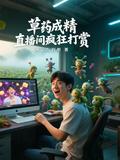 Crazy Rewards in the Live Broadcast Room of Herbal Medicine
11Reads—Score—Shelves
Crazy Rewards in the Live Broadcast Room of Herbal Medicine
11Reads—Score—Shelves
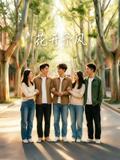 Flowers Bloom in the Wind
131Reads8.1Score—Shelves
Flowers Bloom in the Wind
131Reads8.1Score—Shelves
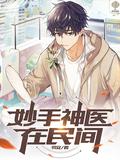 Wonderful Doctors Among the People
16.1kReads9.3Score2.7kShelves
Wonderful Doctors Among the People
16.1kReads9.3Score2.7kShelves
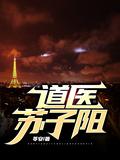 Taoist Medical Clinic Notes
188.8kReads9.5Score53.4kShelves
Taoist Medical Clinic Notes
188.8kReads9.5Score53.4kShelves
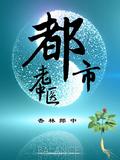 Urban Old Chinese Medicine Doctor
1.3kReads9.1Score261Shelves
Urban Old Chinese Medicine Doctor
1.3kReads9.1Score261Shelves
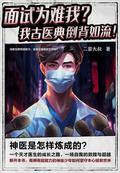 Is the Interview Difficult for Me? I Know Ancient Medical Classics by Heart!
28.4kReads9.3Score3.9kShelves
Is the Interview Difficult for Me? I Know Ancient Medical Classics by Heart!
28.4kReads9.3Score3.9kShelves
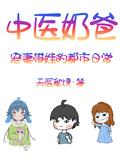 The Urban Daily Life of a Traditional Chinese Medicine Dad Who Dotes on His Wife and Takes Care of His Baby
38Reads8.0Score—Shelves
The Urban Daily Life of a Traditional Chinese Medicine Dad Who Dotes on His Wife and Takes Care of His Baby
38Reads8.0Score—Shelves
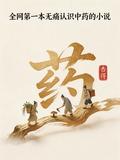 Great Drug Dealer in the Northern Song Dynasty
31.9kReads8.7Score4.9kShelves
Great Drug Dealer in the Northern Song Dynasty
31.9kReads8.7Score4.9kShelves
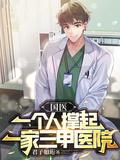 Chinese Medicine: One Person Supports a Tertiary Hospital
62.6kReads9.5Score8.1kShelves
Chinese Medicine: One Person Supports a Tertiary Hospital
62.6kReads9.5Score8.1kShelves
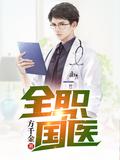 Full-Time Chinese Medicine Doctor
28.1kReads9.3Score3.5kShelves
Full-Time Chinese Medicine Doctor
28.1kReads9.3Score3.5kShelves
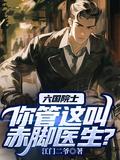 Academician from the Six Nations, Do You Call This a Barefoot Doctor?
5.5kReads9.0Score810Shelves
Academician from the Six Nations, Do You Call This a Barefoot Doctor?
5.5kReads9.0Score810Shelves
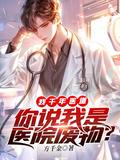 I Have Thousands of Years of Medical Experience, and You Say I Am a Waste in the Hospital?
23.4kReads9.3Score3kShelves
I Have Thousands of Years of Medical Experience, and You Say I Am a Waste in the Hospital?
23.4kReads9.3Score3kShelves
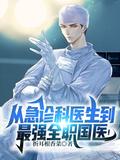 When Doctors Have a Simulated Operating Room
39.9kReads9.2Score3.4kShelves
When Doctors Have a Simulated Operating Room
39.9kReads9.2Score3.4kShelves
 I Am Reborn as the Disciple of the Medical Saint
94Reads—Score—Shelves
I Am Reborn as the Disciple of the Medical Saint
94Reads—Score—Shelves
 Chinese Medicine Doctor Li Hengzheng
304Reads8.8Score102Shelves
Chinese Medicine Doctor Li Hengzheng
304Reads8.8Score102Shelves
 My Traditional Chinese Medicine Anchor Is Proficient in Zhouyi's Physiognomy, Feng Shui and Chinese Art.
966Reads8.9Score226Shelves
My Traditional Chinese Medicine Anchor Is Proficient in Zhouyi's Physiognomy, Feng Shui and Chinese Art.
966Reads8.9Score226Shelves
 Great Doctor·sunrise Chapter
335Reads9.5Score101Shelves
Great Doctor·sunrise Chapter
335Reads9.5Score101Shelves
 The Great Doctor: Breaking Dawn (Two Volumes)
1.6kReads9.6Score353Shelves
The Great Doctor: Breaking Dawn (Two Volumes)
1.6kReads9.6Score353Shelves
 Qinling Herbal Collectors
8.3kReads9.1Score961Shelves
Qinling Herbal Collectors
8.3kReads9.1Score961Shelves
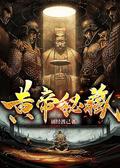 Yellow Emperor's Secret Collection
30kReads8.9Score1.4kShelves
Yellow Emperor's Secret Collection
30kReads8.9Score1.4kShelves
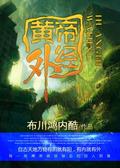 Yellow Emperor's Foreign Classics
683Reads8.6Score166Shelves
Yellow Emperor's Foreign Classics
683Reads8.6Score166Shelves
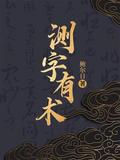 Skilled in Measuring Characters
204.3kReads9.6Score67kShelves
Skilled in Measuring Characters
204.3kReads9.6Score67kShelves
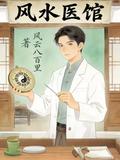 Feng Shui Medical Clinic
434Reads5.8Score102Shelves
Feng Shui Medical Clinic
434Reads5.8Score102Shelves
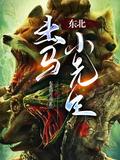 The Young Gentleman from Northeast China
220Reads—Score—Shelves
The Young Gentleman from Northeast China
220Reads—Score—Shelves
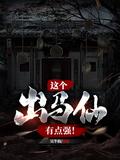 This Horse-Drawing Fairy Is a Bit Strong!
165.4kReads9.7Score18.3kShelves
This Horse-Drawing Fairy Is a Bit Strong!
165.4kReads9.7Score18.3kShelves