A prince was sent to a sect to ensure his safety, and his qualifications could not be discredited. With the sign-in system, he kept trying, and his cultivation level seemed to be anywhere from one party to ten directions.
Li Mu traveled to the fantasy world and became the deposed prince of Cangxuan Kingdom. At the beginning, I was thrown into the cold palace, but fortunately, I woke up to the sign-in system. Just sign in at special locations to get generous rewards. Bite! Congratulations to the protagonist for successfully signing in and obtaining the top-level physique, the Hongmeng Divine Body. Ding! Congratulations to the protagonist for successfully signing in and gaining top-notch luck, unparalleled in the world. Ding! Congratulations to the protagonist for successfully signing in, acquiring god-level swordsmanship, and opening the sky to destroy demons. ] Many years later, Li Mu walked out of the cold palace and found that he was invincible.
An in-depth book review of "Signing in the Taoist Forbidden Land for a Hundred Years, I Sweep All the Heavens" As a typical "sign-in flow" fantasy novel, this book takes "retreat in the forbidden land + system hacking" as its core selling point, and uses high-density system rewards and leapfrog counter-attack plots to build a "zero frustration" counterattack world. It is suitable for casual readers who pursue "instant pleasure" and "brainless upgrades", and is especially suitable for fragmented reading scenarios, but it has obvious shortcomings in narrative depth and character creation. Core highlights: Industrialized production of the refreshing mechanism (1) "Dopamine-style feedback" of the sign-in system. The author designed "check-in" as the core mechanism of "lottery-style surprise". Daily rewards will surely give out rare resources (such as Chapter 1 Innate Sacred Body Taoist Fetus, Chapter 2 Yuan Chen Spirit Technique), and the first sign-in will trigger a "hundred-fold increase", allowing the protagonist Gu Ling to directly counterattack the foundation building period from a useless person. This "zero investment and high return" setting accurately stimulates readers' "feeling of joy", just like the "daily guaranteed reward" in the game, forming a closed loop of "expectation-acquisition-satisfaction". (2) The "pleasure of data crushing" of leapfrogging counter-kills. Gu Ling relied on the physique and skills rewarded by the system to achieve "kills across major realms" many times: instantly killing a disciple who had completed Qi refining in the foundation-building stage (Chapter 2), and using mental sword control to kill a monk from the Quasi-Jiedan Demon Sect (Chapter 5). Through the combination of "realm suppression + special means" (such as the physical strength of the innate holy body and Taoist fetus, Tianleizi's transcendent lethality), the author makes every battle a thrilling performance of "the protagonist's data crushes the villain", satisfying readers' psychological expectations for the "invincible flow". (3) The "Closed Growth Stage" of the Forbidden Land and Secret Realm. The main scene of the story is set in the "Yansu Forbidden Land" to isolate outside interference and provide the protagonist with an "absolutely safe retreat environment." This "isolated island setting" avoids complex power games and allows readers to focus on the simple cycle of "check-in-upgrade-battle", which is similar to the closed growth logic of the "Desolate Tower Secret Realm" in "Zhetian", but emphasizes the "quick sense of success dominated by system rewards". Disadvantages: Character instrumentalization and logical loopholes 1. Paper-based villain creation. All villains (such as Tianyang Sect deacons, Dao Sect foundation-building disciples, and Demon Sect monks) are "tools to promote the protagonist's upgrade" and lack motivation and background. For example, in Chapter 3, the Dao Sect disciples entered the forbidden area to hunt down the ancient tomb due to their "inner demons", but the cause of their inner demons (solely due to the failure of the sect competition) was too thin to allow readers to understand the rationality of their obsession. Comparing the complex humanity of the villains in "Swordsman in the Snow", the villains in this book are more like "randomly refreshed experience packs". 2. The system logic is not self-consistent enough. The "randomness" and "strategic" nature of the sign-in rewards are out of balance: the protagonist received rewards such as Yuan Chen Spirit Technique (rare spiritual exercises) and Spirit Transformation Formation (top auxiliary formations) in the early stage, which lacks "the internal logic of the system's investment of resources." For example, in Chapter 5, the Tianleizi (a killer weapon in the alchemy stage) was suddenly obtained, and there was no explanation as to why the system provided this item at this time, causing readers to have a sense of fragmentation that "the rewards all depend on the author's mood." Interactive Topics 1. If Gu Ling signs in for a thousand years in the forbidden land, can he directly break through to the realm of the Immortal Emperor with the help of system rewards? Is there a "realm ceiling" in the check-in system? 2. Do you prefer "steady and steady upgrades" or "invincible flow directly fed by the system"? Does the "zero frustration" feeling of this book make you feel that it lacks challenge and tension? 3. Does the setting of Gu Ling using spiritual skills to control the sword conflict with the world view that "sword control requires a period of elixir formation"? How should the author correct this kind of logical loophole? 5. Reading suggestions for readers 1. A quick and enjoyable route: focus on Chapter 1 (System Activation), Chapter 3 (First Kill of Mental Technique), and Chapter 5 (Battle of Demon Sect Monks to Seize the Treasure), and quickly experience the exciting cycle of "signing in - counter-killing - becoming stronger"; 2. Logical exemption mode: Give up delving into issues such as "why the villain is brainless" and "why the rewards are random", treat this book as an "electronic mustard-style" reading material, and focus on enjoying the visual battle scenes; 3. Comparative reading of the same kind: If you are not satisfied with the "fast-food comfort" of this book, you can compare it with "My Senior Brother is Too Steady" to experience another refreshing mode of "steady and steady + IQ crushing". Conclusion: "A Hundred Years of Signing in the Taoist Forbidden Land" is a typical sample of the cool writing about signing in. It successfully uses the formula of "system reward-leapfrog battle" to create intensive refreshing points. However, if you want to upgrade from an "assembly-line work" to a "classic novel", you still need to invest more effort in character creation and self-consistency of the worldview. Are you willing to pay for this "simple and direct feeling of pleasure"? Feel free to share your love and hate for the "Sign-in Flow" in the comment area!
Very, good, good, good-looking. This is a bonus for book lovers. I have collected these books for many years. The content is very good-looking and exciting, very passionate, and the plot is very good. It is worth recommending to you.
The author shamelessly recommends himself. [Fantasy] [Sign In] Lin Chen traveled to a fantasy world, and at the beginning his spiritual root was taken away from his biological father and given to his younger brother. He started from a waste and awakened the invincible sign-in system. He forced his mother to die, killed his younger brother, and hunted down his father who was killed by an evil weapon. [Beep, sign in successfully. Receive a gift package for beginners and get the Heaven-Building Pill, Tianmen Sword Intent Technique] [Tianmen-Building Pill: Repair damaged spiritual roots] [Tianmen Sword Intent Technique: Ten thousand swords return to the clan, they look like swords, but they are not swords, and all the swords in the world are broken. The higher the character's realm, the higher the power. Congratulations to the host for obtaining the top skill self-healing technique[Self-healing technique: can repair itself infinitely] Lin Chen gradually grew from an ordinary time traveler to a powerful practitioner. Unite the monks from Fengyun Continent to conquer the northern border in the north, collect the sea people in the east, destroy the barbarians in the west, and finally advance into the barbaric continent. In the end, he became an immortal and swept across the foreign continent.
Seven stars. Traditional fantasy swordsmanship, fantasy imagination, oriental fantasy, and historical imagination. The protagonist has a bright aura, and my portrayal of the opponent is clearly deeply rooted in people's hearts. The story is eye-catching, the plot is interlocking, and the emotions are real and effective. The character positioning is accurate and the character portrayal is deeply rooted in the hearts of the people.
 Signing in the Cold Palace for Fifty Years, I Am Invincible in the World
419Reads5.5Score—Shelves
Signing in the Cold Palace for Fifty Years, I Am Invincible in the World
419Reads5.5Score—Shelves
 Not indexed yet
—Reads5.8Score—Shelves
Not indexed yet
—Reads5.8Score—Shelves
 Sign in to the Body of the Supreme God and Demon, I Am the Number One Person in the Demonic Path
33.1kReads8.9Score4.1kShelves
Sign in to the Body of the Supreme God and Demon, I Am the Number One Person in the Demonic Path
33.1kReads8.9Score4.1kShelves
 Son of the Human Emperor: My Mother Is the Emperor of Heaven!
8.3kReads8.9Score1.2kShelves
Son of the Human Emperor: My Mother Is the Emperor of Heaven!
8.3kReads8.9Score1.2kShelves
 I Have Signed in the Taoist Forbidden Land for a Hundred Years, and I Am Sweeping Across the Heavens
468Reads6.1Score—Shelves
I Have Signed in the Taoist Forbidden Land for a Hundred Years, and I Am Sweeping Across the Heavens
468Reads6.1Score—Shelves
 This Villain Has a Bit of a Conscience, but Not Much!
417.1kReads9.5Score45.1kShelves
This Villain Has a Bit of a Conscience, but Not Much!
417.1kReads9.5Score45.1kShelves
 I'm Lying Down by Signing In, Senior Brother, Stop Rolling!
5Reads—Score—Shelves
I'm Lying Down by Signing In, Senior Brother, Stop Rolling!
5Reads—Score—Shelves
 My Birth Shocked Hundreds of Millions of Geniuses
3.1kReads8.3Score327Shelves
My Birth Shocked Hundreds of Millions of Geniuses
3.1kReads8.3Score327Shelves
 Eternal**
—Reads5.8Score—Shelves
Eternal**
—Reads5.8Score—Shelves
 I Haven't Traveled Through Time Yet, Do I Have the Qualifications to Become a God?
3.6kReads8.7Score504Shelves
I Haven't Traveled Through Time Yet, Do I Have the Qualifications to Become a God?
3.6kReads8.7Score504Shelves
 The Divine Body of Chaos, Poetry as the Blade, Eternally Invincible
375Reads7.4Score—Shelves
The Divine Body of Chaos, Poetry as the Blade, Eternally Invincible
375Reads7.4Score—Shelves
 Fantasy: Invincible Starting from the God King Body
18kReads8.8Score1.5kShelves
Fantasy: Invincible Starting from the God King Body
18kReads8.8Score1.5kShelves
 Start******
—Reads5.8Score—Shelves
Start******
—Reads5.8Score—Shelves
 Fantasy: Become Invincible from Hongmeng Holy Body
4.1kReads8.6Score356Shelves
Fantasy: Become Invincible from Hongmeng Holy Body
4.1kReads8.6Score356Shelves
 Shocking, the Background of This Son of God Is All Taboo
25.4kReads8.9Score2.2kShelves
Shocking, the Background of This Son of God Is All Taboo
25.4kReads8.9Score2.2kShelves
 Let You Cultivate the Devil, Not Let You Directly Become the Eternal Devil
48.2kReads8.9Score5.2kShelves
Let You Cultivate the Devil, Not Let You Directly Become the Eternal Devil
48.2kReads8.9Score5.2kShelves
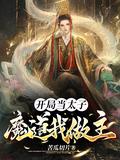 Be the Prince at the Beginning, and I Will Be the Master of the Devil.
2.1kReads8.0Score142Shelves
Be the Prince at the Beginning, and I Will Be the Master of the Devil.
2.1kReads8.0Score142Shelves
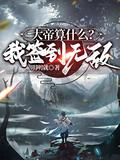 What Is the Emperor? I Signed in Invincible
2kReads7.1Score165Shelves
What Is the Emperor? I Signed in Invincible
2kReads7.1Score165Shelves
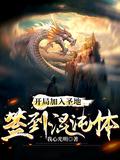 Join Holy Land at the Beginning and Sign into Chaos Body
5.3kReads8.6Score449Shelves
Join Holy Land at the Beginning and Sign into Chaos Body
5.3kReads8.6Score449Shelves
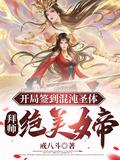 Sign in to the Holy Body of Chaos at the Beginning and Become a Disciple of the Stunning Beauty Queen
12.8kReads8.4Score1.3kShelves
Sign in to the Holy Body of Chaos at the Beginning and Become a Disciple of the Stunning Beauty Queen
12.8kReads8.4Score1.3kShelves
 Sealed for One Era, Invincible at Birth
9.9kReads8.3Score682Shelves
Sealed for One Era, Invincible at Birth
9.9kReads8.3Score682Shelves
 I Asked You to Go Crackdown on Pornography, and You Arrested My Sister-In-Law?
—Reads5.8Score—Shelves
I Asked You to Go Crackdown on Pornography, and You Arrested My Sister-In-Law?
—Reads5.8Score—Shelves
 Start************
—Reads5.8Score—Shelves
Start************
—Reads5.8Score—Shelves
 My Wife Is Actually a Saint from the Devil World
1.2kReads8.8Score101Shelves
My Wife Is Actually a Saint from the Devil World
1.2kReads8.8Score101Shelves
 The Blind Prince Returned for Eighteen Years as a Land God
229Reads—Score—Shelves
The Blind Prince Returned for Eighteen Years as a Land God
229Reads—Score—Shelves
 My Spiritual Root Was Taken Away at the Beginning, and I Became an Immortal by Signing In
—Reads—Score—Shelves
My Spiritual Root Was Taken Away at the Beginning, and I Became an Immortal by Signing In
—Reads—Score—Shelves
 Evolve from Godhead
4.1kReads8.5Score302Shelves
Evolve from Godhead
4.1kReads8.5Score302Shelves
 Yuyao: All My Pets Are Beasts That Are Against the Lord and the Lord.
11.8kReads8.0Score1.8kShelves
Yuyao: All My Pets Are Beasts That Are Against the Lord and the Lord.
11.8kReads8.0Score1.8kShelves
 Signed in for a Hundred Years, and Started to Dominate the World from the Sword Immortal
815Reads—Score101Shelves
Signed in for a Hundred Years, and Started to Dominate the World from the Sword Immortal
815Reads—Score101Shelves
 I Relied on the Sign-In System to Become the Immortal Emperor
—Reads—Score—Shelves
I Relied on the Sign-In System to Become the Immortal Emperor
—Reads—Score—Shelves