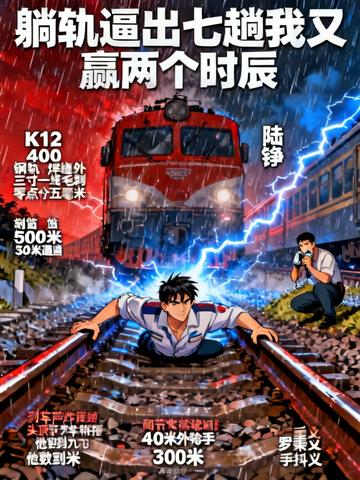
In the torrential rain, a hairline burr, 0.05 millimeters thick, runs along the weld of a K12 400 rail, three inches from the edge. Contract worker Lu Zheng has no certification to use a gauge or judge the defect. Foreman Luo Bingyi urges him back: the maintenance window has only nine minutes left, and they still need to let thirty three-thousand-ton trains through. Lu Zheng asks about the Henggui report. It was marked acceptable three days ago, but he felt the defect himself. The nearest certified inspector is at K40, another at K70, and either will take an hour and a half to arrive. He takes the brass track gauge with its forty-eight engraved markings from his grandfather's oilcloth bundle, presses it against the rail web, and runs it along inch by inch three times. He calculates that this stretch of track can take seven more trains. Over the radio, his mentor, Wen Shoutian, tells him to put the gauge down. Lu Zheng stands and lies down across the two rails, placing both hands on them. The train's whistle sounds at eight hundred meters, then five hundred, then three hundred. As the brakes roar, he counts to nine. The first carriage stops forty meters above his head, its wheels less than two meters from his hands. Luo Bingyi crouches on the ballast slope, his hands shaking as he calls in: the track closure has been reported, but it will take the Henggui testing institute two hours to send someone.