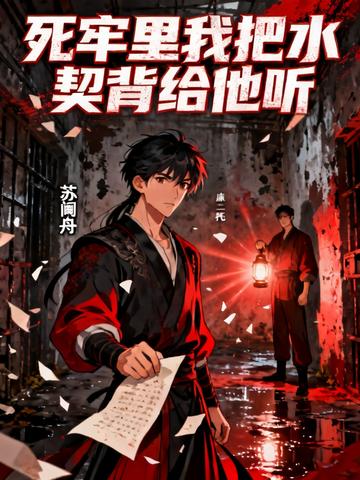
In the death row of Lanzhou, Su Lanzhou awaits her execution at noon. The verdict says she falsified a water contract and caused floods that submerged six townships, killing more than 21,400 people. She says the notice from three years ago said more than 20,000. The figure in the records, 21,367, is one I wrote down. The extra 133 were people no one reported. By reporting 133 additional dead, they could claim 133 extra compensation payments, not one of which was ever paid out. On her third petition, she writes only three questions: Where is the original contract? The contract specifies a flood discharge of 3,200 cubic meters, but the rainfall that night could have produced no more than 1,000. The contract was assigned seven numbers in a single day, jumping from No. 701 to No. 708, with the six numbers in between left blank. Kang San tears the paper into eight pieces and says, "The people upstairs have a saying: Su is ignorant of water management and should be punished as a warning to others." Su Lanzhou recites the water contract from memory. Contract No. 701, with Qin Qu, an official in charge of the canal, as the signatory. The contract text is written in pine soot ink, while the clauses specifying a discharge of 3,200 cubic meters and an opening four zhang and two chi wide are in lampblack ink. Lampblack ink shines, while pine soot ink is dull. You can tell them apart by looking at an angle under a lamp, because those two clauses were added later. Then there's the seal ink. The official seal of Lanzhou uses four parts cinnabar, two parts castor oil, one part bletilla powder, and three parts moxa floss, with an additional part of aged tung oil to seal the color. This was set down in the ninth year of Qingyuan. The seal ink on that water contract lacks that extra part of tung oil. Kang San's hand holding the lamp trembles. He asks her, "How do you know?"