In the final years of the Great Xie dynasty, the border city of Yaguan lay frozen beneath wind and snow.
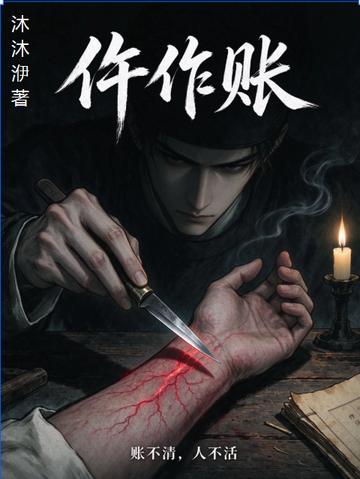
An unknown frozen corpse dredges up an old military provisions case from ten years ago. Coroner Lu Chen is drawn into the investigation. He examines wounds, time of death, and weapons, only to discover a strange cinnabar mark of karmic ties on the victim, pointing straight to the forbidden art of “Heaven’s Examination.”
In this low-magic age of chaos, those who die violent deaths can leave behind fragments of their thoughts. A coroner can use corpse-questioning incense to read three breaths’ worth of sensory fragments, but at the cost of incurring “yin debt”: auditory hallucinations, trembling hands, and nightmares, until the dead consume him with their obsessions.
His master’s old case remains unresolved, and forces from every side emerge: the righteous constable Zhou Tie, the mysterious physician Su Wen, and the aristocratic young master Xie Yunzhan, both rival and ally. Lu Chen believes the truth can solve everything, but discovers that evidence can lie and power can bury a case. Worse, the yin debt he carries is a key his master deliberately planted.
“Truth isn’t a blade, it’s an account book. If the books aren’t settled, no one survives.”
From a small border city to the undercurrents of the provincial capital, from the mists of secret cults to the storms of the imperial capital, Lu Chen presses onward, only to discover that his master’s death was no murder, but a willing sacrifice to seal away the imperial family’s lingering resentment and prevent the realm from descending into chaos.
If he keeps investigating, he’ll hurt the people he wants to protect. If he stops, his master and the dead will have died in vain.
This is an account book of a chaotic age, opened with a coroner’s knife, and the all-or-nothing struggle of a man with the least right to demand the truth as he seeks justice from the entire machinery of power.
The plot has a moderate pace and is not confusing to read.