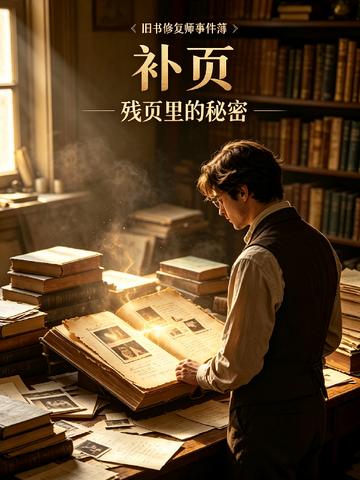
Chen Mo is forty-three and runs an old-book restoration shop called Mending Pages on an old street in the south of the city.
He's no great talent. He has a technical secondary school diploma, doesn't know how to make short videos, and can't promote himself. The only thing he knows how to do is restore books. Hold a page in his hand, give it a touch, and he can tell what year the paper pulp came from, which factory made the ink, and how many times it has been soaked. In twenty years, he's handled tens of thousands of books and developed a touch no layperson can understand.
His landlord wants to raise the rent from 3,500 to 12,000. The old-book market next door is slated for demolition. The whole old street is waiting for its "cultural district" redevelopment. Everyone urges him to change careers. He doesn't.
An old woman brings him a Xinhua Dictionary her son used as a child. It's worth only 3.7 yuan. He takes it. A young man brings him an old copy of The Little Prince, a memento of his sister. Hidden among the pages are a few words circled in pencil: "Wait for me to come back." He takes it. Someone from the museum posts on Weibo: "There's a restorer who uses no equipment. He touched a sheet of paper and said, 'This is Changsha paper from 1937.'"
He goes viral. It makes no difference.
He applies for the city library's restoration project for old Republican-era newspapers. Ma Wenyuan, owner of the biggest restoration company in town, sees him as a thorn in his side. Reports, shop closures, fake books, framed accusations: he drives Chen Mo into a corner, step by step.
He doesn't back down.
He keeps restoring books. The copy of The Little Prince. The Xinhua Dictionary. A manuscript dug out of the basement of a printing factory destroyed by bombing in 1943. An old book with no author and no title, bearing only the words "For those who come after us."
"Other people restore books."