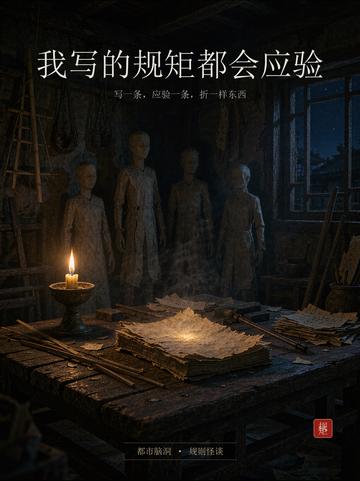
The old city has a street for funeral goods. Half the shops sell wreaths and burial clothes, and the paper crafts shop at the end of the street is the last one still willing to make paper figures by hand. Its rules are older than the shop itself: Never paint a paper figure's eyes. If you do, it will recognize its master. A white horse must not cross a bridge. If it does, it must be burned. Close the shop at sunset. Take no jobs at night. Chen Mo is the grandson of the last paper craftsman. He grew up memorizing these rules, making paper horses and houses by day and earning the neighbors' honest money. After his grandfather disappeared, he kept watch over the shop and the rulebook his grandfather had left behind. Its first half was packed with writing, while the second half was blank, as if it had been left especially for him.
The trouble began on the forty-ninth night after his grandfather vanished. At midnight, someone knocked at the shop door. The Seventh Funeral Shop delivered an obituary, signed with his grandfather's name. That same night, the biggest paper figure in the shop, whose eyes had never been painted, opened them. Only then did Chen Mo begin to understand why the second half of the rulebook was blank: add a rule to the book, and one thing in the city will come true. Write a rule, and it will be fulfilled. The price is called a "fold": fold away ten years of life, a memory, or a skill. Nothing that is folded away disappears. It all turns into ink for grinding.
The people on this street still know nothing. Someone has to protect them. But as his years, memories, and skills are folded away one by one, what will be left of him when the book is full? Tonight, the paper figure's eyes are still open. Chen Mo grinds the ink, opens the blank page of the rulebook, and holds his pen over the paper. What will the first rule he writes be?