Never let a modern combat engineer team up with Li Yunlong, or the Japanese will really be driven crazy! Lu Lei transmigrates to a battlefield during the War of Resistance Against Japan. He isn't fazed by the outdated equipment. What frustrates him most is that Li Yunlong keeps mistaking his specialized engineering tools for ordinary junk.
At a mountain pass, the enemy holds a strong defensive position. Li Yunlong draws his saber, ready to launch a frontal assault. Lu Lei simply turns on a loudspeaker and plays the sounds of a vast army marching on a loop. The puppet troops panic and lose all will to fight, and an entire platoon surrenders, leaving Li Yunlong staring in disbelief.
During an ambush in the forest, thirty elite Japanese soldiers quietly move to encircle them. Shen Ling takes out the enemy commander with a sniper shot from a thousand meters away, while Lu Lei sets off a tripwire grenade he planted in advance, wiping out the enemy in an instant. The surviving Japanese soldiers are terrified, mistakenly believing that the Eighth Route Army has brought in its main force.
After the battle, as they search the battlefield, Li Yunlong only cares about grabbing white flour and bolts of cloth. He mocks Lu Lei for picking up rusty wire and torn sacks, calling it scavenging. But the Japanese reinforcements who arrive are all wiped out when they step on land mines Lu Zheng made from scrap. Seeing the results, Li Yunlong is completely flabbergasted and hurriedly pesters Lu Lei for those "junk treasures."
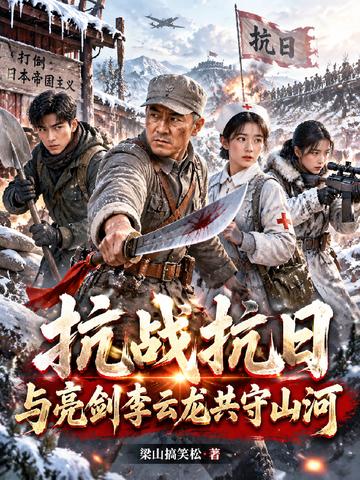

This book travels through time, but without a system. It only has a tweeter and a modern sniper rifle. Everything else is the same, but it adopts the strategy of "cave and mine ambush". "Cave" is to dig caves and tunnels, like that tunnel guerrilla warfare. [Thunder] It's like the mine warfare during the Anti-Japanese War. [Lure] is usually through various luring strategies. [Fu] means to ambush. This is easy to understand, just like the Battle of Pingxingguan. Everyone sees it, it's pretty cool. It does not change the course of history.