[Food] [Relaxed] [System] [Restaurant Management] [Daily Life] [Overseas Restaurant]
[Warning: Reading this novel will make your phone automatically open a mysterious yellow food delivery app and send your weight soaring! Read at your own risk!]
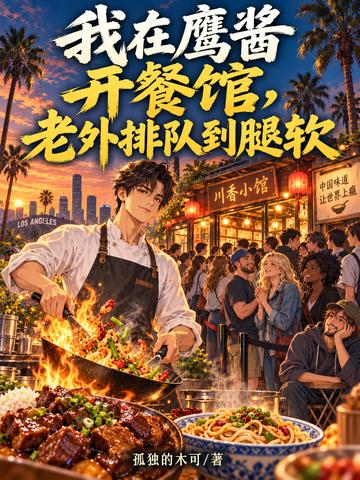
Take over a dying, rundown restaurant in Los Angeles with just four hundred dollars to your name and a staggering eighteen-thousand-dollar debt hanging over you?
Bound to the Hearth and Home Restaurant System, he starts with a bowl of scallion oil noodles, and his actual revenue transforms the shabby little diner overnight!
No American-style Chinese food, no tweaked dishes to cater to local tastes. His rules are tougher than iron, and all across Los Angeles, foreigners complain about the prices while bringing their own stools to queue up!
Chinese chef Lin Chuan is forced to take over a decrepit Chinese restaurant on a long street. If he can't repay the money in thirty days, he'll be thrown out on his ear.
On this West Coast, awash with fake American-style Chinese food, everyone is waiting for him to shut down for good.
But Lin Chuan gets rid of every General Tso's chicken dish and lays down strict rules: clear prices, no cutting in line, and closing time is closing time!
One bowl of glossy, fragrant scallion oil noodles leaves a hot-tempered truck driver licking the soup bowl clean. That very night, he brings his entire fleet to camp outside the restaurant.
One pot of rich, sweet-and-sour tomato-braised beef brisket has a muscular boxing coach wolfing down three bowls of rice, then signing a long-term meal contract on the spot!
From twelve shabby seats on a long street to late-night food trucks sweeping across California.
Emergency room nurses treat the place as a late-night refuge, and even the neighborhood's underworld bosses have to take a number and wait their turn to eat...
"Boss, could you add another ladle of soup tomorrow? I'll trade you the whole neighborhood for it!"

It is a relatively light book, mainly because the author does not write about the feelings of the diners at all. I don't write about whether this thing is delicious or not. Anyway, I am willing to queue up and I am willing to buy it, even if it is delicious. Then it is like a running account, selling and buying every day. No matter how delicious your cooking is, most people still won't appreciate it. For example, Shanghai Railway Station. To buy something from him, you have to have this condition or that condition, whatever. It turns out that the protagonist spent a lot of money and time for this, and he still says it doesn't matter. Then, whoever does him a favor, the protagonist will give him a bunch of money. It is to share all the money without increasing the price of the food. With the system of cooking, I have to participate in other people's food, and I have to make this orange chicken. I have to say that others are not used to it. If you're like this, don't write food articles, it's disgusting for everyone
It's a useless system. At first, I felt relieved that the system didn't provide god-level recipes. Then practice space exercises and start to innovate on your own. As a result, I upgraded to practice on the driving range for the recipes. Isn't this still the same thing? What I said before is nonsense.
. . . The difference is that tasteless chicken ribs are tasteless and would be a pity to throw away. It would be a pity not to throw them away.