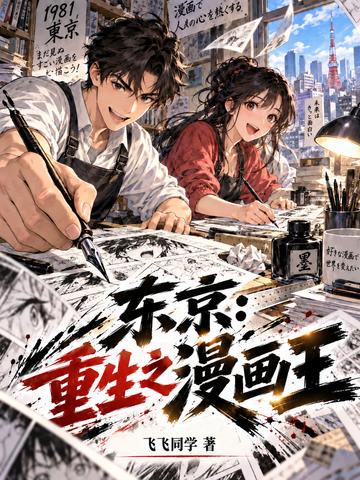
Reborn in 1981, screenwriter Lin Yuan, who had worked himself to death on the eleventh draft in his previous life, opened his eyes to find himself the most inconspicuous background assistant in a Tokyo manga studio.
He couldn't draw, but he remembered the next forty years of Japanese manga.
On deadline night, the lead artist got drunk, and the series was about to miss its deadline. Lin grabbed the storyboard paper. "Eight pages, six hours. I'll tell you what to draw."
From that night on:
His manga about Go, The Divine Move, sent elementary schoolers across Japan rushing into Go clubs with boards in their arms.
His Voyage King ushered in the golden age of adventure manga.
His Fire Ninja sent kids running down every street with their arms stretched out behind them.
His Death Note made all of Japan afraid to write anyone else's name in a black notebook.
In its eighth week of serialization, it overtook Dragon Ball.
The editor-in-chief called him the "King of Manga" in front of the entire editorial department.
And the women around him were all difficult in their own ways:
Mizuno Miu, a genius artist and the only one who could draw the face in his mind;
Kiryu Ayako, his hard-nosed editor, whose red pen was merciless and who was always first to shield him from trouble, showing up on his doorstep every week without fail;
Shiraishi Mari, a genius shojo manga artist and the only girl who dared argue with him over storyboards;
Hoshino Nana, a rookie voice actress whose voice could silence a recording studio;
Himekawa Reiko, the award-winning actress who called his manga her "bedside reading" on television;
Hayasaka Yui, who had gone from assistant to ranking first with her very first issue of a new series.
This time, he would make sure his own name was printed on the cover, for all to see.