At 3:17 a.m., Lin Yanzhou sent the eighteenth version of his proposal to the project group.
The client replied instantly: "The first version was better. Sorry, but could you revise it again?"
He bought a ticket home for 6:20 in the morning. It cost 87 yuan. He didn't tell anyone.
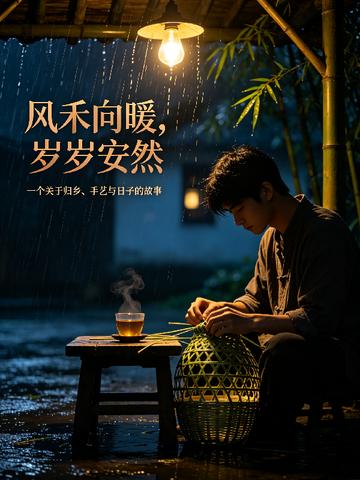
When he returned to Qinghe Town, he was so thin he was almost unrecognizable. He couldn't sleep and had no idea what to do with himself. Then he walked into the bamboo courtyard and met Grandpa Chen, who had been weaving bamboo for sixty-three years. The old man handed him a cleaver for splitting bamboo. "You have no calluses on your hands, and no roots in your heart. But you can learn."
On his first day splitting bamboo, he cut his hands seven times. Su Qinghe crouched in front of him and put a bandage on him. "If it hurts, say so. No one's going to laugh at you."
She recorded oral histories about local life, working alone for three years. "The city is nice, but there are people here waiting for me," she said.
He stayed. Splitting bamboo, soaking strips, weaving the base, closing the edges, and burning in the characters. Day after day, strip by strip, he wove life into the bamboo.
Later, someone offered a high price to buy the brand. Someone invited him back to the city with an annual salary of a million yuan. A company wanted to mass-produce two thousand pieces. He gave them all the same answer:
"No."
Because Grandpa Chen once said, "Weaving bamboo is weaving a life. Life is meant to be lived, not rushed through."
This is a story about escaping back to one's hometown, learning to slow down, and finding one's roots amid the warmth of everyday life.
It's also the story of a group of people, using their own hands to preserve the life of a town.
Slowly is the faster way.