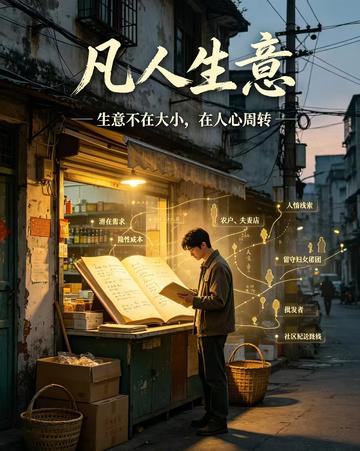
Lin Xiaoman worked as a community group buying operator in first-tier cities for five years. After the industry bubble burst, he lost his job and returned to his hometown, a small southern county in decline, with 30,000 yuan in savings. Relatives laughed at him that he "can't make it in a big city", and his parents advised him to take the exam and live a stable life. When he was setting up a street stall to sell off-price goods, he picked up an old account book and found that every time a real transaction was recorded, the customer's potential needs, the hidden cost of the product, and a human clue would emerge. Starting from taking over his family's small shop that was on the verge of bankruptcy, he used "buying and delivering on behalf of others" to build trust, work with mom-and-pop shops on joint purchases, and train left-behind women to become community leaders. When wholesalers cut off supplies, he directly contacted farmers; when capital companies poached employees, he gave the majority of the profits to the group leader. From just wanting to make quick money to turn around, to truly plunge into the world of fireworks, he connected hundreds of small shops, farmers and left-behind laborers, turning ordinary people's businesses into a warm ecosystem. The last page of the ledger appeared: business is not about the size, but about the turnover of people.